
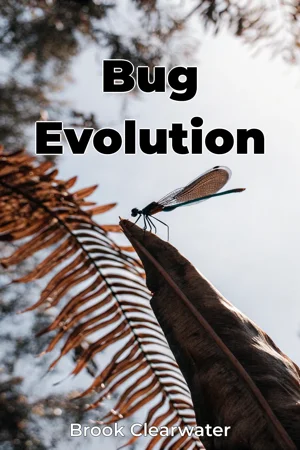
About This Book
What if the buzzing fly in your kitchen window is a distant relative of a dragonfly with a two-foot wingspan? "Bug Evolution" explores the fascinating journey of insects, from their prehistoric origins as colossal creatures to their current status as the most diverse and abundant group of animals on Earth. This book delves into the evolutionary processes that have shaped insects over millions of years, revealing the secrets behind their resilience, adaptability, and incredible diversity. Understanding insect evolution is crucial not only for appreciating the natural world but also for addressing pressing issues in agriculture, medicine, and conservation. This book argues that insect evolution is a story of constant adaptation driven by environmental changes, competition, and co-evolution with other organisms. We will illuminate how these selective pressures have resulted in the staggering array of insect forms and behaviors we see today and how it continues to shape their future . "Bug Evolution" is structured to provide a comprehensive understanding of the subject. It begins by introducing the earliest insect ancestors and tracing their origins in the Paleozoic Era, highlighting the conditions that fostered the evolution of giant insects. The book then transitions into an exploration of key evolutionary innovations, like the development of wings and metamorphosis, which allowed insects to diversify and colonize new habitats. We examine the evolution of social behavior in insects, exploring the genetic and environmental factors that drive the formation of complex societies like those of ants, bees, and termites. Finally, we discuss the role of insects in modern ecosystems and the challenges they face in a rapidly changing world, culminating in a discussion of conservation efforts and the future of insect evolution. The evidence presented in this book is drawn from a range of sources, including fossil records, genomic data, and experimental studies. We utilize cutting-edge phylogenetic analyses to reconstruct evolutionary relationships between different insect groups and explore the genetic mechanisms underlying adaptation. Case studies of specific insect groups, such as beetles, butterflies, and flies, will illustrate the principles of insect evolution in action. The study of insect evolution is inherently interdisciplinary. This book connects to fields such as paleontology, genetics, ecology, and climate science, offering insights into the intertwined nature of evolutionary processes. Furthermore, it relates to agriculture by examining pest control and resistance development, and to medicine by investigating disease vectors and the development of novel drugs from insect-derived compounds. "Bug Evolution" takes a unique perspective by emphasizing the interplay between genetic and environmental factors in driving insect evolution. It highlights the importance of understanding insect evolution in the context of global change, including climate change, habitat loss, and the introduction of invasive species. This perspective provides novel insights into the challenges and opportunities facing insects in the 21st century. The tone of this book is authoritative and engaging, combining scientific rigor with clear and accessible language. Complex concepts are explained in a way that is easy for non-experts to understand, while still providing sufficient detail for those with a scientific background. The target audience for "Bug Evolution" includes students, researchers, and anyone with an interest in biology, entomology, or natural history. This book will be valuable to those seeking a comprehensive and up-to-date overview of insect evolution, as well as those interested in the broader implications of evolutionary biology. As a science book, it presents researched facts with appropriate citations and data. The scope of "Bug Evolution" is comprehensive, covering the major milestones in insect evolution from their origins to the present day. However, it is not an exhaustive treatment of every insect species or every aspect of insect biology. Rather, it focuses on the key evolutionary processes that have shaped insects and their role in the natural world. The information in this book has numerous real-world applications. It can inform strategies for pest management, conservation efforts, and the development of new technologies inspired by insect adaptations. Understanding insect evolution is also essential for addressing the challenges posed by climate change and other environmental stressors. One current debate in insect evolutionary biology concerns the relative importance of different evolutionary mechanisms, such as natural selection, genetic drift, and horizontal gene transfer. This book will address these debates and present the latest evidence on the roles of these mechanisms in shaping insect evolution.
What if the buzzing fly in your kitchen window is a distant relative of a dragonfly with a two-foot wingspan? "Bug Evolution" explores the fascinating journey of insects, from their prehistoric origins as colossal creatures to their current status as the most diverse and abundant group of animals on Earth. This book delves into the evolutionary processes that have shaped insects over millions of years, revealing the secrets behind their resilience, adaptability, and incredible diversity. Understanding insect evolution is crucial not only for appreciating the natural world but also for addressing pressing issues in agriculture, medicine, and conservation. This book argues that insect evolution is a story of constant adaptation driven by environmental changes, competition, and co-evolution with other organisms. We will illuminate how these selective pressures have resulted in the staggering array of insect forms and behaviors we see today and how it continues to shape their future . "Bug Evolution" is structured to provide a comprehensive understanding of the subject. It begins by introducing the earliest insect ancestors and tracing their origins in the Paleozoic Era, highlighting the conditions that fostered the evolution of giant insects. The book then transitions into an exploration of key evolutionary innovations, like the development of wings and metamorphosis, which allowed insects to diversify and colonize new habitats. We examine the evolution of social behavior in insects, exploring the genetic and environmental factors that drive the formation of complex societies like those of ants, bees, and termites. Finally, we discuss the role of insects in modern ecosystems and the challenges they face in a rapidly changing world, culminating in a discussion of conservation efforts and the future of insect evolution. The evidence presented in this book is drawn from a range of sources, including fossil records, genomic data, and experimental studies. We utilize cutting-edge phylogenetic analyses to reconstruct evolutionary relationships between different insect groups and explore the genetic mechanisms underlying adaptation. Case studies of specific insect groups, such as beetles, butterflies, and flies, will illustrate the principles of insect evolution in action. The study of insect evolution is inherently interdisciplinary. This book connects to fields such as paleontology, genetics, ecology, and climate science, offering insights into the intertwined nature of evolutionary processes. Furthermore, it relates to agriculture by examining pest control and resistance development, and to medicine by investigating disease vectors and the development of novel drugs from insect-derived compounds. "Bug Evolution" takes a unique perspective by emphasizing the interplay between genetic and environmental factors in driving insect evolution. It highlights the importance of understanding insect evolution in the context of global change, including climate change, habitat loss, and the introduction of invasive species. This perspective provides novel insights into the challenges and opportunities facing insects in the 21st century. The tone of this book is authoritative and engaging, combining scientific rigor with clear and accessible language. Complex concepts are explained in a way that is easy for non-experts to understand, while still providing sufficient detail for those with a scientific background. The target audience for "Bug Evolution" includes students, researchers, and anyone with an interest in biology, entomology, or natural history. This book will be valuable to those seeking a comprehensive and up-to-date overview of insect evolution, as well as those interested in the broader implications of evolutionary biology. As a science book, it presents researched facts with appropriate citations and data. The scope of "Bug Evolution" is comprehensive, covering the major milestones in insect evolution from their origins to the present day. However, it is not an exhaustive treatment of every insect species or every aspect of insect biology. Rather, it focuses on the key evolutionary processes that have shaped insects and their role in the natural world. The information in this book has numerous real-world applications. It can inform strategies for pest management, conservation efforts, and the development of new technologies inspired by insect adaptations. Understanding insect evolution is also essential for addressing the challenges posed by climate change and other environmental stressors. One current debate in insect evolutionary biology concerns the relative importance of different evolutionary mechanisms, such as natural selection, genetic drift, and horizontal gene transfer. This book will address these debates and present the latest evidence on the roles of these mechanisms in shaping insect evolution.
"Bug Evolution" explores the captivating evolutionary journey of insects, tracing their origins from colossal Paleozoic Era creatures to the diverse and abundant group they are today. The book emphasizes the interplay between genetic and environmental factors in driving insect evolution, revealing how selective pressures have shaped their forms and behaviors. Intriguingly, the buzzing fly in your kitchen might be a distant relative of a dragonfly with a two-foot wingspan, highlighting the dramatic changes insects have undergone. The book uniquely emphasizes the importance of understanding insect evolution in the context of global change, offering novel insights into their future. The book begins by introducing the earliest insect ancestors and their origins, then transitions into the development of key innovations like wings and metamorphosis, which allowed insects to diversify and colonize new habitats. Case studies of specific insect groups, such as beetles, butterflies, and flies, illustrate the principles of insect evolution in action, showcasing how insects have adapted to various ecological niches. Drawing from fossil records, genomic data, and phylogenetic analyses, the book reconstructs evolutionary relationships between different insect groups. Ultimately, "Bug Evolution" is a valuable resource for anyone interested in biology, entomology, or natural history, seeking a comprehensive overview of insect evolution.
Book Details
ISBN
9788233967291
Publisher
Publifye AS
Your Licenses
You don't own any licenses for this book
Purchase a license below to unlock this book and download the EPUB.
Purchase License
Select a tier to unlock this book
Need bulk licensing?
Contact us for enterprise agreements.