
About This Book
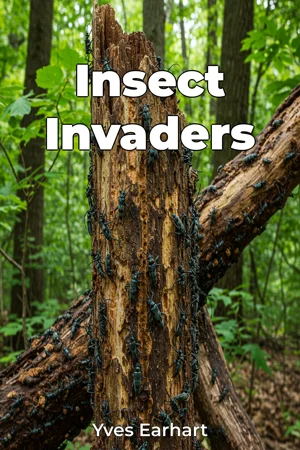
Imagine a world where the delicate balance of nature is constantly threatened by silent, creeping invaders. *Insect Invaders* delves into the increasingly critical issue of invasive insect species and their devastating impact on ecosystems worldwide. This book is not just about bugs; it’s about understanding a global crisis that affects agriculture, forestry, public health, and the very fabric of our natural world. We explore two central themes. First, we examine the biological characteristics that enable certain insect species to become successful invaders. Understanding their adaptability, reproductive strategies, and feeding habits is crucial to predicting and managing their spread. Second, we analyze the pathways and patterns of insect invasions, tracing their movement across continents and identifying the human activities that facilitate their dispersal, such as global trade and transportation. These topics are vital because they provide the foundation for developing effective strategies to mitigate the ecological and economic consequences of these invasions. The historical context is essential. Over centuries, human activities have inadvertently introduced insects to new environments. We’ll explore how the acceleration of global trade in recent decades has dramatically increased the rate of insect invasions, creating a complex web of ecological disruption. No specific scientific background is needed to understand *Insect Invaders*, as we provide clear explanations of ecological concepts and biological processes. Our central argument is that invasive insect species represent a significant and growing threat to global biodiversity and ecosystem stability. The book demonstrates that a comprehensive understanding of the biology and ecology of these invaders, coupled with proactive management strategies, is essential to minimize their destructive impacts. The book is structured in three parts. Part 1 introduces the fundamental concepts of insect invasions, defining key terms, explaining the ecological principles that govern invasion dynamics, and outlining the major pathways of insect dispersal. Part 2 explores the impact of invasive insects on various ecosystems, from forests and agricultural lands to aquatic environments. We will analyze case studies of particularly damaging invaders, such as the emerald ash borer, the Asian longhorned beetle, and the brown marmorated stink bug, examining their ecological effects, economic costs, and the challenges of their control. Part 3 focuses on strategies for preventing and managing insect invasions. We discuss a range of approaches, including biosecurity measures, early detection programs, biological control methods, and integrated pest management strategies. The book concludes by emphasizing the need for international cooperation and a coordinated global response to address this growing threat. Evidence is drawn from a wide range of sources, including scientific publications, government reports, and international databases on invasive species. We incorporate data from field studies, laboratory experiments, and modeling exercises to support our analyses. *Insect Invaders* connects to several other fields. It has links to economics, as the cost of managing insect invasions reaches billions of dollars annually. It has connections to political science, as effective management requires international agreements and policy coordination. It has connections to climatology, as changing environmental conditions influence the spread and establishment of invasive insects. This book offers a global analysis of the problem, synthesizing information from diverse geographic regions and ecological systems to provide a broad and integrated perspective on the issue of invasive insect species. *Insect Invaders* employs a scientific and accessible writing style, presenting complex information in a clear and engaging manner. The target audience includes students, researchers, policymakers, and anyone interested in environmental science, conservation biology, and the management of invasive species. It is valuable for those who want to understand the ecological challenges and develop effective strategies for mitigating their impacts. As a work of non-fiction, *Insect Invaders* strives for accuracy, objectivity, and a balanced presentation of information, adhering to the standards of scientific scholarship. The scope of the book is limited to insect species, excluding other types of invasive organisms. While we address the management of invasive insects, we do not provide detailed instructions for specific control methods. Instead, we focus on the underlying principles and strategies for managing these invasions. The information in *Insect Invaders* can be applied in numerous ways. It can inform policy decisions related to biosecurity and trade regulations. It can guide the development of more effective pest management strategies in agriculture and forestry. And it can raise public awareness about the importance of preventing the introduction and spread of invasive species. There are ongoing debates about the best approaches to managing invasive insects, particularly regarding the use of biological control agents and the potential risks of unintended ecological consequences. *Insect Invaders* addresses these controversies by presenting different perspectives and evaluating the evidence for and against various management options.
Imagine a world where the delicate balance of nature is constantly threatened by silent, creeping invaders. *Insect Invaders* delves into the increasingly critical issue of invasive insect species and their devastating impact on ecosystems worldwide. This book is not just about bugs; it’s about understanding a global crisis that affects agriculture, forestry, public health, and the very fabric of our natural world. We explore two central themes. First, we examine the biological characteristics that enable certain insect species to become successful invaders. Understanding their adaptability, reproductive strategies, and feeding habits is crucial to predicting and managing their spread. Second, we analyze the pathways and patterns of insect invasions, tracing their movement across continents and identifying the human activities that facilitate their dispersal, such as global trade and transportation. These topics are vital because they provide the foundation for developing effective strategies to mitigate the ecological and economic consequences of these invasions. The historical context is essential. Over centuries, human activities have inadvertently introduced insects to new environments. We’ll explore how the acceleration of global trade in recent decades has dramatically increased the rate of insect invasions, creating a complex web of ecological disruption. No specific scientific background is needed to understand *Insect Invaders*, as we provide clear explanations of ecological concepts and biological processes. Our central argument is that invasive insect species represent a significant and growing threat to global biodiversity and ecosystem stability. The book demonstrates that a comprehensive understanding of the biology and ecology of these invaders, coupled with proactive management strategies, is essential to minimize their destructive impacts. The book is structured in three parts. Part 1 introduces the fundamental concepts of insect invasions, defining key terms, explaining the ecological principles that govern invasion dynamics, and outlining the major pathways of insect dispersal. Part 2 explores the impact of invasive insects on various ecosystems, from forests and agricultural lands to aquatic environments. We will analyze case studies of particularly damaging invaders, such as the emerald ash borer, the Asian longhorned beetle, and the brown marmorated stink bug, examining their ecological effects, economic costs, and the challenges of their control. Part 3 focuses on strategies for preventing and managing insect invasions. We discuss a range of approaches, including biosecurity measures, early detection programs, biological control methods, and integrated pest management strategies. The book concludes by emphasizing the need for international cooperation and a coordinated global response to address this growing threat. Evidence is drawn from a wide range of sources, including scientific publications, government reports, and international databases on invasive species. We incorporate data from field studies, laboratory experiments, and modeling exercises to support our analyses. *Insect Invaders* connects to several other fields. It has links to economics, as the cost of managing insect invasions reaches billions of dollars annually. It has connections to political science, as effective management requires international agreements and policy coordination. It has connections to climatology, as changing environmental conditions influence the spread and establishment of invasive insects. This book offers a global analysis of the problem, synthesizing information from diverse geographic regions and ecological systems to provide a broad and integrated perspective on the issue of invasive insect species. *Insect Invaders* employs a scientific and accessible writing style, presenting complex information in a clear and engaging manner. The target audience includes students, researchers, policymakers, and anyone interested in environmental science, conservation biology, and the management of invasive species. It is valuable for those who want to understand the ecological challenges and develop effective strategies for mitigating their impacts. As a work of non-fiction, *Insect Invaders* strives for accuracy, objectivity, and a balanced presentation of information, adhering to the standards of scientific scholarship. The scope of the book is limited to insect species, excluding other types of invasive organisms. While we address the management of invasive insects, we do not provide detailed instructions for specific control methods. Instead, we focus on the underlying principles and strategies for managing these invasions. The information in *Insect Invaders* can be applied in numerous ways. It can inform policy decisions related to biosecurity and trade regulations. It can guide the development of more effective pest management strategies in agriculture and forestry. And it can raise public awareness about the importance of preventing the introduction and spread of invasive species. There are ongoing debates about the best approaches to managing invasive insects, particularly regarding the use of biological control agents and the potential risks of unintended ecological consequences. *Insect Invaders* addresses these controversies by presenting different perspectives and evaluating the evidence for and against various management options.
"Insect Invaders" explores the escalating crisis of invasive insect species and their profound effects on global ecosystems, agriculture, and human health. The book highlights how certain biological traits, such as adaptability and rapid reproduction, enable these insects to thrive in new environments. It also examines the role of global trade and transportation in facilitating their spread across continents, leading to ecological disruption and economic costs. The book is structured into three parts, starting with an introduction to the fundamental concepts of insect invasions, including key terms and pathways of dispersal. It progresses to analyze the impact of these invaders on diverse ecosystems, using case studies like the emerald ash borer to illustrate ecological and economic consequences. Finally, it focuses on prevention and management strategies, emphasizing the need for international cooperation and proactive measures to mitigate the destructive impacts of invasive insect species. This book uniquely synthesizes information from diverse regions, offering a broad perspective on the issue. By connecting the science to economics, political science, and climatology, "Insect Invaders" provides a comprehensive understanding of the challenges and strategies needed for effective biosecurity, pest management, and conservation biology. It serves as a valuable resource for students, researchers, policymakers, and anyone concerned with environmental science and ecosystem stability.
Book Details
ISBN
9788233967277
Publisher
Publifye AS
Your Licenses
You don't own any licenses for this book
Purchase a license below to unlock this book and download the EPUB.
Purchase License
Select a tier to unlock this book
Need bulk licensing?
Contact us for enterprise agreements.