
About This Book
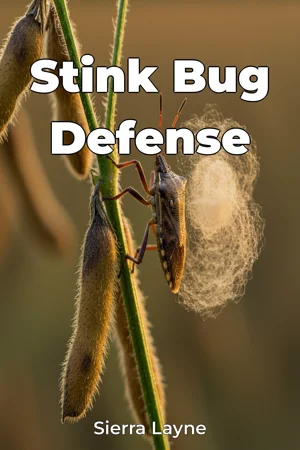
Have you ever wondered what triggers the pungent aroma that suddenly fills the air when a stink bug feels threatened, or why these seemingly harmless insects are so determined to find their way into our homes? "Stink Bug Defense" delves into the fascinating world of these malodorous creatures, exploring the dual nature of their defense mechanisms and invasive behaviors. This book examines the biological basis of their stink, the evolutionary reasons behind it, and the escalating challenges they pose to homeowners and agriculture. The central argument of "Stink Bug Defense" is that understanding the complex interplay between a stink bug's defensive secretions and their adaptive strategies for survival is crucial for developing effective and sustainable management solutions. The book highlights the importance of viewing stink bugs not merely as pests, but as organisms with intricate biological and ecological roles. This book is structured to provide a comprehensive understanding of stink bugs, beginning with an introduction to their taxonomy, morphology, and global distribution. It details the chemical composition of their defensive secretions, explaining how these compounds are produced, stored, and released. The book dedicates significant attention to the evolutionary aspects of stink bug defense, exploring how the stink evolved as a survival mechanism. We present evidence derived from laboratory experiments, field observations, and chemical analyses of stink bug secretions, offering readers substantial support for each claim. Original research will show the varying effectiveness of different compounds on different predators. Furthermore, "Stink Bug Defense" examines the factors driving stink bug invasions into human habitats, from climate change and habitat loss to the insects' inherent attraction to certain colors and light sources. It analyzes the ecological impact of invasive stink bug species on native ecosystems and agricultural crops, focusing on the economic consequences for farmers and the environmental ramifications of widespread pesticide use. This study connects to the fields of entomology, ecology, and chemistry. From entomology, it draws upon detailed species-specific research and behavioral studies. From ecology, it considers the environmental factors that contribute to stink bug proliferation. From chemistry, it analyzes the composition, synthesis, and effects of the stink bug's defensive compounds. This interdisciplinary approach strengthens the analysis of stink bugs as complex organisms interacting within a larger ecological landscape. The book also offers a unique perspective by emphasizing the need for integrated pest management strategies that minimize reliance on chemical insecticides, advocating for biological control methods and preventative measures to reduce stink bug populations. This approach challenges the conventional view of stink bugs as simply pests to be eradicated, promoting a more holistic and environmentally conscious approach. "Stink Bug Defense" adopts a fact-based, scientific style, presenting complicated information in an accessible manner. It is targeted toward a broad audience, including homeowners, gardeners, farmers, students of biology and entomology, and anyone interested in learning more about these perplexing insects. The exploration of stink bug defense is limited to terrestrial species and does not deeply investigate aquatic stink bugs. The information provided in "Stink Bug Defense" will empower readers to make informed decisions about managing stink bugs in their homes and gardens, offering practical strategies for preventing infestations and minimizing their impact. It also addresses controversies surrounding pest control methods, presenting a balanced view of the debate over chemical versus biological control. This book provides a solid foundation for understanding these insects.
Have you ever wondered what triggers the pungent aroma that suddenly fills the air when a stink bug feels threatened, or why these seemingly harmless insects are so determined to find their way into our homes? "Stink Bug Defense" delves into the fascinating world of these malodorous creatures, exploring the dual nature of their defense mechanisms and invasive behaviors. This book examines the biological basis of their stink, the evolutionary reasons behind it, and the escalating challenges they pose to homeowners and agriculture. The central argument of "Stink Bug Defense" is that understanding the complex interplay between a stink bug's defensive secretions and their adaptive strategies for survival is crucial for developing effective and sustainable management solutions. The book highlights the importance of viewing stink bugs not merely as pests, but as organisms with intricate biological and ecological roles. This book is structured to provide a comprehensive understanding of stink bugs, beginning with an introduction to their taxonomy, morphology, and global distribution. It details the chemical composition of their defensive secretions, explaining how these compounds are produced, stored, and released. The book dedicates significant attention to the evolutionary aspects of stink bug defense, exploring how the stink evolved as a survival mechanism. We present evidence derived from laboratory experiments, field observations, and chemical analyses of stink bug secretions, offering readers substantial support for each claim. Original research will show the varying effectiveness of different compounds on different predators. Furthermore, "Stink Bug Defense" examines the factors driving stink bug invasions into human habitats, from climate change and habitat loss to the insects' inherent attraction to certain colors and light sources. It analyzes the ecological impact of invasive stink bug species on native ecosystems and agricultural crops, focusing on the economic consequences for farmers and the environmental ramifications of widespread pesticide use. This study connects to the fields of entomology, ecology, and chemistry. From entomology, it draws upon detailed species-specific research and behavioral studies. From ecology, it considers the environmental factors that contribute to stink bug proliferation. From chemistry, it analyzes the composition, synthesis, and effects of the stink bug's defensive compounds. This interdisciplinary approach strengthens the analysis of stink bugs as complex organisms interacting within a larger ecological landscape. The book also offers a unique perspective by emphasizing the need for integrated pest management strategies that minimize reliance on chemical insecticides, advocating for biological control methods and preventative measures to reduce stink bug populations. This approach challenges the conventional view of stink bugs as simply pests to be eradicated, promoting a more holistic and environmentally conscious approach. "Stink Bug Defense" adopts a fact-based, scientific style, presenting complicated information in an accessible manner. It is targeted toward a broad audience, including homeowners, gardeners, farmers, students of biology and entomology, and anyone interested in learning more about these perplexing insects. The exploration of stink bug defense is limited to terrestrial species and does not deeply investigate aquatic stink bugs. The information provided in "Stink Bug Defense" will empower readers to make informed decisions about managing stink bugs in their homes and gardens, offering practical strategies for preventing infestations and minimizing their impact. It also addresses controversies surrounding pest control methods, presenting a balanced view of the debate over chemical versus biological control. This book provides a solid foundation for understanding these insects.
"Stink Bug Defense" explores the intriguing world of stink bugs, focusing on their defensive mechanisms and invasive behaviors. The book delves into the science behind their characteristic odor, revealing how the stink functions as a crucial survival tool. It also addresses the reasons these insects often invade our homes, linking it to factors like climate change and their attraction to specific light sources. Understanding the intricacies of their biology and ecology is key to developing effective and sustainable pest management solutions. This book emphasizes the importance of integrated pest management, advocating for biological control methods over heavy reliance on insecticides. It examines the chemical composition of their defensive secretions and their evolutionary purpose. The book progresses logically, starting with an introduction to stink bug taxonomy and distribution, then moving to the chemical and evolutionary aspects of their defense. It also analyzes their ecological impact as invasive species. "Stink Bug Defense" offers a comprehensive, fact-based examination of these malodorous creatures, making it a valuable resource for homeowners, gardeners, farmers, and students interested in entomology, ecology, and chemistry. By understanding stink bugs, readers are empowered to make informed decisions about pest control and appreciate the complex roles these insects play within our environment.
Book Details
ISBN
9788233967239
Publisher
Publifye AS
Your Licenses
You don't own any licenses for this book
Purchase a license below to unlock this book and download the EPUB.
Purchase License
Select a tier to unlock this book
Need bulk licensing?
Contact us for enterprise agreements.