
About This Book
What if the key to surviving the next global catastrophe lies not in technological innovation, but in understanding the resilience of one of Earth's most persistent creatures? "Roach Survival" delves into the biological secrets behind the cockroach's near-indestructibility, exploring how these often-reviled insects have thrived for millions of years and their surprising resistance to nuclear radiation. This book elucidates the science of survival, examining the cockroach as a model organism for comprehending adaptation, resilience, and the very nature of life itself. This book explores three central topics: the cockroach's unique physiological adaptations, its remarkable ability to withstand extreme environmental conditions including radiation, and the evolutionary history that has shaped its resilience. Understanding these facets is crucial because it provides insights into the fundamental principles of survival, adaptation, and the potential limits of life on Earth. In a world facing increasing environmental challenges, learning from nature's most successful survivors is more relevant than ever. The cockroach has existed for over 300 million years, predating dinosaurs and enduring multiple extinction events. This deep history offers a valuable context for understanding its inherent advantages. The book investigates the cockroach’s evolutionary journey, tracing its lineage and exploring the factors that contributed to its enduring success. Readers will not require specialized scientific knowledge. The book is written to be accessible to a broad audience with an interest in biology and natural history. The central argument of "Roach Survival" is that the cockroach's resilience provides a powerful case study for understanding the biological mechanisms of survival and adaptation. By comprehensively examining its physiology, evolutionary history, and specific adaptations, the book demonstrates how this creature represents a masterclass in overcoming environmental challenges, including exposure to nuclear fallout levels tolerated by few other organisms. This argument is important because it challenges the conventional view of cockroaches as mere pests and elevates their significance as models for scientific study. The book begins by introducing the cockroach and its place in the natural world. It then launches into an exploration of its physiology, detailing key features such as its segmented body, exoskeleton, efficient respiratory system, and unique reproductive strategies. A dedicated section focuses on the cockroach's resistance to radiation, examining the cellular and molecular mechanisms that enable it to withstand levels of radiation that would be lethal to most other animals. The book then considers the evolutionary context, tracing the cockroach's lineage and exploring the selective pressures that have shaped its resilience. The culmination of the book addresses the practical implications of this knowledge, exploring how insights from cockroach biology can inform fields such as medicine, materials science, and disaster preparedness. The book presents a wide array of evidence, drawing from scientific literature in fields such as entomology, radiation biology, and evolutionary biology. Original data from experimental studies on cockroach physiology and radiation resistance will also be showcased. Methodologies include comparative anatomy, molecular biology techniques, and experimental studies using controlled radiation exposure. "Roach Survival" connects to several other fields. First, it is pertinent to environmental science, informing our understanding of how organisms adapt to extreme environments and pollutant exposure. Second, it connects to astrobiology, offering insights into the potential for life to exist in harsh conditions on other planets. Lastly, it is connected to disaster management, providing knowledge that could aid in developing strategies for surviving and mitigating the effects of nuclear disasters or other catastrophic events. This book takes a unique approach by placing the cockroach at the center of a broad exploration of survival and adaptation. Rather than simply focusing on the pest control aspects, "Roach Survival" elevates the cockroach to a model organism, highlighting its value for scientific research and its potential to inform solutions to real-world problems. The book adopts a conversational yet informative tone, balancing scientific accuracy with accessibility for a general audience. The writing style is clear and engaging, using vivid descriptions and compelling examples to illustrate complex scientific concepts. The target audience includes nature enthusiasts, science buffs, students of biology and environmental science, and anyone interested in learning about the secrets of survival. The book will appeal to readers who enjoy exploring the wonders of the natural world and gaining insights into the potential for life to thrive in unexpected places. As a work of science life sciences/nature, "Roach Survival" adheres to genre conventions by presenting accurate information, citing credible sources, and maintaining a clear distinction between fact and speculation. The scope of the book is limited to the biological and evolutionary aspects of cockroach survival, with a particular focus on radiation resistance. It does not delve into the details of pest control methods or the social impact of cockroach infestations. The information in "Roach Survival" can be applied to various real-world scenarios. For example, understanding the cockroach's DNA repair mechanisms could inform research into new cancer therapies. Its exoskeleton’s structural properties can be used as inspiration for designing resilient materials. Finally, insights into its survival strategies can provide guidance for preparing for and responding to environmental disasters. The book addresses the ongoing debate about the potential long-term effects of low-level radiation exposure on humans. By examining how cockroaches cope with radiation, the book provides a unique perspective on this complex issue, contributing to a more nuanced understanding of radiation's impact on living organisms.
What if the key to surviving the next global catastrophe lies not in technological innovation, but in understanding the resilience of one of Earth's most persistent creatures? "Roach Survival" delves into the biological secrets behind the cockroach's near-indestructibility, exploring how these often-reviled insects have thrived for millions of years and their surprising resistance to nuclear radiation. This book elucidates the science of survival, examining the cockroach as a model organism for comprehending adaptation, resilience, and the very nature of life itself. This book explores three central topics: the cockroach's unique physiological adaptations, its remarkable ability to withstand extreme environmental conditions including radiation, and the evolutionary history that has shaped its resilience. Understanding these facets is crucial because it provides insights into the fundamental principles of survival, adaptation, and the potential limits of life on Earth. In a world facing increasing environmental challenges, learning from nature's most successful survivors is more relevant than ever. The cockroach has existed for over 300 million years, predating dinosaurs and enduring multiple extinction events. This deep history offers a valuable context for understanding its inherent advantages. The book investigates the cockroach’s evolutionary journey, tracing its lineage and exploring the factors that contributed to its enduring success. Readers will not require specialized scientific knowledge. The book is written to be accessible to a broad audience with an interest in biology and natural history. The central argument of "Roach Survival" is that the cockroach's resilience provides a powerful case study for understanding the biological mechanisms of survival and adaptation. By comprehensively examining its physiology, evolutionary history, and specific adaptations, the book demonstrates how this creature represents a masterclass in overcoming environmental challenges, including exposure to nuclear fallout levels tolerated by few other organisms. This argument is important because it challenges the conventional view of cockroaches as mere pests and elevates their significance as models for scientific study. The book begins by introducing the cockroach and its place in the natural world. It then launches into an exploration of its physiology, detailing key features such as its segmented body, exoskeleton, efficient respiratory system, and unique reproductive strategies. A dedicated section focuses on the cockroach's resistance to radiation, examining the cellular and molecular mechanisms that enable it to withstand levels of radiation that would be lethal to most other animals. The book then considers the evolutionary context, tracing the cockroach's lineage and exploring the selective pressures that have shaped its resilience. The culmination of the book addresses the practical implications of this knowledge, exploring how insights from cockroach biology can inform fields such as medicine, materials science, and disaster preparedness. The book presents a wide array of evidence, drawing from scientific literature in fields such as entomology, radiation biology, and evolutionary biology. Original data from experimental studies on cockroach physiology and radiation resistance will also be showcased. Methodologies include comparative anatomy, molecular biology techniques, and experimental studies using controlled radiation exposure. "Roach Survival" connects to several other fields. First, it is pertinent to environmental science, informing our understanding of how organisms adapt to extreme environments and pollutant exposure. Second, it connects to astrobiology, offering insights into the potential for life to exist in harsh conditions on other planets. Lastly, it is connected to disaster management, providing knowledge that could aid in developing strategies for surviving and mitigating the effects of nuclear disasters or other catastrophic events. This book takes a unique approach by placing the cockroach at the center of a broad exploration of survival and adaptation. Rather than simply focusing on the pest control aspects, "Roach Survival" elevates the cockroach to a model organism, highlighting its value for scientific research and its potential to inform solutions to real-world problems. The book adopts a conversational yet informative tone, balancing scientific accuracy with accessibility for a general audience. The writing style is clear and engaging, using vivid descriptions and compelling examples to illustrate complex scientific concepts. The target audience includes nature enthusiasts, science buffs, students of biology and environmental science, and anyone interested in learning about the secrets of survival. The book will appeal to readers who enjoy exploring the wonders of the natural world and gaining insights into the potential for life to thrive in unexpected places. As a work of science life sciences/nature, "Roach Survival" adheres to genre conventions by presenting accurate information, citing credible sources, and maintaining a clear distinction between fact and speculation. The scope of the book is limited to the biological and evolutionary aspects of cockroach survival, with a particular focus on radiation resistance. It does not delve into the details of pest control methods or the social impact of cockroach infestations. The information in "Roach Survival" can be applied to various real-world scenarios. For example, understanding the cockroach's DNA repair mechanisms could inform research into new cancer therapies. Its exoskeleton’s structural properties can be used as inspiration for designing resilient materials. Finally, insights into its survival strategies can provide guidance for preparing for and responding to environmental disasters. The book addresses the ongoing debate about the potential long-term effects of low-level radiation exposure on humans. By examining how cockroaches cope with radiation, the book provides a unique perspective on this complex issue, contributing to a more nuanced understanding of radiation's impact on living organisms.
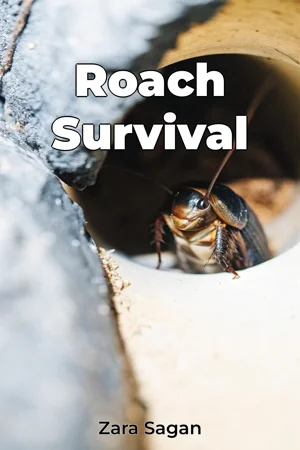
"Roach Survival" explores the remarkable resilience of cockroaches, positioning them as model organisms for understanding adaptation and survival. This book unveils how these creatures have thrived for millions of years, even exhibiting surprising resistance to nuclear radiation. Delving into the cockroach's unique physiology and evolutionary history, the book emphasizes the biological mechanisms that enable their survival. It highlights intriguing facts, such as their ability to withstand radiation levels lethal to most animals and their existence predating dinosaurs by millions of years. The book progresses by first introducing the cockroach and its place in nature, then systematically exploring its physiology, radiation resistance, and evolutionary journey. "Roach Survival" uses this deep dive to draw parallels to broader scientific fields. The insights gained from studying cockroach biology could inform advancements in medicine, materials science, and even disaster preparedness, demonstrating the practical implications of understanding nature's most successful survivors.
Book Details
ISBN
9788233967192
Publisher
Publifye AS
Your Licenses
You don't own any licenses for this book
Purchase a license below to unlock this book and download the EPUB.
Purchase License
Select a tier to unlock this book
Need bulk licensing?
Contact us for enterprise agreements.