
About This Book
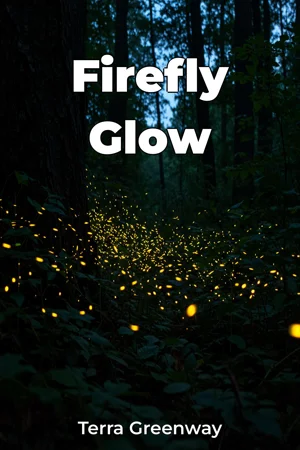
Have you ever wondered at the captivating dance of fireflies on a warm summer night? "Firefly Glow" delves into the fascinating world of these bioluminescent beetles, exploring the science behind their light production, the reasons behind their flashing patterns, and the crucial role this glow plays in their survival and reproduction. This book illuminates not just the "how" of firefly bioluminescence, but also the "why," offering readers a comprehensive understanding of these enchanting creatures within their ecological context. This exploration is structured around three primary areas: the biochemical process of light creation, the communicative function of firefly flashes, and the ecological pressures that have shaped these behaviors. Understanding these areas is important because it sheds light on broader biological principles, such as chemical reactions in living organisms, animal communication strategies, and evolutionary adaptation to environmental challenges. To understand firefly glow, the book first grounds the reader in the basics of insect biology and bioluminescence generally, before focusing specifically on fireflies. This includes an overview of insect anatomy, classification, and the basic chemical principles underlying light production in living organisms. The central argument of "Firefly Glow" is that firefly bioluminescence is a multifaceted adaptation that plays a critical role in their survival and reproductive success. This argument extends beyond a simple explanation of how light is produced to an understanding of the intricate communication system it enables and how it shapes their interactions within their environment. The book begins by introducing the main concepts of bioluminescence and firefly anatomy. It then develops these ideas across several interconnected themes. First, the chemical reactions behind light production, detailing the roles of luciferin, luciferase, ATP, and oxygen in the process. Second, it delves into the complexities of firefly communication, examining the diverse flash patterns used for mate attraction, species recognition, and even predatory mimicry. Third, the ecological pressures that have molded these behaviors, including habitat loss, light pollution, and pesticide use, are explored, as are the conservation challenges facing firefly populations worldwide. The book culminates in a discussion of practical applications and implications, focusing on what we can do to preserve these natural wonders and protect their habitats. The evidence and research presented within "Firefly Glow" draw upon a wide range of scientific disciplines, including biochemistry, entomology, ecology, and behavioral biology. The book integrates findings from field studies, laboratory experiments, and statistical analyses to support its arguments. It utilizes primary research articles, expert interviews, and photographic documentation to provide a rich and comprehensive understanding of the subject matter. The book also connects to other fields, such as environmental science, conservation biology, and even astrobiology (the study of potential life beyond Earth, since bioluminescence might be a biosignature). These connections enhance the book's argument by demonstrating the interconnectedness of life on Earth and the importance of understanding biological processes in a broader context. "Firefly Glow" stands out due to its accessible presentation of complex scientific information. It avoids overly technical jargon and employs clear explanations, helpful diagrams, and engaging anecdotes to make the subject matter approachable for a wide audience. The book is aimed at nature enthusiasts, amateur entomologists, students, and anyone with a general interest in science and the natural world. It is also relevant to educators looking for engaging material to teach concepts related to biology, ecology, and conservation. As a work of science-based nature writing, "Firefly Glow" strives for accuracy, clarity, and factual depth. The book’s scope is intentionally broad, covering various aspects of firefly biology and ecology, but it focuses primarily on North American species, with some references to well-studied species in other regions. Detailed phylogenetic analyses are intentionally omitted to maintain accessibility. Readers can apply the information in "Firefly Glow" to better understand their local environments, support firefly conservation efforts, and educate others about the importance of protecting these fascinating creatures. They can also use the book as a resource for identifying different firefly species and observing their behaviors in the field. The book acknowledges the ongoing debates regarding the impacts of artificial light at night (ALAN) on firefly populations. While there is a consensus that ALAN is harmful, the specific mechanisms and the relative sensitivity of different species remain active areas of research. The ethical considerations of interfering with natural processes are also addressed.
Have you ever wondered at the captivating dance of fireflies on a warm summer night? "Firefly Glow" delves into the fascinating world of these bioluminescent beetles, exploring the science behind their light production, the reasons behind their flashing patterns, and the crucial role this glow plays in their survival and reproduction. This book illuminates not just the "how" of firefly bioluminescence, but also the "why," offering readers a comprehensive understanding of these enchanting creatures within their ecological context. This exploration is structured around three primary areas: the biochemical process of light creation, the communicative function of firefly flashes, and the ecological pressures that have shaped these behaviors. Understanding these areas is important because it sheds light on broader biological principles, such as chemical reactions in living organisms, animal communication strategies, and evolutionary adaptation to environmental challenges. To understand firefly glow, the book first grounds the reader in the basics of insect biology and bioluminescence generally, before focusing specifically on fireflies. This includes an overview of insect anatomy, classification, and the basic chemical principles underlying light production in living organisms. The central argument of "Firefly Glow" is that firefly bioluminescence is a multifaceted adaptation that plays a critical role in their survival and reproductive success. This argument extends beyond a simple explanation of how light is produced to an understanding of the intricate communication system it enables and how it shapes their interactions within their environment. The book begins by introducing the main concepts of bioluminescence and firefly anatomy. It then develops these ideas across several interconnected themes. First, the chemical reactions behind light production, detailing the roles of luciferin, luciferase, ATP, and oxygen in the process. Second, it delves into the complexities of firefly communication, examining the diverse flash patterns used for mate attraction, species recognition, and even predatory mimicry. Third, the ecological pressures that have molded these behaviors, including habitat loss, light pollution, and pesticide use, are explored, as are the conservation challenges facing firefly populations worldwide. The book culminates in a discussion of practical applications and implications, focusing on what we can do to preserve these natural wonders and protect their habitats. The evidence and research presented within "Firefly Glow" draw upon a wide range of scientific disciplines, including biochemistry, entomology, ecology, and behavioral biology. The book integrates findings from field studies, laboratory experiments, and statistical analyses to support its arguments. It utilizes primary research articles, expert interviews, and photographic documentation to provide a rich and comprehensive understanding of the subject matter. The book also connects to other fields, such as environmental science, conservation biology, and even astrobiology (the study of potential life beyond Earth, since bioluminescence might be a biosignature). These connections enhance the book's argument by demonstrating the interconnectedness of life on Earth and the importance of understanding biological processes in a broader context. "Firefly Glow" stands out due to its accessible presentation of complex scientific information. It avoids overly technical jargon and employs clear explanations, helpful diagrams, and engaging anecdotes to make the subject matter approachable for a wide audience. The book is aimed at nature enthusiasts, amateur entomologists, students, and anyone with a general interest in science and the natural world. It is also relevant to educators looking for engaging material to teach concepts related to biology, ecology, and conservation. As a work of science-based nature writing, "Firefly Glow" strives for accuracy, clarity, and factual depth. The book’s scope is intentionally broad, covering various aspects of firefly biology and ecology, but it focuses primarily on North American species, with some references to well-studied species in other regions. Detailed phylogenetic analyses are intentionally omitted to maintain accessibility. Readers can apply the information in "Firefly Glow" to better understand their local environments, support firefly conservation efforts, and educate others about the importance of protecting these fascinating creatures. They can also use the book as a resource for identifying different firefly species and observing their behaviors in the field. The book acknowledges the ongoing debates regarding the impacts of artificial light at night (ALAN) on firefly populations. While there is a consensus that ALAN is harmful, the specific mechanisms and the relative sensitivity of different species remain active areas of research. The ethical considerations of interfering with natural processes are also addressed.
"Firefly Glow" illuminates the captivating world of fireflies, focusing on their bioluminescence and ecological adaptations. It explores how these insects produce light through a chemical reaction involving luciferin and luciferase, emphasizing that this glow isn't just pretty—it's crucial for communication and survival. Intriguingly, each firefly species uses unique flashing patterns for mate attraction, showcasing the complexity of animal communication. The book uniquely presents complex biochemical and ecological concepts in an accessible manner, making it engaging for a broad audience interested in nature and science. The book progresses logically, starting with an introduction to insect biology and bioluminescence, then detailing the chemical reactions responsible for light production. It further examines the diverse flash patterns used for communication and the ecological pressures, like light pollution and habitat loss, that threaten firefly populations. By connecting firefly biology to broader biological principles and conservation concerns, "Firefly Glow" underscores the importance of protecting these enchanting creatures and their habitats, offering insights applicable to local environments and conservation efforts.
Book Details
ISBN
9788233967161
Publisher
Publifye AS
Your Licenses
You don't own any licenses for this book
Purchase a license below to unlock this book and download the EPUB.
Purchase License
Select a tier to unlock this book
Need bulk licensing?
Contact us for enterprise agreements.