
About This Book
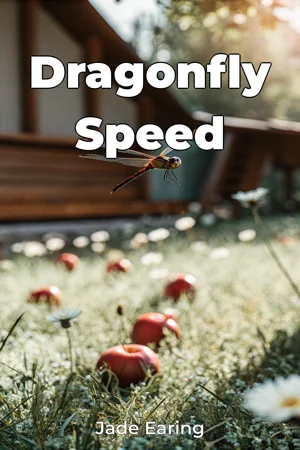
Have you ever wondered what makes dragonflies such efficient hunters in the insect world? "Dragonfly Speed" delves into the science behind these aerial predators, exploring their unique flight mechanics and sophisticated predatory behaviors. This book aims to provide a comprehensive understanding of dragonflies, emphasizing how their speed and agility contribute to their success. Our investigation focuses on three main areas: the biomechanics of dragonfly flight, their visual and neural adaptations for hunting, and the ecological implications of their predatory role. These topics are crucial because they reveal how evolution has shaped dragonflies into highly specialized and effective hunters, giving insights into broader principles of aerodynamics, neurobiology, and ecological balance. The book relies on a foundation of scientific research, drawing upon studies in entomology, biomechanics, and neuroethology. We’ll explore historical perspectives on insect flight, from early observations to modern high-speed video analysis and computational modeling. No prior knowledge is required, as we will define key terms and concepts. The central argument of "Dragonfly Speed" is that the dragonfly's exceptional flight capabilities are directly linked to its hunting success, making it a model organism for understanding predator-prey dynamics. This argument matters because it provides a clear example of how physical adaptations and behavioral strategies can drive ecological interactions. The book is divided into three parts. First, we introduce the basic biology of dragonflies, focusing on their anatomy and life cycle. Second, we delve into the mechanics of their flight, examining their wing structure, muscle physiology, and aerodynamic principles that enable high speed and maneuverability. This section incorporates detailed analysis of high-speed video recordings of dragonflies in flight. Third, we explore their sensory systems, particularly vision, and how their brains process visual information to track and intercept prey. We also investigate the dragonfly's hunting strategies, with examples of field observations and laboratory experiments. The book concludes by considering the role of dragonflies in ecosystems and the conservation challenges they face. The evidence presented includes data from wind tunnel experiments, neurological studies using electrophysiology, and ecological surveys of dragonfly populations in different habitats. Data visualization techniques will be used to present complex information in an accessible format. "Dragonfly Speed" connects to several disciplines, including engineering (biomimicry of dragonfly flight), neuroscience (understanding insect vision and neural processing), and conservation biology (assessing the impact of environmental changes on dragonfly populations). These interdisciplinary connections enrich our understanding of dragonflies and highlight their importance beyond the realm of entomology. This book adopts a data-driven approach. We present scientific findings in a clear and concise manner, avoiding jargon and focusing on the key concepts. Diagrams, photographs, and illustrations are used throughout to enhance understanding. The target audience includes students, researchers, and anyone with an interest in biology, entomology, or nature in general. The book provides a scientific exploration of dragonflies that’s accessible to a broad readership. As a work of science writing, "Dragonfly Speed" aims to be accurate, thorough, and engaging, adhering to the standards of evidence-based reporting. While covering many aspects of dragonfly biology, the book is primarily focused on their flight and hunting behavior, with less emphasis on taxonomy or evolutionary history. The information found in "Dragonfly Speed" can be applied to practical problems like improving the design of micro-aerial vehicles. While there is general agreement on the basic principles of dragonfly flight, there are ongoing debates about the relative importance of different sensory cues in prey detection and the neural mechanisms underlying their hunting decisions. We will present these different viewpoints and examine the evidence supporting each.
Have you ever wondered what makes dragonflies such efficient hunters in the insect world? "Dragonfly Speed" delves into the science behind these aerial predators, exploring their unique flight mechanics and sophisticated predatory behaviors. This book aims to provide a comprehensive understanding of dragonflies, emphasizing how their speed and agility contribute to their success. Our investigation focuses on three main areas: the biomechanics of dragonfly flight, their visual and neural adaptations for hunting, and the ecological implications of their predatory role. These topics are crucial because they reveal how evolution has shaped dragonflies into highly specialized and effective hunters, giving insights into broader principles of aerodynamics, neurobiology, and ecological balance. The book relies on a foundation of scientific research, drawing upon studies in entomology, biomechanics, and neuroethology. We’ll explore historical perspectives on insect flight, from early observations to modern high-speed video analysis and computational modeling. No prior knowledge is required, as we will define key terms and concepts. The central argument of "Dragonfly Speed" is that the dragonfly's exceptional flight capabilities are directly linked to its hunting success, making it a model organism for understanding predator-prey dynamics. This argument matters because it provides a clear example of how physical adaptations and behavioral strategies can drive ecological interactions. The book is divided into three parts. First, we introduce the basic biology of dragonflies, focusing on their anatomy and life cycle. Second, we delve into the mechanics of their flight, examining their wing structure, muscle physiology, and aerodynamic principles that enable high speed and maneuverability. This section incorporates detailed analysis of high-speed video recordings of dragonflies in flight. Third, we explore their sensory systems, particularly vision, and how their brains process visual information to track and intercept prey. We also investigate the dragonfly's hunting strategies, with examples of field observations and laboratory experiments. The book concludes by considering the role of dragonflies in ecosystems and the conservation challenges they face. The evidence presented includes data from wind tunnel experiments, neurological studies using electrophysiology, and ecological surveys of dragonfly populations in different habitats. Data visualization techniques will be used to present complex information in an accessible format. "Dragonfly Speed" connects to several disciplines, including engineering (biomimicry of dragonfly flight), neuroscience (understanding insect vision and neural processing), and conservation biology (assessing the impact of environmental changes on dragonfly populations). These interdisciplinary connections enrich our understanding of dragonflies and highlight their importance beyond the realm of entomology. This book adopts a data-driven approach. We present scientific findings in a clear and concise manner, avoiding jargon and focusing on the key concepts. Diagrams, photographs, and illustrations are used throughout to enhance understanding. The target audience includes students, researchers, and anyone with an interest in biology, entomology, or nature in general. The book provides a scientific exploration of dragonflies that’s accessible to a broad readership. As a work of science writing, "Dragonfly Speed" aims to be accurate, thorough, and engaging, adhering to the standards of evidence-based reporting. While covering many aspects of dragonfly biology, the book is primarily focused on their flight and hunting behavior, with less emphasis on taxonomy or evolutionary history. The information found in "Dragonfly Speed" can be applied to practical problems like improving the design of micro-aerial vehicles. While there is general agreement on the basic principles of dragonfly flight, there are ongoing debates about the relative importance of different sensory cues in prey detection and the neural mechanisms underlying their hunting decisions. We will present these different viewpoints and examine the evidence supporting each.
"Dragonfly Speed" explores the fascinating world of dragonflies, focusing on their exceptional flight capabilities and predatory behaviors. It examines how these aerial predators have evolved into highly efficient hunters, offering insights into aerodynamics, neurobiology, and ecological balance. One intriguing fact is that dragonflies possess nearly 360-degree vision, enabling them to spot prey from a considerable distance. The book uses a data-driven approach to present scientific findings, incorporating diagrams and illustrations for clarity. The book delves into the biomechanics of dragonfly flight, their visual and neural adaptations for hunting, and their ecological role. It reveals how their wing structure, muscle physiology, and sensory systems contribute to their remarkable speed and maneuverability. By analyzing high-speed video recordings and neurological studies, "Dragonfly Speed" demonstrates the link between the dragonfly's physical adaptations and hunting success. The book progresses through the basic biology of dragonflies, the mechanics of their flight, and their sensory systems, concluding with their role in ecosystems and conservation challenges.
Book Details
ISBN
9788233967154
Publisher
Publifye AS
Your Licenses
You don't own any licenses for this book
Purchase a license below to unlock this book and download the EPUB.
Purchase License
Select a tier to unlock this book
Need bulk licensing?
Contact us for enterprise agreements.