
About This Book
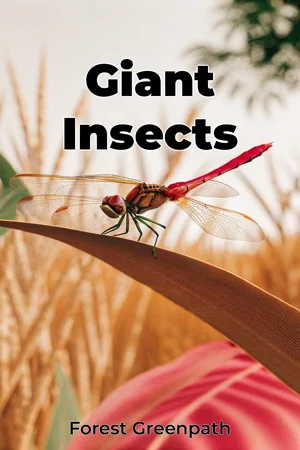
Have you ever wondered what the world looked like when insects ruled, growing to sizes that dwarf even the largest modern creatures? "Giant Insects" delves into the fascinating history and biology of the largest insects to have ever existed, exploring the environmental factors, evolutionary pressures, and biological mechanisms that allowed these colossal arthropods to thrive. This book is crucial because understanding these ancient giants offers insights into fundamental principles of biology, ecology, and climate science, providing a unique perspective on the limits of insect size and the factors that constrain their growth today. This exploration requires an understanding of basic entomology, paleontology, and climatology. We will need to understand atmospheric oxygen levels, the mechanics of insect respiration, and the geological timescale to fully appreciate the context in which these giant insects lived. The central argument of "Giant Insects" is that specific environmental conditions, particularly elevated oxygen levels and different predator-prey dynamics, were critical in enabling insects to attain massive sizes. Further, understanding why insects are limited in size today, despite their evolutionary success, sheds light on broader constraints in animal physiology and evolution. This book is important because it challenges conventional views on insect evolution and highlights the role of environmental factors in shaping life on Earth. The book begins by introducing the concept of gigantism in insects and providing a historical overview of the discovery and study of giant insect fossils. The first section explores the Carboniferous and Permian periods, focusing on the giant dragonflies (Protodonata) like *Meganeura*, which boasted wingspans of up to 70 centimeters. We analyze the environmental conditions, specifically the high atmospheric oxygen levels thought to have existed during these periods, and how these conditions facilitated the evolution of large body sizes by allowing for efficient oxygen delivery to tissues despite insects' inefficient tracheal respiration system. The second major section shifts to the Mesozoic Era and the rise of other giant insects, including large beetles and orthopterans. Here, the book examines the interplay between insect size, predation pressure from early reptiles and birds, and changes in plant life. We’ll discuss how the evolution of flowering plants impacted insect evolution, and whether this had direct or indirect consequences on gigantism. The final section analyzes modern-day giant insects, such as the Goliath beetle and the giant weta, comparing their characteristics and environments to those of their prehistoric counterparts. This section explores the factors that currently limit insect size, including respiratory constraints, exoskeleton limitations, and competition with other animals. The book culminates by discussing the implications of these findings for understanding the future of insect evolution in the face of climate change and habitat loss. The evidence presented in this book includes paleontological data from fossil records, physiological studies of modern insects, and climate models reconstructing past environmental conditions. A unique aspect of the research involves comparing the tracheal systems of extant and extinct insects using advanced imaging techniques to assess their respiratory capacity. "Giant Insects" bridges the gap between paleontology, entomology, and climate science. It also touches on evolutionary biology by examining the constraints on insect size and connecting the dots with environmental factors influencing that development. Furthermore, the book connects to genetics by examining the role of genes in regulating the size of insects and how mutations in these genes might have contributed to gigantism in the past. This book offers a unique perspective by integrating fossil evidence with modern physiological and ecological insights to provide a comprehensive understanding of insect gigantism. It avoids speculation and focuses on data-driven interpretations. The tone is informative and accessible, aiming to engage both scientists and non-scientists interested in natural history. The writing style is clear and concise, with complex scientific concepts explained in an understandable manner. The target audience includes students, researchers, and anyone with an interest in biology, paleontology, and natural history. The book’s value lies in its synthesis of diverse scientific fields to provide a new perspective on insect evolution and the role of environmental factors in shaping life on Earth. This book adheres to the conventions of non-fiction science writing, emphasizing accuracy, clarity, and thoroughness. The scope of the book is limited to the study of insect gigantism, focusing on the largest known insects and the factors that influenced their size. It does not cover all aspects of insect evolution or the entire fossil record. The information in this book can be applied to understanding the impacts of climate change on insect populations, predicting future evolutionary trends, and developing new strategies for pest control. The book addresses ongoing debates about the relative importance of oxygen levels, predation, and competition in limiting insect size, presenting different perspectives and evaluating the evidence for each.
Have you ever wondered what the world looked like when insects ruled, growing to sizes that dwarf even the largest modern creatures? "Giant Insects" delves into the fascinating history and biology of the largest insects to have ever existed, exploring the environmental factors, evolutionary pressures, and biological mechanisms that allowed these colossal arthropods to thrive. This book is crucial because understanding these ancient giants offers insights into fundamental principles of biology, ecology, and climate science, providing a unique perspective on the limits of insect size and the factors that constrain their growth today. This exploration requires an understanding of basic entomology, paleontology, and climatology. We will need to understand atmospheric oxygen levels, the mechanics of insect respiration, and the geological timescale to fully appreciate the context in which these giant insects lived. The central argument of "Giant Insects" is that specific environmental conditions, particularly elevated oxygen levels and different predator-prey dynamics, were critical in enabling insects to attain massive sizes. Further, understanding why insects are limited in size today, despite their evolutionary success, sheds light on broader constraints in animal physiology and evolution. This book is important because it challenges conventional views on insect evolution and highlights the role of environmental factors in shaping life on Earth. The book begins by introducing the concept of gigantism in insects and providing a historical overview of the discovery and study of giant insect fossils. The first section explores the Carboniferous and Permian periods, focusing on the giant dragonflies (Protodonata) like *Meganeura*, which boasted wingspans of up to 70 centimeters. We analyze the environmental conditions, specifically the high atmospheric oxygen levels thought to have existed during these periods, and how these conditions facilitated the evolution of large body sizes by allowing for efficient oxygen delivery to tissues despite insects' inefficient tracheal respiration system. The second major section shifts to the Mesozoic Era and the rise of other giant insects, including large beetles and orthopterans. Here, the book examines the interplay between insect size, predation pressure from early reptiles and birds, and changes in plant life. We’ll discuss how the evolution of flowering plants impacted insect evolution, and whether this had direct or indirect consequences on gigantism. The final section analyzes modern-day giant insects, such as the Goliath beetle and the giant weta, comparing their characteristics and environments to those of their prehistoric counterparts. This section explores the factors that currently limit insect size, including respiratory constraints, exoskeleton limitations, and competition with other animals. The book culminates by discussing the implications of these findings for understanding the future of insect evolution in the face of climate change and habitat loss. The evidence presented in this book includes paleontological data from fossil records, physiological studies of modern insects, and climate models reconstructing past environmental conditions. A unique aspect of the research involves comparing the tracheal systems of extant and extinct insects using advanced imaging techniques to assess their respiratory capacity. "Giant Insects" bridges the gap between paleontology, entomology, and climate science. It also touches on evolutionary biology by examining the constraints on insect size and connecting the dots with environmental factors influencing that development. Furthermore, the book connects to genetics by examining the role of genes in regulating the size of insects and how mutations in these genes might have contributed to gigantism in the past. This book offers a unique perspective by integrating fossil evidence with modern physiological and ecological insights to provide a comprehensive understanding of insect gigantism. It avoids speculation and focuses on data-driven interpretations. The tone is informative and accessible, aiming to engage both scientists and non-scientists interested in natural history. The writing style is clear and concise, with complex scientific concepts explained in an understandable manner. The target audience includes students, researchers, and anyone with an interest in biology, paleontology, and natural history. The book’s value lies in its synthesis of diverse scientific fields to provide a new perspective on insect evolution and the role of environmental factors in shaping life on Earth. This book adheres to the conventions of non-fiction science writing, emphasizing accuracy, clarity, and thoroughness. The scope of the book is limited to the study of insect gigantism, focusing on the largest known insects and the factors that influenced their size. It does not cover all aspects of insect evolution or the entire fossil record. The information in this book can be applied to understanding the impacts of climate change on insect populations, predicting future evolutionary trends, and developing new strategies for pest control. The book addresses ongoing debates about the relative importance of oxygen levels, predation, and competition in limiting insect size, presenting different perspectives and evaluating the evidence for each.
"Giant Insects" explores the captivating world of oversized arthropods that once roamed the Earth, delving into the science behind their remarkable sizes. It uncovers how specific environmental conditions, such as elevated atmospheric oxygen levels during the Carboniferous period, enabled these giants to thrive. *Meganeura*, a dragonfly with a 70-centimeter wingspan, exemplifies this era of insect gigantism. The book uniquely integrates paleontology, entomology, and climate science to understand what facilitated and constrained insect size, offering valuable insights into insect evolution and environmental influences. The book progresses through different geological eras, analyzing fossil records and physiological studies. It examines the interplay between insect size and factors like predation from early reptiles and the evolution of plant life. Modern-day giants, such as the Goliath beetle, are also examined, providing a comparative analysis with their prehistoric counterparts. By connecting fossil evidence with contemporary physiological and ecological findings, "Giant Insects" provides a comprehensive, data-driven perspective on insect gigantism and the environmental factors shaping life on Earth.
Book Details
ISBN
9788233967147
Publisher
Publifye AS
Your Licenses
You don't own any licenses for this book
Purchase a license below to unlock this book and download the EPUB.
Purchase License
Select a tier to unlock this book
Need bulk licensing?
Contact us for enterprise agreements.