
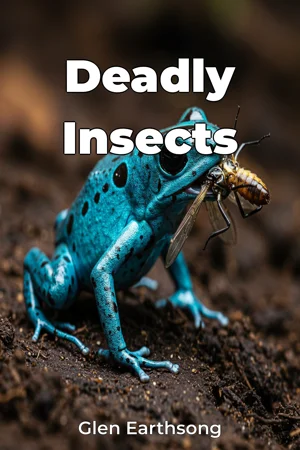
About This Book
Did you know that some of the deadliest creatures on Earth are not large predators, but rather, insects? "Deadly Insects" delves into the fascinating and often frightening world of venomous, dangerous, and aggressive insects, exploring the biological mechanisms behind their potency and the ecological roles they play. This book aims to provide a comprehensive understanding of these often-overlooked creatures and their impact on human health and ecosystems. We will explore the key aspects of insect venom, aggression, and their ecological threats. Understanding insect venom is crucial as it allows us to develop better treatments for stings and bites and also to appreciate the complex biochemistry involved. Insect aggression, whether for predation or defense, impacts human activities and can have broader implications for agriculture and conservation. The ecological threats posed by invasive or particularly destructive insect species have consequences for biodiversity and ecosystem stability. In order to fully appreciate the intricacies of deadly insects, certain background knowledge in basic biology, entomology, and toxicology may be helpful, but is not required. The book will provide clear explanations of key concepts as they are introduced, making the content accessible to a broad audience. The central argument of "Deadly Insects" is that understanding the biological intricacies, ecological roles, and behavioral patterns of dangerous insects is critical for effective medical treatment, responsible conservation, and mitigating the impact of invasive species. This argument is important because it shifts the focus from fear and eradication to informed management and appreciation of insects' complex place in the natural world. The book is structured in a logical progression. It begins with an introduction to the world of deadly insects, defining key terms such as venom, toxicity, and aggression, and outlines the criteria for inclusion in the study. The next section explores the diverse types of venomous insects, including bees, wasps, ants, spiders, and caterpillars, detailing the composition and effects of their venom, and discussing case studies of human encounters. Following this, an in-depth look at the aggressive behaviors of insects is undertaken, examining the evolutionary drivers behind aggression, such as competition for resources and defense of territory. The book culminates with a discussion on the ecological impacts of invasive and destructive insect species, analyzing their effects on agriculture, forestry, and human health. The practical applications of this knowledge are then explored, including strategies for preventing insect bites, treating envenomation, and managing invasive species. The evidence presented in "Deadly Insects" is drawn from a wide range of sources, including peer-reviewed scientific literature, field studies, and expert interviews with entomologists, toxicologists, and medical professionals. Additionally, unique data sources such as venom composition databases and insect bite case reports are incorporated to provide a comprehensive and up-to-date picture of the topic. "Deadly Insects" bridges multiple disciplines, connecting biology, ecology, and medicine. The connection to biology is evident in the examination of insect anatomy, physiology, and behavior. Ecology is relevant in understanding the role of insects in various ecosystems and the impact of invasive species. Medicine plays a crucial role in the discussion on venom toxicity, treatment strategies, and public health implications. These interdisciplinary connections enhance the book's argument by providing a holistic perspective on the multifaceted nature of deadly insects. A unique aspect of this book is its integration of cutting-edge research on venom composition and its practical applications in treatment and management strategies. Much of the information about the insects presented is commonly misunderstood, even by experts, so this book acts as a summary of the current understanding of insects in toxicology. The tone and writing style is factual and informative, aiming to educate and engage the reader. The information is presented in a clear and concise manner, avoiding overly technical jargon while maintaining scientific accuracy. The target audience includes students of biology, entomology, and ecology, healthcare professionals, and anyone with an interest in the natural world and the creatures that inhabit it. This book would be valuable to them because it provides a comprehensive and accessible overview of a topic that is often misunderstood or overlooked. As a work of non-fiction, this book adheres to the conventions of accuracy, objectivity, and evidence-based reasoning. It aims to provide a balanced and unbiased account of the topic. The scope of the book encompasses a wide range of venomous, dangerous, and aggressive insects from around the world. However, it is not intended to be an exhaustive catalog of every insect species, but rather a representative sample that illustrates key concepts and principles. The information in this book can be applied in a number of practical ways, including identifying and avoiding dangerous insects, providing first aid for insect bites and stings, and supporting efforts to manage invasive species and protect biodiversity. The book also addresses controversies related to insect control methods and the use of pesticides.
Did you know that some of the deadliest creatures on Earth are not large predators, but rather, insects? "Deadly Insects" delves into the fascinating and often frightening world of venomous, dangerous, and aggressive insects, exploring the biological mechanisms behind their potency and the ecological roles they play. This book aims to provide a comprehensive understanding of these often-overlooked creatures and their impact on human health and ecosystems. We will explore the key aspects of insect venom, aggression, and their ecological threats. Understanding insect venom is crucial as it allows us to develop better treatments for stings and bites and also to appreciate the complex biochemistry involved. Insect aggression, whether for predation or defense, impacts human activities and can have broader implications for agriculture and conservation. The ecological threats posed by invasive or particularly destructive insect species have consequences for biodiversity and ecosystem stability. In order to fully appreciate the intricacies of deadly insects, certain background knowledge in basic biology, entomology, and toxicology may be helpful, but is not required. The book will provide clear explanations of key concepts as they are introduced, making the content accessible to a broad audience. The central argument of "Deadly Insects" is that understanding the biological intricacies, ecological roles, and behavioral patterns of dangerous insects is critical for effective medical treatment, responsible conservation, and mitigating the impact of invasive species. This argument is important because it shifts the focus from fear and eradication to informed management and appreciation of insects' complex place in the natural world. The book is structured in a logical progression. It begins with an introduction to the world of deadly insects, defining key terms such as venom, toxicity, and aggression, and outlines the criteria for inclusion in the study. The next section explores the diverse types of venomous insects, including bees, wasps, ants, spiders, and caterpillars, detailing the composition and effects of their venom, and discussing case studies of human encounters. Following this, an in-depth look at the aggressive behaviors of insects is undertaken, examining the evolutionary drivers behind aggression, such as competition for resources and defense of territory. The book culminates with a discussion on the ecological impacts of invasive and destructive insect species, analyzing their effects on agriculture, forestry, and human health. The practical applications of this knowledge are then explored, including strategies for preventing insect bites, treating envenomation, and managing invasive species. The evidence presented in "Deadly Insects" is drawn from a wide range of sources, including peer-reviewed scientific literature, field studies, and expert interviews with entomologists, toxicologists, and medical professionals. Additionally, unique data sources such as venom composition databases and insect bite case reports are incorporated to provide a comprehensive and up-to-date picture of the topic. "Deadly Insects" bridges multiple disciplines, connecting biology, ecology, and medicine. The connection to biology is evident in the examination of insect anatomy, physiology, and behavior. Ecology is relevant in understanding the role of insects in various ecosystems and the impact of invasive species. Medicine plays a crucial role in the discussion on venom toxicity, treatment strategies, and public health implications. These interdisciplinary connections enhance the book's argument by providing a holistic perspective on the multifaceted nature of deadly insects. A unique aspect of this book is its integration of cutting-edge research on venom composition and its practical applications in treatment and management strategies. Much of the information about the insects presented is commonly misunderstood, even by experts, so this book acts as a summary of the current understanding of insects in toxicology. The tone and writing style is factual and informative, aiming to educate and engage the reader. The information is presented in a clear and concise manner, avoiding overly technical jargon while maintaining scientific accuracy. The target audience includes students of biology, entomology, and ecology, healthcare professionals, and anyone with an interest in the natural world and the creatures that inhabit it. This book would be valuable to them because it provides a comprehensive and accessible overview of a topic that is often misunderstood or overlooked. As a work of non-fiction, this book adheres to the conventions of accuracy, objectivity, and evidence-based reasoning. It aims to provide a balanced and unbiased account of the topic. The scope of the book encompasses a wide range of venomous, dangerous, and aggressive insects from around the world. However, it is not intended to be an exhaustive catalog of every insect species, but rather a representative sample that illustrates key concepts and principles. The information in this book can be applied in a number of practical ways, including identifying and avoiding dangerous insects, providing first aid for insect bites and stings, and supporting efforts to manage invasive species and protect biodiversity. The book also addresses controversies related to insect control methods and the use of pesticides.
"Deadly Insects" explores the intriguing realm of venomous and aggressive insects, highlighting their biological complexities and ecological significance. It emphasizes that many of Earth's most dangerous creatures are not large predators, but rather, these often-overlooked insects. The book delves into the composition and effects of insect venom, crucial for developing better medical treatments and understanding biochemical processes. It also addresses the ecological threats posed by invasive insect species, which can significantly impact agriculture, forestry, and human health. The book progresses logically, beginning with an introduction to key concepts, then exploring diverse types of venomous insects and their venoms, examining the evolutionary drivers behind insect aggression, and culminating in a discussion of the ecological impacts of invasive species. It draws from peer-reviewed scientific literature, field studies, and expert interviews to provide a comprehensive understanding. One unique aspect is its integration of cutting-edge research on venom composition and its practical applications in treatment and management strategies. The central argument is that understanding these insects is critical for effective medical treatment, responsible conservation, and mitigating the impact of invasive species. By bridging biology, ecology, and medicine, it shifts the focus from fear to informed management, offering a holistic perspective on the multifaceted nature of deadly insects. The book aims to educate and engage readers through clear explanations and relevant examples, making it accessible to students, healthcare professionals, and anyone interested in the natural world.
Book Details
ISBN
9788233967116
Publisher
Publifye AS
Your Licenses
You don't own any licenses for this book
Purchase a license below to unlock this book and download the EPUB.
Purchase License
Select a tier to unlock this book
Need bulk licensing?
Contact us for enterprise agreements.