
About This Book
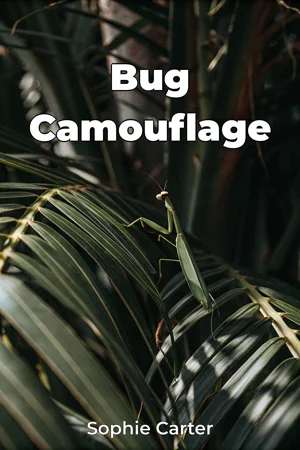
Have you ever wondered how insects, some of the most vulnerable creatures in the natural world, manage to survive amidst a constant barrage of predators? "Bug Camouflage" delves into the intricate and often astonishing world of insect camouflage, revealing the diverse strategies these creatures employ to blend seamlessly into their environments. This book explores the fascinating science behind these adaptations, offering a detailed look at the evolutionary pressures that have shaped them. This book meticulously examines several key aspects of insect camouflage. First, it provides an overview of the different types of camouflage, including crypsis (blending in), mimesis (imitating other objects), and disruptive coloration (breaking up the body outline.) Second, it explores the underlying mechanisms that enable insects to achieve such remarkable feats of disguise, from specialized pigments and cuticular structures to behavioral adaptations. Finally, it examines the evolutionary arms race between predators and prey, highlighting how camouflage strategies evolve in response to predator detection abilities and vice versa. Understanding these topics is crucial for appreciating the complexity of ecological interactions and the power of natural selection. The study of camouflage has historical roots in both art and science, with early naturalists marveling at the deceptive appearances of various organisms. "Bug Camouflage" builds upon this history, incorporating decades of scientific research, including advances in fields like evolutionary biology, entomology, and visual ecology. No prior knowledge is needed to understand the concepts presented, as the book provides clear explanations of key terms and principles. The central argument of this book is that insect camouflage is not simply a matter of appearance; it is a dynamic and multifaceted adaptation shaped by complex ecological interactions and evolutionary pressures. Understanding the nuances of insect camouflage provides valuable insights into the functioning of ecosystems and the nature of adaptation itself. The book begins with an introduction to the basic principles of camouflage and the various methods insects use to conceal themselves. It proceeds with detailed case studies of specific insect species, illustrating the diversity of camouflage strategies in action. Subsequent chapters examine the physiological mechanisms that enable insects to achieve camouflage, such as the production of pigments and the development of specialized body structures. The book culminates with a discussion of the evolutionary implications of camouflage, including the role it plays in shaping predator-prey relationships and driving speciation. Throughout, the book emphasizes the interplay between genetics, environment, and behavior in shaping camouflage adaptations. The evidence presented in "Bug Camouflage" draws upon a wide range of sources, including field observations, laboratory experiments, and genomic analyses. The book features high-quality photographs and illustrations that showcase the remarkable camouflage abilities of various insect species. It presents data from studies that have investigated the effectiveness of camouflage in reducing predation risk. "Bug Camouflage" connects to several other fields of study, most notably ecology, evolutionary biology, and visual perception. The book's exploration of camouflage strategies has implications for our understanding of community ecology and species interactions. The discussion of evolutionary mechanisms relates directly to the broader field of evolutionary biology. Finally, the analysis of visual perception connects to areas of neuroscience and sensory biology. These interdisciplinary connections enhance the book's argument by demonstrating the relevance of insect camouflage to a wide range of scientific disciplines. This book takes a unique approach by integrating insights from multiple fields to provide a comprehensive understanding of insect camouflage. It not only explores the visual aspects of camouflage but also considers the behavioral and ecological factors that influence its effectiveness. Written in a clear and engaging style, "Bug Camouflage" aims to make complex scientific concepts accessible to a broad audience. The book presents information in a logical and organized manner, using real-world examples and case studies to illustrate key points. The target audience for "Bug Camouflage" includes students, educators, nature enthusiasts, and anyone interested in the fascinating world of insects and their adaptations. The book will be of particular value to those studying biology, ecology, or entomology. As a work of science writing, "Bug Camouflage" adheres to the conventions of the genre by presenting factual information in an objective and evidence-based manner. The book avoids sensationalism and focuses on providing a clear and accurate account of the science behind insect camouflage. The scope of "Bug Camouflage" is limited to the study of camouflage in insects. While the book touches on broader ecological and evolutionary principles, it does not delve deeply into other types of animal camouflage or other forms of adaptation. The information in "Bug Camouflage" can be applied practically in a variety of ways. For example, understanding insect camouflage can inform strategies for pest control and conservation. The principles of camouflage can also inspire new designs for military and civilian applications. Understanding the chemical composition of insects can lead to advances in materials technology. While the effectiveness of different camouflage strategies is generally well-established, there is ongoing debate about the relative importance of different factors in shaping camouflage adaptations. The book addresses these controversies, presenting different viewpoints and evaluating the evidence for each.
Have you ever wondered how insects, some of the most vulnerable creatures in the natural world, manage to survive amidst a constant barrage of predators? "Bug Camouflage" delves into the intricate and often astonishing world of insect camouflage, revealing the diverse strategies these creatures employ to blend seamlessly into their environments. This book explores the fascinating science behind these adaptations, offering a detailed look at the evolutionary pressures that have shaped them. This book meticulously examines several key aspects of insect camouflage. First, it provides an overview of the different types of camouflage, including crypsis (blending in), mimesis (imitating other objects), and disruptive coloration (breaking up the body outline.) Second, it explores the underlying mechanisms that enable insects to achieve such remarkable feats of disguise, from specialized pigments and cuticular structures to behavioral adaptations. Finally, it examines the evolutionary arms race between predators and prey, highlighting how camouflage strategies evolve in response to predator detection abilities and vice versa. Understanding these topics is crucial for appreciating the complexity of ecological interactions and the power of natural selection. The study of camouflage has historical roots in both art and science, with early naturalists marveling at the deceptive appearances of various organisms. "Bug Camouflage" builds upon this history, incorporating decades of scientific research, including advances in fields like evolutionary biology, entomology, and visual ecology. No prior knowledge is needed to understand the concepts presented, as the book provides clear explanations of key terms and principles. The central argument of this book is that insect camouflage is not simply a matter of appearance; it is a dynamic and multifaceted adaptation shaped by complex ecological interactions and evolutionary pressures. Understanding the nuances of insect camouflage provides valuable insights into the functioning of ecosystems and the nature of adaptation itself. The book begins with an introduction to the basic principles of camouflage and the various methods insects use to conceal themselves. It proceeds with detailed case studies of specific insect species, illustrating the diversity of camouflage strategies in action. Subsequent chapters examine the physiological mechanisms that enable insects to achieve camouflage, such as the production of pigments and the development of specialized body structures. The book culminates with a discussion of the evolutionary implications of camouflage, including the role it plays in shaping predator-prey relationships and driving speciation. Throughout, the book emphasizes the interplay between genetics, environment, and behavior in shaping camouflage adaptations. The evidence presented in "Bug Camouflage" draws upon a wide range of sources, including field observations, laboratory experiments, and genomic analyses. The book features high-quality photographs and illustrations that showcase the remarkable camouflage abilities of various insect species. It presents data from studies that have investigated the effectiveness of camouflage in reducing predation risk. "Bug Camouflage" connects to several other fields of study, most notably ecology, evolutionary biology, and visual perception. The book's exploration of camouflage strategies has implications for our understanding of community ecology and species interactions. The discussion of evolutionary mechanisms relates directly to the broader field of evolutionary biology. Finally, the analysis of visual perception connects to areas of neuroscience and sensory biology. These interdisciplinary connections enhance the book's argument by demonstrating the relevance of insect camouflage to a wide range of scientific disciplines. This book takes a unique approach by integrating insights from multiple fields to provide a comprehensive understanding of insect camouflage. It not only explores the visual aspects of camouflage but also considers the behavioral and ecological factors that influence its effectiveness. Written in a clear and engaging style, "Bug Camouflage" aims to make complex scientific concepts accessible to a broad audience. The book presents information in a logical and organized manner, using real-world examples and case studies to illustrate key points. The target audience for "Bug Camouflage" includes students, educators, nature enthusiasts, and anyone interested in the fascinating world of insects and their adaptations. The book will be of particular value to those studying biology, ecology, or entomology. As a work of science writing, "Bug Camouflage" adheres to the conventions of the genre by presenting factual information in an objective and evidence-based manner. The book avoids sensationalism and focuses on providing a clear and accurate account of the science behind insect camouflage. The scope of "Bug Camouflage" is limited to the study of camouflage in insects. While the book touches on broader ecological and evolutionary principles, it does not delve deeply into other types of animal camouflage or other forms of adaptation. The information in "Bug Camouflage" can be applied practically in a variety of ways. For example, understanding insect camouflage can inform strategies for pest control and conservation. The principles of camouflage can also inspire new designs for military and civilian applications. Understanding the chemical composition of insects can lead to advances in materials technology. While the effectiveness of different camouflage strategies is generally well-established, there is ongoing debate about the relative importance of different factors in shaping camouflage adaptations. The book addresses these controversies, presenting different viewpoints and evaluating the evidence for each.
In "Bug Camouflage," explore the captivating world of insect camouflage, an essential adaptation for survival in the face of predation. The book unveils how insects, through evolutionary biology and natural selection, have developed diverse strategies like crypsis, mimesis, and disruptive coloration to blend seamlessly into their environments. One striking example showcased is how some insects mimic leaves so convincingly that they even display "leaf damage" markings. The book adopts a multidisciplinary approach, integrating insights from ecology, entomology, and visual perception to provide a comprehensive understanding. It examines the physiological mechanisms behind camouflage, such as pigment production and specialized body structures, and delves into the evolutionary arms race between predators and prey. "Bug Camouflage" progresses from introducing basic camouflage principles and case studies to discussing the ecological and evolutionary implications, offering a valuable resource for students, educators, and nature enthusiasts alike.
Book Details
ISBN
9788233967109
Publisher
Publifye AS
Your Licenses
You don't own any licenses for this book
Purchase a license below to unlock this book and download the EPUB.
Purchase License
Select a tier to unlock this book
Need bulk licensing?
Contact us for enterprise agreements.