
About This Book
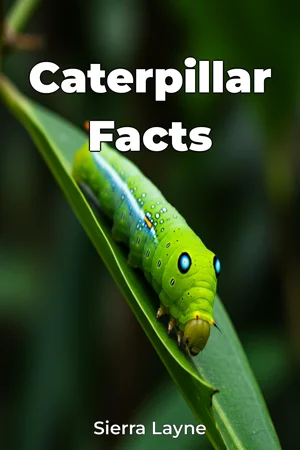
Did you know that some caterpillars can mimic snakes to ward off predators, or that their seemingly simple existence is a complex dance of survival and transformation? "Caterpillar Facts" delves into the intricate world of these often-overlooked creatures, exploring their diverse life strategies and remarkable metamorphosis into butterflies. This book examines three pivotal aspects of caterpillar life: their physical adaptations for survival, their ecological roles within various ecosystems, and the biological processes driving their transformation. Understanding these elements is crucial because caterpillars form a vital link in the food chain and serve as indicators of environmental health. This book provides a comprehensive overview of caterpillar biology, building upon decades of scientific research in entomology, ecology, and evolutionary biology. We offer a concise yet thorough explanation of caterpillar anatomy, physiology, and behavior, assuming only a basic understanding of biological principles. The central argument of "Caterpillar Facts" is that caterpillars are not merely simple larvae awaiting transformation, but rather highly specialized organisms with unique adaptations and critical ecological functions. Recognizing their complexity is essential for effective conservation efforts and a deeper appreciation of biodiversity. The book is structured in three parts. First, we introduce the basic biology of caterpillars, including their anatomy, feeding habits, and growth processes. This section lays the groundwork for understanding their subsequent life stages. Second, we explore the diverse defense mechanisms caterpillars employ, from camouflage and mimicry to chemical defenses and social behavior. This part highlights the evolutionary pressures that have shaped their survival strategies. Third, we examine the fascinating process of metamorphosis, detailing the hormonal and cellular changes that transform a caterpillar into a butterfly. This section will also address common misconceptions about the process. The book culminates with a discussion of the practical applications of caterpillar research, including pest management strategies, bio-monitoring and conservation efforts. The evidence presented in this book comes from a wide range of sources, including peer-reviewed scientific articles, field studies, and laboratory experiments. We incorporate data from original research, including comparative analyses of different caterpillar species and investigations of their interactions with plants and predators. "Caterpillar Facts" connects to several other fields of study. First, it links to botany through an examination of plant-caterpillar interactions, including herbivory and co-evolution. Second, it connects to chemistry by investigating the chemical defenses that some caterpillars produce or sequester from their host plants. Third, it relates to climatology through discussions of how climate change affects caterpillar populations and their life cycles. These interdisciplinary connections highlight the broader ecological significance of caterpillars. This book presents a comprehensive review of existing research on caterpillars, synthesizing information from diverse sources to provide a unified and accessible account. In particular, we focus on recent advances in understanding caterpillar behavior and the molecular mechanisms underlying metamorphosis. The tone of "Caterpillar Facts" is informative and accessible, aimed at a general audience with an interest in science and nature. The writing style is clear and concise, avoiding technical jargon where possible and providing definitions for essential scientific terms. The target audience includes nature enthusiasts, students, gardeners, and anyone curious about the natural world. This book provides valuable insights into the hidden lives of caterpillars and their importance to ecosystems. It would also be valuable for biology students. As a work of non-fiction, "Caterpillar Facts" adheres to the conventions of scientific accuracy and objectivity. All claims are supported by evidence, and sources are properly cited. The scope of this book is limited to the biology and ecology of caterpillars. While we touch upon the butterfly stage of their life cycle, our primary focus is on the larval stage. Readers can apply the information in this book to a variety of real-world situations. Gardeners can use their knowledge of caterpillar behavior to manage pests effectively, and nature enthusiasts can enhance their appreciation of local ecosystems by observing and identifying different caterpillar species. While most aspects of caterpillar biology are well-established, ongoing debates exist regarding the evolutionary origins of certain defense mechanisms and the precise role of specific genes in metamorphosis. This book addresses these debates and presents different perspectives, but does not promote any particular position.
Did you know that some caterpillars can mimic snakes to ward off predators, or that their seemingly simple existence is a complex dance of survival and transformation? "Caterpillar Facts" delves into the intricate world of these often-overlooked creatures, exploring their diverse life strategies and remarkable metamorphosis into butterflies. This book examines three pivotal aspects of caterpillar life: their physical adaptations for survival, their ecological roles within various ecosystems, and the biological processes driving their transformation. Understanding these elements is crucial because caterpillars form a vital link in the food chain and serve as indicators of environmental health. This book provides a comprehensive overview of caterpillar biology, building upon decades of scientific research in entomology, ecology, and evolutionary biology. We offer a concise yet thorough explanation of caterpillar anatomy, physiology, and behavior, assuming only a basic understanding of biological principles. The central argument of "Caterpillar Facts" is that caterpillars are not merely simple larvae awaiting transformation, but rather highly specialized organisms with unique adaptations and critical ecological functions. Recognizing their complexity is essential for effective conservation efforts and a deeper appreciation of biodiversity. The book is structured in three parts. First, we introduce the basic biology of caterpillars, including their anatomy, feeding habits, and growth processes. This section lays the groundwork for understanding their subsequent life stages. Second, we explore the diverse defense mechanisms caterpillars employ, from camouflage and mimicry to chemical defenses and social behavior. This part highlights the evolutionary pressures that have shaped their survival strategies. Third, we examine the fascinating process of metamorphosis, detailing the hormonal and cellular changes that transform a caterpillar into a butterfly. This section will also address common misconceptions about the process. The book culminates with a discussion of the practical applications of caterpillar research, including pest management strategies, bio-monitoring and conservation efforts. The evidence presented in this book comes from a wide range of sources, including peer-reviewed scientific articles, field studies, and laboratory experiments. We incorporate data from original research, including comparative analyses of different caterpillar species and investigations of their interactions with plants and predators. "Caterpillar Facts" connects to several other fields of study. First, it links to botany through an examination of plant-caterpillar interactions, including herbivory and co-evolution. Second, it connects to chemistry by investigating the chemical defenses that some caterpillars produce or sequester from their host plants. Third, it relates to climatology through discussions of how climate change affects caterpillar populations and their life cycles. These interdisciplinary connections highlight the broader ecological significance of caterpillars. This book presents a comprehensive review of existing research on caterpillars, synthesizing information from diverse sources to provide a unified and accessible account. In particular, we focus on recent advances in understanding caterpillar behavior and the molecular mechanisms underlying metamorphosis. The tone of "Caterpillar Facts" is informative and accessible, aimed at a general audience with an interest in science and nature. The writing style is clear and concise, avoiding technical jargon where possible and providing definitions for essential scientific terms. The target audience includes nature enthusiasts, students, gardeners, and anyone curious about the natural world. This book provides valuable insights into the hidden lives of caterpillars and their importance to ecosystems. It would also be valuable for biology students. As a work of non-fiction, "Caterpillar Facts" adheres to the conventions of scientific accuracy and objectivity. All claims are supported by evidence, and sources are properly cited. The scope of this book is limited to the biology and ecology of caterpillars. While we touch upon the butterfly stage of their life cycle, our primary focus is on the larval stage. Readers can apply the information in this book to a variety of real-world situations. Gardeners can use their knowledge of caterpillar behavior to manage pests effectively, and nature enthusiasts can enhance their appreciation of local ecosystems by observing and identifying different caterpillar species. While most aspects of caterpillar biology are well-established, ongoing debates exist regarding the evolutionary origins of certain defense mechanisms and the precise role of specific genes in metamorphosis. This book addresses these debates and presents different perspectives, but does not promote any particular position.
"Caterpillar Facts" explores the fascinating world of caterpillars, revealing them as more than just simple larvae awaiting transformation. The book emphasizes their unique adaptations and crucial roles within diverse ecosystems. Readers will discover intriguing facts, such as caterpillars mimicking snakes to deter predators, showcasing their complex survival strategies. This book is valuable to anyone interested in science, nature, or biology. The book examines caterpillar biology in three key parts. It starts with their anatomy, feeding habits, and growth, then explores diverse defense mechanisms like camouflage and chemical defenses shaped by evolution. Finally, it details the hormonal and cellular changes during metamorphosis. By understanding these elements, we gain insight into their ecological importance and the impact of environmental health. This book presents a comprehensive and accessible account, synthesizing research in entomology, ecology, and evolutionary biology. It connects to botany, chemistry, and climatology, highlighting the broader ecological significance of caterpillars. The book aims to enhance appreciation for biodiversity, offering valuable insights for nature enthusiasts, biology students, and gardeners alike.
Book Details
ISBN
9788233967086
Publisher
Publifye AS
Your Licenses
You don't own any licenses for this book
Purchase a license below to unlock this book and download the EPUB.
Purchase License
Select a tier to unlock this book
Need bulk licensing?
Contact us for enterprise agreements.