
About This Book
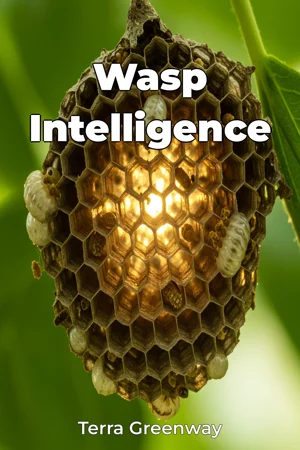
Have you ever considered that the wasp, often dismissed as a mere stinging nuisance, might possess a level of intelligence that rivals some mammals? "Wasp Intelligence" challenges preconceived notions about these ubiquitous insects, delving into their cognitive abilities, complex social structures, and vital ecological roles. This book will explore the surprising mental capabilities of wasps, analyze their diverse and often aggressive survival strategies, and illuminate their often-underestimated importance in maintaining ecological balance. These topics are vital because understanding insect intelligence can revolutionize our approach to pest control, conservation efforts, and even inspire new algorithms and problem-solving techniques in artificial intelligence. This book situates wasp intelligence within the broader context of insect cognition and evolutionary biology. Although wasps have historically been viewed through a lens of simple instinct, recent research reveals sophisticated learning, memory, and problem-solving skills. "Wasp Intelligence" argues that these abilities are not mere anomalies but rather integral to their survival and ecological success. This argument is significant because it necessitates a re-evaluation of insect intelligence writ large, challenging anthropocentric biases in cognitive research. The book begins by introducing the diverse world of wasps, highlighting key species known for behavioral complexity. It examines the neurobiological basis of wasp intelligence, exploring brain structure and neural pathways associated with specific cognitive functions. Subsequently, the book delves into the specifics of wasp behavior, devoting chapters to learning and memory, social cognition, and problem-solving strategies. The final section of the work will explore the implications of wasp intelligence for broader scientific fields and practical applications. The evidence presented in "Wasp Intelligence" draws from a range of experimental studies, field observations, and comparative analyses. Data on wasp communication, nest construction, hunting behaviors, and social interactions will be examined. Unique data sources include detailed video analyses of wasp behavior in controlled environments, neuroimaging studies of wasp brains, and comparative genomic data that sheds light on the evolution of their cognitive abilities. "Wasp Intelligence" also establishes interdisciplinary connections. First, the book will connect to the field of artificial intelligence by drawing parallels between wasp problem-solving strategies and algorithm design. Second, it will connect to agricultural science by considering how a deeper understanding of wasp behavior can lead to more effective and sustainable pest management techniques. Third, it will connect to the burgeoning field of animal cognition by providing new data points in the evolution and distribution of cognitive abilities. A unique aspect of this book is its focus on the individual variation in wasp intelligence. Current research often treats insects as homogenous groups. “Wasp Intelligence” highlights the individual learning styles and problem-solving capabilities within wasp populations. Presented in a manner accessible to a broad audience, "Wasp Intelligence’s" tone is informative and engaging, avoiding excessive jargon while maintaining scientific rigor. The target audience includes biologists, entomologists, ecologists, and anyone with an interest in animal behavior and natural history. People curious about insects and cognition, both students and general readers, will find this book valuable. It adheres to the expectations of the science/nature non-fiction genre by staying grounded in scientific evidence and clear explanations. The scope of "Wasp Intelligence" is intentionally limited to the cognitive abilities of wasps. While it touches on their evolutionary history and ecological roles, the primary focus remains on their intelligence. This book does not provide a comprehensive overview of all wasp species or their economic impact. The insights presented in this book have several real-world applications. For example, understanding how wasps learn and remember can inform the design of more effective pest control strategies that minimize harm to beneficial insects. The book also demonstrates how observing wasp social behavior can improve our understanding of the evolution of sociality in other species, including humans. While it addresses the ongoing debate of the extent of insect sentience, this book focuses primarily on the measurable indications of wasp intelligence.
Have you ever considered that the wasp, often dismissed as a mere stinging nuisance, might possess a level of intelligence that rivals some mammals? "Wasp Intelligence" challenges preconceived notions about these ubiquitous insects, delving into their cognitive abilities, complex social structures, and vital ecological roles. This book will explore the surprising mental capabilities of wasps, analyze their diverse and often aggressive survival strategies, and illuminate their often-underestimated importance in maintaining ecological balance. These topics are vital because understanding insect intelligence can revolutionize our approach to pest control, conservation efforts, and even inspire new algorithms and problem-solving techniques in artificial intelligence. This book situates wasp intelligence within the broader context of insect cognition and evolutionary biology. Although wasps have historically been viewed through a lens of simple instinct, recent research reveals sophisticated learning, memory, and problem-solving skills. "Wasp Intelligence" argues that these abilities are not mere anomalies but rather integral to their survival and ecological success. This argument is significant because it necessitates a re-evaluation of insect intelligence writ large, challenging anthropocentric biases in cognitive research. The book begins by introducing the diverse world of wasps, highlighting key species known for behavioral complexity. It examines the neurobiological basis of wasp intelligence, exploring brain structure and neural pathways associated with specific cognitive functions. Subsequently, the book delves into the specifics of wasp behavior, devoting chapters to learning and memory, social cognition, and problem-solving strategies. The final section of the work will explore the implications of wasp intelligence for broader scientific fields and practical applications. The evidence presented in "Wasp Intelligence" draws from a range of experimental studies, field observations, and comparative analyses. Data on wasp communication, nest construction, hunting behaviors, and social interactions will be examined. Unique data sources include detailed video analyses of wasp behavior in controlled environments, neuroimaging studies of wasp brains, and comparative genomic data that sheds light on the evolution of their cognitive abilities. "Wasp Intelligence" also establishes interdisciplinary connections. First, the book will connect to the field of artificial intelligence by drawing parallels between wasp problem-solving strategies and algorithm design. Second, it will connect to agricultural science by considering how a deeper understanding of wasp behavior can lead to more effective and sustainable pest management techniques. Third, it will connect to the burgeoning field of animal cognition by providing new data points in the evolution and distribution of cognitive abilities. A unique aspect of this book is its focus on the individual variation in wasp intelligence. Current research often treats insects as homogenous groups. “Wasp Intelligence” highlights the individual learning styles and problem-solving capabilities within wasp populations. Presented in a manner accessible to a broad audience, "Wasp Intelligence’s" tone is informative and engaging, avoiding excessive jargon while maintaining scientific rigor. The target audience includes biologists, entomologists, ecologists, and anyone with an interest in animal behavior and natural history. People curious about insects and cognition, both students and general readers, will find this book valuable. It adheres to the expectations of the science/nature non-fiction genre by staying grounded in scientific evidence and clear explanations. The scope of "Wasp Intelligence" is intentionally limited to the cognitive abilities of wasps. While it touches on their evolutionary history and ecological roles, the primary focus remains on their intelligence. This book does not provide a comprehensive overview of all wasp species or their economic impact. The insights presented in this book have several real-world applications. For example, understanding how wasps learn and remember can inform the design of more effective pest control strategies that minimize harm to beneficial insects. The book also demonstrates how observing wasp social behavior can improve our understanding of the evolution of sociality in other species, including humans. While it addresses the ongoing debate of the extent of insect sentience, this book focuses primarily on the measurable indications of wasp intelligence.
"Wasp Intelligence" offers a fascinating exploration into the surprisingly sophisticated cognitive abilities of wasps, challenging the common perception of them as simple pests. This book delves into their learning, memory, and problem-solving skills, revealing a level of intelligence that rivals some mammals. Wasps exhibit remarkable social cognition, evident in their complex communication and cooperative behaviors, crucial for survival and maintaining ecological balance. The book examines the neurobiological basis of wasp intelligence, linking brain structure to cognitive functions. It demonstrates how wasps use sophisticated strategies for hunting, nest construction, and social interactions, drawing from experimental studies and field observations. "Wasp Intelligence" uniquely emphasizes individual variation in wasp intelligence, moving beyond the idea of insects as homogenous groups. The book progresses by introducing wasp diversity, exploring the neurobiology of their intelligence, and then delving into specific behaviors like learning, memory, and social cognition. The insights from "Wasp Intelligence" have practical implications. For example, understanding wasp learning could lead to more effective and sustainable pest control. By drawing parallels to algorithm design, the book also connects wasp problem-solving strategies to the field of artificial intelligence, highlighting the broader relevance of insect cognition. This book presents information in an accessible manner, making it valuable for biologists, ecologists, and anyone interested in animal behavior and natural history.
Book Details
ISBN
9788233967079
Publisher
Publifye AS
Your Licenses
You don't own any licenses for this book
Purchase a license below to unlock this book and download the EPUB.
Purchase License
Select a tier to unlock this book
Need bulk licensing?
Contact us for enterprise agreements.