
About This Book
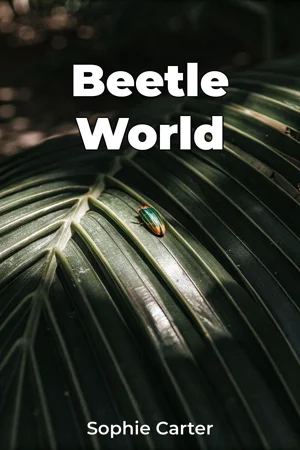
Did you know that beetles comprise nearly a quarter of all known species on Earth? "Beetle World" offers a comprehensive exploration into the Coleoptera order, the largest group of insects, and delves into the intricate adaptations that have allowed them to thrive in almost every terrestrial and freshwater habitat on the planet. This book explores the remarkable biodiversity, evolutionary history, and ecological significance of beetles, making it an essential resource for anyone interested in biology, entomology, or the natural world. Two key topics are central to understanding the success of beetles: their morphological diversity and their ecological roles. Beetle morphology, ranging from the heavily armored scarabs to the delicate weevils, showcases an unparalleled variety of shapes, sizes, and structures, each adapted to specific lifestyles and environments. Understanding this diversity is important because it reveals the power of natural selection in shaping species. The book also details the diverse ecological roles beetles play, from crucial decomposers and pollinators to significant predators and even pests. These roles underscore their importance in maintaining ecosystem health and stability. To fully appreciate the world of beetles, it’s important to understand their evolutionary history, tracing their lineage back hundreds of millions of years. The book provides essential context on how beetles diversified and adapted alongside major geological and climatic events. No prior knowledge is needed other than a general interest in science or nature. The central argument of "Beetle World" posits that the evolutionary success of beetles is a direct result of their unparalleled adaptability, driven by a combination of morphological innovation, behavioral plasticity, and ecological diversification. This argument is vital because it highlights the importance of beetles in understanding broader principles of evolution and ecology. The book is structured to progressively build a comprehensive understanding of beetles. It begins with an introduction to the basic anatomy, physiology, and classification of Coleoptera. It then explores the evolutionary history of beetles, tracing their origins and diversification through the fossil record. Major sections will focus on key beetle families, highlighting their unique adaptations, behaviors, and ecological roles. A chapter will discuss the interactions of beetles with other organisms, including plants, fungi, and other animals. The book culminates with a discussion of the conservation status of beetles and the threats they face, alongside a discussion of their practical applications in fields like agriculture and forensics. The book's arguments are supported by a wealth of scientific evidence, drawing on research findings from fields such as morphology, molecular biology, ecology, and paleontology. It uses diverse data sources, including detailed anatomical studies, genetic analyses, ecological surveys, and fossil records. "Beetle World" connects to other fields, including evolutionary biology, ecology, and conservation biology. For example, the study of beetle evolution provides insights into the mechanisms of adaptation and diversification that are relevant to understanding the evolution of other organisms. The ecological roles of beetles are crucial for understanding ecosystem function and stability. Beetle conservation is essential for maintaining biodiversity and ecosystem services. This book stands out by offering a synthesis of current knowledge on beetle biology. It’s written in an accessible yet informative style, making it suitable for a broad audience, while maintaining scientific rigor. The target audience includes students, researchers, naturalists, and anyone with an interest in insects or the natural world. This book offers valuable information to anyone seeking a deeper understanding of beetles. As a non-fiction science book, "Beetle World" adheres to the conventions of accuracy, objectivity, and evidence-based argumentation expected in the genre. The scope of the book is broad, covering the major aspects of beetle biology, but it acknowledges limitations in its ability to cover every species or detail. The information in "Beetle World" can be applied practically in several ways. For example, understanding beetle ecology is important for developing sustainable agricultural practices and managing pest species. The book also addresses ongoing debates about the best strategies for conserving beetle populations and mitigating the impacts of habitat loss and climate change.
Did you know that beetles comprise nearly a quarter of all known species on Earth? "Beetle World" offers a comprehensive exploration into the Coleoptera order, the largest group of insects, and delves into the intricate adaptations that have allowed them to thrive in almost every terrestrial and freshwater habitat on the planet. This book explores the remarkable biodiversity, evolutionary history, and ecological significance of beetles, making it an essential resource for anyone interested in biology, entomology, or the natural world. Two key topics are central to understanding the success of beetles: their morphological diversity and their ecological roles. Beetle morphology, ranging from the heavily armored scarabs to the delicate weevils, showcases an unparalleled variety of shapes, sizes, and structures, each adapted to specific lifestyles and environments. Understanding this diversity is important because it reveals the power of natural selection in shaping species. The book also details the diverse ecological roles beetles play, from crucial decomposers and pollinators to significant predators and even pests. These roles underscore their importance in maintaining ecosystem health and stability. To fully appreciate the world of beetles, it’s important to understand their evolutionary history, tracing their lineage back hundreds of millions of years. The book provides essential context on how beetles diversified and adapted alongside major geological and climatic events. No prior knowledge is needed other than a general interest in science or nature. The central argument of "Beetle World" posits that the evolutionary success of beetles is a direct result of their unparalleled adaptability, driven by a combination of morphological innovation, behavioral plasticity, and ecological diversification. This argument is vital because it highlights the importance of beetles in understanding broader principles of evolution and ecology. The book is structured to progressively build a comprehensive understanding of beetles. It begins with an introduction to the basic anatomy, physiology, and classification of Coleoptera. It then explores the evolutionary history of beetles, tracing their origins and diversification through the fossil record. Major sections will focus on key beetle families, highlighting their unique adaptations, behaviors, and ecological roles. A chapter will discuss the interactions of beetles with other organisms, including plants, fungi, and other animals. The book culminates with a discussion of the conservation status of beetles and the threats they face, alongside a discussion of their practical applications in fields like agriculture and forensics. The book's arguments are supported by a wealth of scientific evidence, drawing on research findings from fields such as morphology, molecular biology, ecology, and paleontology. It uses diverse data sources, including detailed anatomical studies, genetic analyses, ecological surveys, and fossil records. "Beetle World" connects to other fields, including evolutionary biology, ecology, and conservation biology. For example, the study of beetle evolution provides insights into the mechanisms of adaptation and diversification that are relevant to understanding the evolution of other organisms. The ecological roles of beetles are crucial for understanding ecosystem function and stability. Beetle conservation is essential for maintaining biodiversity and ecosystem services. This book stands out by offering a synthesis of current knowledge on beetle biology. It’s written in an accessible yet informative style, making it suitable for a broad audience, while maintaining scientific rigor. The target audience includes students, researchers, naturalists, and anyone with an interest in insects or the natural world. This book offers valuable information to anyone seeking a deeper understanding of beetles. As a non-fiction science book, "Beetle World" adheres to the conventions of accuracy, objectivity, and evidence-based argumentation expected in the genre. The scope of the book is broad, covering the major aspects of beetle biology, but it acknowledges limitations in its ability to cover every species or detail. The information in "Beetle World" can be applied practically in several ways. For example, understanding beetle ecology is important for developing sustainable agricultural practices and managing pest species. The book also addresses ongoing debates about the best strategies for conserving beetle populations and mitigating the impacts of habitat loss and climate change.
"Beetle World" offers an in-depth journey into the world of Coleoptera, exploring the incredible diversity and evolutionary success of beetles, which comprise nearly a quarter of all known species. This book showcases the insect's remarkable adaptations, which allow them to thrive in diverse habitats. Readers will discover how beetle morphology, from armored bodies to delicate structures, reflects adaptation to specific ecological niches, showcasing nature's ingenuity. It also emphasizes their crucial ecological roles, highlighting how beetles function as decomposers, pollinators, and predators, influencing ecosystem health. The book traces the evolutionary history of beetles, detailing their diversification alongside major geological events, providing context to their current biodiversity. Each chapter builds upon the last, starting with anatomy and classification, moving through evolutionary history, and focusing on key beetle families and their unique adaptations. Ultimately, "Beetle World" argues that beetles' adaptability, driven by morphological innovation, behavioral plasticity, and ecological diversification, explains their evolutionary success. The book's approach blends scientific rigor with accessible language, making it valuable for students, researchers, and anyone fascinated by insects and the natural world.
Book Details
ISBN
9788233967062
Publisher
Publifye AS
Your Licenses
You don't own any licenses for this book
Purchase a license below to unlock this book and download the EPUB.
Purchase License
Select a tier to unlock this book
Need bulk licensing?
Contact us for enterprise agreements.