
About This Book
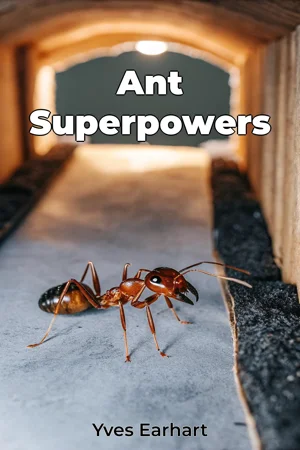
Have you ever wondered how such tiny creatures could create such complex societies? "Ant Superpowers" delves into the intricate world of ants, exploring their remarkable abilities and the secrets behind their success. This book uncovers the science behind how ants achieve feats of strength, master chemical communication, and construct elaborate underground nests. Understanding these capabilities provides key insights into collective behavior, evolutionary biology, and the potential for bio-inspired engineering. This book is built around three core concepts: biomechanics of ant strength, chemical communication systems, and the principles of ant colony organization and architecture. The focus will be on examining the physical and biological mechanisms that underpin these fascinating aspects of ant life. We will explore how their exoskeletons and muscle arrangements allow them to lift objects many times their own weight, and how pheromones create complex informational networks that govern their behavior. Furthermore, the book showcases how ant colonies are organized to function so efficiently, and examines the construction and functionality of their highly sophisticated underground nests. The context for understanding ant superpowers comes from a rich history of biological study and observation. Decades of research, from early naturalists to modern-day entomologists, have contributed to our understanding of ant biology. The reader should have a basic understanding of biological concepts such as evolution, natural selection, and basic chemistry of signaling molecules. The central argument of "Ant Superpowers" is that the collective accomplishments of ants, seemingly impossible for individual insects, arise from a confluence of specialized adaptations, finely tuned communication, and decentralized decision-making. By understanding these principles, we can unlock new insights into the nature of complex systems. It will also demonstrate novel ways with which we can address our own engineering and organizational challenges. The book will begin with an introduction to ant biology and taxonomy, setting the stage for the investigations. The following sections will then explore the remarkable physical capabilities of ants, detailing the biomechanics of their strength and the materials science of their exoskeletons. Next, we will investigate the fascinating world of ant chemical communication, examining the diverse array of pheromones they use and the complex social behaviors they govern. Following this, we will delve into the organization and architecture of ant colonies, studying how ants cooperate to build sophisticated underground nests and manage their resources. The book will culminate with a discussion of the bio-inspired applications of ant research, exploring how we can learn from ants to design more efficient robots, algorithms, and organizational structures. This book will draw upon a diverse range of evidence, including detailed scientific observations, experimental data, and mathematical models. It will also incorporate cutting-edge research from fields such as biomechanics, chemical ecology, and network science. Particular emphasis is on data collected using advanced imaging techniques, such as scanning electron microscopy, and by tracking ant movements and interactions within colonies. "Ant Superpowers" connects to many areas of study, including robotics, computer science, and organizational management. The study of ant locomotion and strength helps in the design of small, powerful robots. Understanding ant colony optimization algorithms helps with the development of efficient solutions to complex problems. The organizational principles of ant colonies can provide insights into how to manage large, distributed teams effectively. This book stands out by taking a multidisciplinary approach to the study of ants, combining insights from biology, physics, chemistry, and computer science to provide a complete picture of their capabilities. It offers a fresh perspective on the natural world, showing how even the smallest creatures can achieve feats of science and engineering. "Ant Superpowers" is written in a clear, accessible style, designed to appeal to a wide audience. It is aimed at anyone with an interest in biology, science, or nature, from students and educators to science enthusiasts and curious readers. It offers a captivating exploration of the natural world that will inspire awe and wonder. As a work of non-fiction, "Ant Superpowers" adheres to the highest standards of accuracy and objectivity. The scope of the book is broad, covering many aspects of ant biology and behavior, but it focuses specifically on the three "superpowers" and their underlying mechanisms. While the book touches on evolution, it is not a comprehensive treatise on evolutionary biology. The information presented can be applied in practical ways, from inspiring new designs in robotics to informing strategies for managing complex systems. By understanding how ants overcome challenges in the natural world, we can gain valuable insights into how to solve problems in our own lives and societies. While the core principles of ant biology are well-established, there are ongoing debates about the precise mechanisms and functions of certain behaviors and communication signals. This book addresses these controversies by presenting different perspectives and highlighting areas of active research.
Have you ever wondered how such tiny creatures could create such complex societies? "Ant Superpowers" delves into the intricate world of ants, exploring their remarkable abilities and the secrets behind their success. This book uncovers the science behind how ants achieve feats of strength, master chemical communication, and construct elaborate underground nests. Understanding these capabilities provides key insights into collective behavior, evolutionary biology, and the potential for bio-inspired engineering. This book is built around three core concepts: biomechanics of ant strength, chemical communication systems, and the principles of ant colony organization and architecture. The focus will be on examining the physical and biological mechanisms that underpin these fascinating aspects of ant life. We will explore how their exoskeletons and muscle arrangements allow them to lift objects many times their own weight, and how pheromones create complex informational networks that govern their behavior. Furthermore, the book showcases how ant colonies are organized to function so efficiently, and examines the construction and functionality of their highly sophisticated underground nests. The context for understanding ant superpowers comes from a rich history of biological study and observation. Decades of research, from early naturalists to modern-day entomologists, have contributed to our understanding of ant biology. The reader should have a basic understanding of biological concepts such as evolution, natural selection, and basic chemistry of signaling molecules. The central argument of "Ant Superpowers" is that the collective accomplishments of ants, seemingly impossible for individual insects, arise from a confluence of specialized adaptations, finely tuned communication, and decentralized decision-making. By understanding these principles, we can unlock new insights into the nature of complex systems. It will also demonstrate novel ways with which we can address our own engineering and organizational challenges. The book will begin with an introduction to ant biology and taxonomy, setting the stage for the investigations. The following sections will then explore the remarkable physical capabilities of ants, detailing the biomechanics of their strength and the materials science of their exoskeletons. Next, we will investigate the fascinating world of ant chemical communication, examining the diverse array of pheromones they use and the complex social behaviors they govern. Following this, we will delve into the organization and architecture of ant colonies, studying how ants cooperate to build sophisticated underground nests and manage their resources. The book will culminate with a discussion of the bio-inspired applications of ant research, exploring how we can learn from ants to design more efficient robots, algorithms, and organizational structures. This book will draw upon a diverse range of evidence, including detailed scientific observations, experimental data, and mathematical models. It will also incorporate cutting-edge research from fields such as biomechanics, chemical ecology, and network science. Particular emphasis is on data collected using advanced imaging techniques, such as scanning electron microscopy, and by tracking ant movements and interactions within colonies. "Ant Superpowers" connects to many areas of study, including robotics, computer science, and organizational management. The study of ant locomotion and strength helps in the design of small, powerful robots. Understanding ant colony optimization algorithms helps with the development of efficient solutions to complex problems. The organizational principles of ant colonies can provide insights into how to manage large, distributed teams effectively. This book stands out by taking a multidisciplinary approach to the study of ants, combining insights from biology, physics, chemistry, and computer science to provide a complete picture of their capabilities. It offers a fresh perspective on the natural world, showing how even the smallest creatures can achieve feats of science and engineering. "Ant Superpowers" is written in a clear, accessible style, designed to appeal to a wide audience. It is aimed at anyone with an interest in biology, science, or nature, from students and educators to science enthusiasts and curious readers. It offers a captivating exploration of the natural world that will inspire awe and wonder. As a work of non-fiction, "Ant Superpowers" adheres to the highest standards of accuracy and objectivity. The scope of the book is broad, covering many aspects of ant biology and behavior, but it focuses specifically on the three "superpowers" and their underlying mechanisms. While the book touches on evolution, it is not a comprehensive treatise on evolutionary biology. The information presented can be applied in practical ways, from inspiring new designs in robotics to informing strategies for managing complex systems. By understanding how ants overcome challenges in the natural world, we can gain valuable insights into how to solve problems in our own lives and societies. While the core principles of ant biology are well-established, there are ongoing debates about the precise mechanisms and functions of certain behaviors and communication signals. This book addresses these controversies by presenting different perspectives and highlighting areas of active research.
"Ant Superpowers" explores the extraordinary abilities of ants, revealing how these tiny insects achieve incredible feats through collective behavior, specialized adaptations, and sophisticated communication. The book delves into the biomechanics behind their surprising strength, allowing them to lift objects many times their weight, and uncovers the intricacies of their chemical communication, using pheromones to govern complex social interactions. Readers will gain insights into the science of how ants construct elaborate underground nests and organize their colonies with remarkable efficiency. The book progresses from an introduction to ant biology to detailed explorations of their physical capabilities, communication systems, and colony architecture. It highlights how decades of biological study have led to our current understanding, emphasizing the role of natural selection and evolutionary biology. Discover how the collective accomplishments of ants arise from specialized adaptations, finely tuned communication, and decentralized decision-making, offering potential applications in bio-inspired engineering, robotics, and organizational management. This book distinguishes itself by combining insights from diverse fields such as biology, physics, chemistry, and computer science, presenting a comprehensive view of ant capabilities. By examining the physical and biological mechanisms underpinning ant life, "Ant Superpowers" offers a valuable perspective on complex systems and the potential for innovative solutions inspired by the natural world.
Book Details
ISBN
9788233967017
Publisher
Publifye AS
Your Licenses
You don't own any licenses for this book
Purchase a license below to unlock this book and download the EPUB.
Purchase License
Select a tier to unlock this book
Need bulk licensing?
Contact us for enterprise agreements.