
About This Book
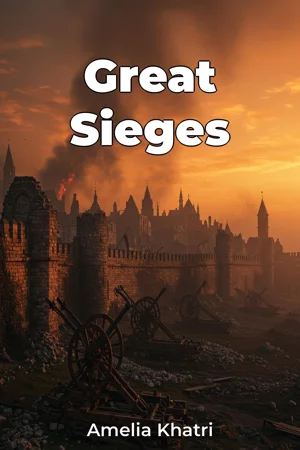
Have you ever wondered what it truly takes to endure a siege, not just as a soldier, but as a civilian trapped within crumbling walls? "Great Sieges" delves into the grueling realities of history's most protracted and devastating urban sieges, spanning from the medieval era to the modern age, offering a comprehensive analysis of the military, social, and human dimensions of these pivotal events. We will explore the strategic calculus of siege warfare, examining how besiegers and besieged adapted their tactics and technologies over centuries. We also analyze the immense suffering inflicted upon civilian populations and the long-term consequences for the affected cities and societies. This book argues that sieges are more than just military engagements; they are crucibles of human endurance that reveal profound truths about resilience, desperation, and the enduring cost of conflict. To understand the dynamics of siege warfare, we examine several key elements: the evolution of siege technology, the strategies employed by both attackers and defenders, and the social and economic impact on besieged populations. The history of sieges provides crucial insight into the evolution of warfare, the development of urbanism, and the complex relationship between military power and civilian life. "Great Sieges" follows a chronological structure, beginning with an overview of siege warfare in the ancient and medieval world. We explore examples such as the sieges of Syracuse and Constantinople, where innovative defensive strategies and technological advancements played decisive roles. The narrative then progresses into the early modern period, examining sieges like the Siege of Antwerp and the Siege of Vienna, highlighting the increasing importance of gunpowder and fortifications. Finally, the book analyzes more modern sieges, including the Siege of Leningrad and the Siege of Sarajevo, focusing on the devastating impact of modern weaponry on urban populations and infrastructure. Cases are analyzed to emphasize the human experience, detailing the struggles for survival, the breakdown of social order, and the long-term psychological effects on survivors. The book will draw upon a wide range of sources, including contemporary accounts, archaeological evidence, military treatises, and demographic data. Accounts from soldiers, civilians, and political leaders offer personal perspectives on the realities of siege warfare. Utilizing these resources helps to present a balanced and nuanced understanding of the events. "Great Sieges" connects to several other fields, including military history, urban studies, and sociology. It delves into the urban planning and infrastructure, the social dynamics of a city under siege, and the psychological impact of prolonged conflict on individuals and communities. This book stands out due to its holistic approach, integrating military analysis with social and human perspectives. It is written in a clear and accessible style, aiming to engage both academic and general readers. The book is designed for military history enthusiasts, students of history, and anyone interested in the dynamics of conflict and urban life. The breadth of coverage, spanning multiple continents and historical periods, allows for comparative analysis and broad conclusions about the nature of siege warfare. While the book aims to be comprehensive, it acknowledges the limitations of focusing on a select number of key sieges, rather than providing an exhaustive account of every siege in history. Understanding the strategies and consequences of sieges offers valuable insights for modern urban planning, disaster relief, and conflict resolution. The experiences of besieged cities can inform strategies for protecting civilian populations, managing resources, and maintaining social order in times of crisis. The book will also address ongoing debates about the laws of war, the protection of civilians in armed conflict, and the ethical responsibilities of military forces in urban environments.
Have you ever wondered what it truly takes to endure a siege, not just as a soldier, but as a civilian trapped within crumbling walls? "Great Sieges" delves into the grueling realities of history's most protracted and devastating urban sieges, spanning from the medieval era to the modern age, offering a comprehensive analysis of the military, social, and human dimensions of these pivotal events. We will explore the strategic calculus of siege warfare, examining how besiegers and besieged adapted their tactics and technologies over centuries. We also analyze the immense suffering inflicted upon civilian populations and the long-term consequences for the affected cities and societies. This book argues that sieges are more than just military engagements; they are crucibles of human endurance that reveal profound truths about resilience, desperation, and the enduring cost of conflict. To understand the dynamics of siege warfare, we examine several key elements: the evolution of siege technology, the strategies employed by both attackers and defenders, and the social and economic impact on besieged populations. The history of sieges provides crucial insight into the evolution of warfare, the development of urbanism, and the complex relationship between military power and civilian life. "Great Sieges" follows a chronological structure, beginning with an overview of siege warfare in the ancient and medieval world. We explore examples such as the sieges of Syracuse and Constantinople, where innovative defensive strategies and technological advancements played decisive roles. The narrative then progresses into the early modern period, examining sieges like the Siege of Antwerp and the Siege of Vienna, highlighting the increasing importance of gunpowder and fortifications. Finally, the book analyzes more modern sieges, including the Siege of Leningrad and the Siege of Sarajevo, focusing on the devastating impact of modern weaponry on urban populations and infrastructure. Cases are analyzed to emphasize the human experience, detailing the struggles for survival, the breakdown of social order, and the long-term psychological effects on survivors. The book will draw upon a wide range of sources, including contemporary accounts, archaeological evidence, military treatises, and demographic data. Accounts from soldiers, civilians, and political leaders offer personal perspectives on the realities of siege warfare. Utilizing these resources helps to present a balanced and nuanced understanding of the events. "Great Sieges" connects to several other fields, including military history, urban studies, and sociology. It delves into the urban planning and infrastructure, the social dynamics of a city under siege, and the psychological impact of prolonged conflict on individuals and communities. This book stands out due to its holistic approach, integrating military analysis with social and human perspectives. It is written in a clear and accessible style, aiming to engage both academic and general readers. The book is designed for military history enthusiasts, students of history, and anyone interested in the dynamics of conflict and urban life. The breadth of coverage, spanning multiple continents and historical periods, allows for comparative analysis and broad conclusions about the nature of siege warfare. While the book aims to be comprehensive, it acknowledges the limitations of focusing on a select number of key sieges, rather than providing an exhaustive account of every siege in history. Understanding the strategies and consequences of sieges offers valuable insights for modern urban planning, disaster relief, and conflict resolution. The experiences of besieged cities can inform strategies for protecting civilian populations, managing resources, and maintaining social order in times of crisis. The book will also address ongoing debates about the laws of war, the protection of civilians in armed conflict, and the ethical responsibilities of military forces in urban environments.
"Great Sieges" explores the intense military and human aspects of urban sieges throughout history, from the ancient world to modern times. It examines the evolution of siege warfare, analyzing the strategies, technologies, and the immense suffering endured by civilian populations trapped within besieged cities. The book argues that sieges serve as extreme tests of human resilience, revealing profound truths about desperation and the enduring costs of conflict. Intriguingly, sieges were not only military events but also crucibles that significantly influenced urban development and social order. The book progresses chronologically, starting with ancient and medieval sieges like Constantinople, where innovative defenses played a key role. It moves through the early modern period, examining sieges such as the Siege of Vienna, highlighting the impact of gunpowder. Finally, it analyzes modern sieges like the Siege of Sarajevo, focusing on the devastating impact of modern weaponry on urban populations. By drawing upon contemporary accounts and archaeological evidence, "Great Sieges" provides a comprehensive understanding of these historical events and their long-term consequences.
Book Details
ISBN
9788233966973
Publisher
Publifye AS
Your Licenses
You don't own any licenses for this book
Purchase a license below to unlock this book and download the EPUB.
Purchase License
Select a tier to unlock this book
Need bulk licensing?
Contact us for enterprise agreements.