
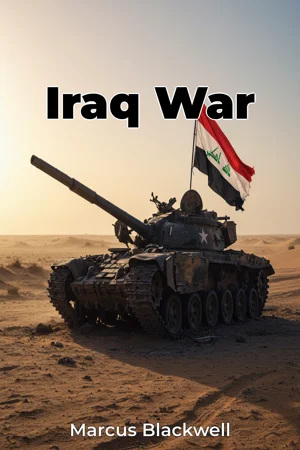
About This Book
What chain of events led to the 2003 invasion of Iraq, and what were the true costs of toppling Saddam Hussein? This book, *Iraq War*, meticulously examines the complex web of political decisions, intelligence failures, and ideological motivations that culminated in a conflict with profound and lasting global consequences. It delves into the historical context, dissects the justifications presented for the war, and analyzes the tumultuous aftermath that continues to shape the Middle East today. Understanding the Iraq War is crucial for comprehending contemporary global politics, international relations, and the challenges of nation-building in the 21st century. This book argues that the Iraq War was not simply a response to the threat of weapons of mass destruction, but a confluence of factors including neoconservative ambitions, the desire to reshape the Middle East, and longstanding animosity towards Saddam Hussein’s Ba’athist regime. The central thesis is that the war, predicated on flawed intelligence and a misunderstanding of Iraqi society, unleashed a chain of unintended consequences that destabilized the region and fueled sectarian violence. The book is structured to provide a comprehensive exploration of the war. It begins by examining the historical relationship between the United States and Iraq, tracing the evolution of US foreign policy in the Middle East and the rise of Saddam Hussein. It then explores the buildup to the war, critically analyzing the intelligence assessments regarding Iraq’s weapons capabilities, the diplomatic efforts (or lack thereof) to avert conflict, and the political maneuvering within the Bush administration. The subsequent chapters detail the military campaign itself, the occupation of Iraq, and the descent into insurgency and civil war. Separate sections are dedicated to the rise of ISIS as a direct consequence of the power vacuum created by the war, and the long-term impact of the conflict on Iraqi society, regional stability, and international relations. Finally, the book concludes with an assessment of the lessons learned (or not learned) from the Iraq War and its implications for future foreign policy decisions. The analysis presented is supported by a wide range of sources, including declassified government documents, firsthand accounts from soldiers and civilians, reports from international organizations, and scholarly research. The book draws upon the findings of the Iraq Inquiry (the Chilcot Report) and other independent investigations to provide a balanced and nuanced perspective. This book connects to several other fields of study, including political science (examining theories of international relations and the decision-making processes of governments), sociology (analyzing the impact of war on social structures and identities), and international law (assessing the legality of the invasion and the conduct of the war). These interdisciplinary connections enrich the analysis and provide a more holistic understanding of the war's complexities. This book stands out by offering a comprehensive re-evaluation of the entire Iraq War narrative, moving past established talking points. The tone of the book is analytical and objective, aiming to present a balanced account of the war based on factual evidence and rigorous analysis. The target audience includes students of history, political science, and international relations, as well as policymakers, journalists, and general readers interested in understanding the contemporary Middle East and the dynamics of US foreign policy. The book will appeal to anyone seeking a deeper understanding of one of the most consequential events of the 21st century. As a work dedicated to current events, world history, and world history, it adheres to the standards of academic rigor and objectivity, while also striving for accessibility and readability. The scope of the book is limited to the causes, conduct, and consequences of the 2003 Iraq War and its immediate aftermath, without attempting to provide a comprehensive history of Iraq. The focus is on the international dimensions of the conflict and its impact on global politics. Understanding the decisions that led to the Iraq War and the consequences that followed provides valuable insights into the challenges of interventionism, the importance of accurate intelligence, and the complexities of nation-building. This understanding can be applied to contemporary debates about foreign policy and the use of military force. The book addresses the ongoing debates surrounding the legality and justification for the war, the effectiveness of the surge strategy, and the long-term consequences of the intervention. It offers a critical examination of these debates, presenting different perspectives and drawing evidence-based conclusions.
What chain of events led to the 2003 invasion of Iraq, and what were the true costs of toppling Saddam Hussein? This book, *Iraq War*, meticulously examines the complex web of political decisions, intelligence failures, and ideological motivations that culminated in a conflict with profound and lasting global consequences. It delves into the historical context, dissects the justifications presented for the war, and analyzes the tumultuous aftermath that continues to shape the Middle East today. Understanding the Iraq War is crucial for comprehending contemporary global politics, international relations, and the challenges of nation-building in the 21st century. This book argues that the Iraq War was not simply a response to the threat of weapons of mass destruction, but a confluence of factors including neoconservative ambitions, the desire to reshape the Middle East, and longstanding animosity towards Saddam Hussein’s Ba’athist regime. The central thesis is that the war, predicated on flawed intelligence and a misunderstanding of Iraqi society, unleashed a chain of unintended consequences that destabilized the region and fueled sectarian violence. The book is structured to provide a comprehensive exploration of the war. It begins by examining the historical relationship between the United States and Iraq, tracing the evolution of US foreign policy in the Middle East and the rise of Saddam Hussein. It then explores the buildup to the war, critically analyzing the intelligence assessments regarding Iraq’s weapons capabilities, the diplomatic efforts (or lack thereof) to avert conflict, and the political maneuvering within the Bush administration. The subsequent chapters detail the military campaign itself, the occupation of Iraq, and the descent into insurgency and civil war. Separate sections are dedicated to the rise of ISIS as a direct consequence of the power vacuum created by the war, and the long-term impact of the conflict on Iraqi society, regional stability, and international relations. Finally, the book concludes with an assessment of the lessons learned (or not learned) from the Iraq War and its implications for future foreign policy decisions. The analysis presented is supported by a wide range of sources, including declassified government documents, firsthand accounts from soldiers and civilians, reports from international organizations, and scholarly research. The book draws upon the findings of the Iraq Inquiry (the Chilcot Report) and other independent investigations to provide a balanced and nuanced perspective. This book connects to several other fields of study, including political science (examining theories of international relations and the decision-making processes of governments), sociology (analyzing the impact of war on social structures and identities), and international law (assessing the legality of the invasion and the conduct of the war). These interdisciplinary connections enrich the analysis and provide a more holistic understanding of the war's complexities. This book stands out by offering a comprehensive re-evaluation of the entire Iraq War narrative, moving past established talking points. The tone of the book is analytical and objective, aiming to present a balanced account of the war based on factual evidence and rigorous analysis. The target audience includes students of history, political science, and international relations, as well as policymakers, journalists, and general readers interested in understanding the contemporary Middle East and the dynamics of US foreign policy. The book will appeal to anyone seeking a deeper understanding of one of the most consequential events of the 21st century. As a work dedicated to current events, world history, and world history, it adheres to the standards of academic rigor and objectivity, while also striving for accessibility and readability. The scope of the book is limited to the causes, conduct, and consequences of the 2003 Iraq War and its immediate aftermath, without attempting to provide a comprehensive history of Iraq. The focus is on the international dimensions of the conflict and its impact on global politics. Understanding the decisions that led to the Iraq War and the consequences that followed provides valuable insights into the challenges of interventionism, the importance of accurate intelligence, and the complexities of nation-building. This understanding can be applied to contemporary debates about foreign policy and the use of military force. The book addresses the ongoing debates surrounding the legality and justification for the war, the effectiveness of the surge strategy, and the long-term consequences of the intervention. It offers a critical examination of these debates, presenting different perspectives and drawing evidence-based conclusions.
The *Iraq War* examines the multifaceted factors leading to the 2003 invasion, emphasizing the long-lasting global consequences and the reshaping of the Middle East. It argues that the war went beyond just eliminating weapons of mass destruction, highlighting the roles of neoconservative ambitions and deep-seated animosity towards Saddam Hussein’s Ba'athist regime. The book questions the accuracy of pre-war intelligence and explores how initial misunderstandings of Iraqi society fueled unintended consequences, contributing to regional instability and sectarian violence. The book progresses chronologically, starting with the historical context of US-Iraq relations and US foreign policy in the Middle East. It then analyzes the buildup to the war, the military campaign, the occupation, and the descent into civil war. A significant part of the analysis is dedicated to ISIS's rise as a direct result of the power vacuum created by the conflict. The work draws from declassified documents, firsthand accounts, and international reports, aiming to offer a balanced and nuanced perspective on the political decisions and intelligence failures.
Book Details
ISBN
9788233966812
Publisher
Publifye AS
Your Licenses
You don't own any licenses for this book
Purchase a license below to unlock this book and download the EPUB.
Purchase License
Select a tier to unlock this book
Need bulk licensing?
Contact us for enterprise agreements.