
About This Book
How did one nation, in a mere matter of years, conquer almost the entire continent of Europe? "The Blitzkrieg" unravels the story of Germany’s lightning war strategy, a military innovation that redefined warfare in the 20th century and allowed it to dominate much of Europe early in World War II. This book examines the multifaceted nature of Blitzkrieg, unpacking its key components, analyzing its successes and failures, and exploring its lasting impact on military doctrine. Understanding Blitzkrieg is crucial not only for comprehending the events of World War II but also for grasping the evolution of modern military strategy and the continuing interplay between technology, tactics, and leadership. This book explores three main topics. First, it dissects the operational mechanics of Blitzkrieg, showing how the coordinated employment of tanks, aircraft, and infantry overcame traditional defensive lines. Second, it considers the vital role of leadership and training in enabling German forces to execute this complex and high-tempo strategy. Finally, it analyzes the political and economic factors that underpinned Germany’s ability to develop and deploy Blitzkrieg on such a large scale. Before delving into the details of Blitzkrieg, it is important to understand the interwar period, a time of rapid technological advancement and intense debate about the future of warfare. The book provides context, tracing the development of armored warfare theories and the evolution of air power doctrines. It also touches on the Treaty of Versailles and its impact on German military development, showing how limitations spurred innovation and unconventional thinking. A basic understanding of World War I and its impact on military thought is helpful for readers. The central argument is that Blitzkrieg was not simply a set of tactics but a comprehensive system that integrated technology, leadership, and ideology to achieve rapid and decisive victories. The book demonstrates that Blitzkrieg’s early successes were contingent on specific circumstances and that its limitations became evident as the war progressed and opponents adapted. This argument is important because it challenges simplistic views of Blitzkrieg as an unstoppable force and highlights the complex interplay of factors that determine military outcomes. The book begins by introducing the core concepts of Blitzkrieg, its historical roots, and the key figures behind its development. Next, it examines the campaigns in Poland and France, showcasing the strategy's successes and analyzing the factors that contributed to them. The book turns its attention to the Eastern Front, exploring how the vastness of the territory and the resilience of the Soviet Union exposed the limitations of Blitzkrieg. Finally, the book concludes with an assessment of Blitzkrieg's long-term impact on military doctrine, exploring its legacy. This book draws upon a wide range of primary and secondary sources, including official German military documents, personal accounts of soldiers and commanders, and scholarly analyses of the war. It incorporates statistical data on military equipment and troop deployments to provide a quantitative assessment of Blitzkrieg's effectiveness. It also employs comparative analysis, contrasting German military performance with that of its adversaries to highlight key differences in doctrine and capabilities. The book connects military history with political science, analyzing the relationship between military strategy and national objectives. It also interfaces with economics, exploring how resource constraints and industrial capacity shaped the development and deployment of Blitzkrieg. Finally, it touches upon the social sciences, examining the role of propaganda and morale in sustaining the German war effort. This book offers a nuanced perspective on Blitzkrieg, moving beyond simplistic notions of its invincibility to provide a complex and contextualized account of its evolution, its application, and its ultimate limitations. It avoids glorifying war, instead offering a balanced and critical analysis of the strategy and its consequences. The book is written for anyone interested in military history, World War II, or the evolution of modern warfare. It will appeal to students, scholars, and general readers alike. The book adheres to the conventions of historical writing, emphasizing accuracy, objectivity, and thorough documentation. The goal is to provide a reliable and informative account of Blitzkrieg. The book focuses on the operational and strategic aspects of Blitzkrieg, with limited attention to the broader social and cultural dimensions of World War II. The lessons of Blitzkrieg remain relevant today, offering insights into the importance of adaptability, technological innovation, and integrated operations in modern warfare. Understanding the strengths and weaknesses of Blitzkrieg can inform contemporary military strategy and help policymakers make informed decisions about defense spending and military deployments. While Blitzkrieg is often associated with German military prowess, there remains debate about the extent to which its successes were attributable to superior strategy versus other factors, such as luck, the weaknesses of its enemies, and the element of surprise. The book addresses these debates, presenting different perspectives and encouraging readers to form their own conclusions.
How did one nation, in a mere matter of years, conquer almost the entire continent of Europe? "The Blitzkrieg" unravels the story of Germany’s lightning war strategy, a military innovation that redefined warfare in the 20th century and allowed it to dominate much of Europe early in World War II. This book examines the multifaceted nature of Blitzkrieg, unpacking its key components, analyzing its successes and failures, and exploring its lasting impact on military doctrine. Understanding Blitzkrieg is crucial not only for comprehending the events of World War II but also for grasping the evolution of modern military strategy and the continuing interplay between technology, tactics, and leadership. This book explores three main topics. First, it dissects the operational mechanics of Blitzkrieg, showing how the coordinated employment of tanks, aircraft, and infantry overcame traditional defensive lines. Second, it considers the vital role of leadership and training in enabling German forces to execute this complex and high-tempo strategy. Finally, it analyzes the political and economic factors that underpinned Germany’s ability to develop and deploy Blitzkrieg on such a large scale. Before delving into the details of Blitzkrieg, it is important to understand the interwar period, a time of rapid technological advancement and intense debate about the future of warfare. The book provides context, tracing the development of armored warfare theories and the evolution of air power doctrines. It also touches on the Treaty of Versailles and its impact on German military development, showing how limitations spurred innovation and unconventional thinking. A basic understanding of World War I and its impact on military thought is helpful for readers. The central argument is that Blitzkrieg was not simply a set of tactics but a comprehensive system that integrated technology, leadership, and ideology to achieve rapid and decisive victories. The book demonstrates that Blitzkrieg’s early successes were contingent on specific circumstances and that its limitations became evident as the war progressed and opponents adapted. This argument is important because it challenges simplistic views of Blitzkrieg as an unstoppable force and highlights the complex interplay of factors that determine military outcomes. The book begins by introducing the core concepts of Blitzkrieg, its historical roots, and the key figures behind its development. Next, it examines the campaigns in Poland and France, showcasing the strategy's successes and analyzing the factors that contributed to them. The book turns its attention to the Eastern Front, exploring how the vastness of the territory and the resilience of the Soviet Union exposed the limitations of Blitzkrieg. Finally, the book concludes with an assessment of Blitzkrieg's long-term impact on military doctrine, exploring its legacy. This book draws upon a wide range of primary and secondary sources, including official German military documents, personal accounts of soldiers and commanders, and scholarly analyses of the war. It incorporates statistical data on military equipment and troop deployments to provide a quantitative assessment of Blitzkrieg's effectiveness. It also employs comparative analysis, contrasting German military performance with that of its adversaries to highlight key differences in doctrine and capabilities. The book connects military history with political science, analyzing the relationship between military strategy and national objectives. It also interfaces with economics, exploring how resource constraints and industrial capacity shaped the development and deployment of Blitzkrieg. Finally, it touches upon the social sciences, examining the role of propaganda and morale in sustaining the German war effort. This book offers a nuanced perspective on Blitzkrieg, moving beyond simplistic notions of its invincibility to provide a complex and contextualized account of its evolution, its application, and its ultimate limitations. It avoids glorifying war, instead offering a balanced and critical analysis of the strategy and its consequences. The book is written for anyone interested in military history, World War II, or the evolution of modern warfare. It will appeal to students, scholars, and general readers alike. The book adheres to the conventions of historical writing, emphasizing accuracy, objectivity, and thorough documentation. The goal is to provide a reliable and informative account of Blitzkrieg. The book focuses on the operational and strategic aspects of Blitzkrieg, with limited attention to the broader social and cultural dimensions of World War II. The lessons of Blitzkrieg remain relevant today, offering insights into the importance of adaptability, technological innovation, and integrated operations in modern warfare. Understanding the strengths and weaknesses of Blitzkrieg can inform contemporary military strategy and help policymakers make informed decisions about defense spending and military deployments. While Blitzkrieg is often associated with German military prowess, there remains debate about the extent to which its successes were attributable to superior strategy versus other factors, such as luck, the weaknesses of its enemies, and the element of surprise. The book addresses these debates, presenting different perspectives and encouraging readers to form their own conclusions.
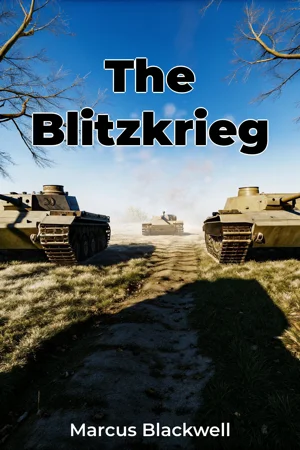
"The Blitzkrieg" explores Germany's "lightning war" strategy during World War II, a military innovation that enabled their early dominance in Europe. The book examines the operational mechanics of Blitzkrieg, detailing how coordinated tank, aircraft, and infantry movements overwhelmed traditional defenses. It also considers the importance of leadership, training, and political/economic factors in Germany's successful implementation of this complex military doctrine. One intriguing fact is how the Treaty of Versailles, which limited German military power, inadvertently spurred innovation and unconventional thinking in their armed forces. The book traces the development of armored warfare theories and air power doctrines during the interwar period, providing context for Blitzkrieg's emergence. It analyzes campaigns in Poland and France, highlighting early successes, then shifts focus to the Eastern Front, revealing the strategy's limitations against the Soviet Union's vastness. It argues that Blitzkrieg was more than just tactics; it was a system integrating technology, leadership, and ideology. The book assesses Blitzkrieg's long-term impact on military doctrine, examining its legacy and challenging simplistic views of its invincibility.
Book Details
ISBN
9788233966706
Publisher
Publifye AS
Your Licenses
You don't own any licenses for this book
Purchase a license below to unlock this book and download the EPUB.
Purchase License
Select a tier to unlock this book
Need bulk licensing?
Contact us for enterprise agreements.