
About This Book
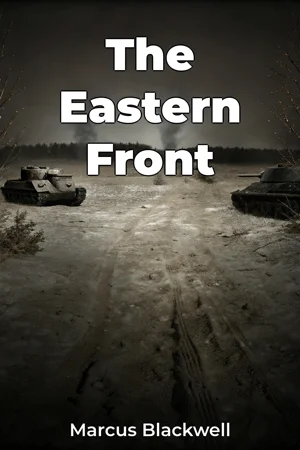
Can any conflict truly be considered more devastating than that of the Eastern Front during the Second World War, a theater of operations marked by unparalleled brutality, immense scale, and catastrophic loss of life? This book, *The Eastern Front*, delves into the heart of this conflict, exploring the key military campaigns, ideological clashes, and human cost that defined this pivotal theater. The Eastern Front was not merely a series of battles; it was a collision of ideologies, a struggle for survival, and a defining moment in the 20th century. Understanding its complexities is crucial to comprehending the outcome of the Second World War and its lasting impact on the global political landscape. This work examines three core aspects of the Eastern Front: the strategic objectives of both Nazi Germany and the Soviet Union, the operational realities faced by soldiers on both sides, and the devastating impact of the war on civilian populations. The book analyzes the initial German advances, the turning points at Stalingrad and Kursk, and the eventual Soviet counter-offensives that pushed the Wehrmacht back to Berlin. It also addresses the key ideological differences between the combatants, namely the Nazi goal of Lebensraum and the Soviet defense of the socialist motherland, which fueled a war of extermination. We further investigate the suffering endured by civilians caught in the crossfire, including widespread famine, massacres, and forced labor. To fully appreciate the Eastern Front, a basic understanding of 20th-century European history and the major powers involved is helpful, though not essential. The book provides sufficient context, including the rise of fascism, the consolidation of Soviet power, and the geopolitical tensions that led to the outbreak of war. The central argument of *The Eastern Front* is that the sheer scale and intensity of the conflict, coupled with the ideological fanaticism of both sides, transformed the Eastern Front into a war of annihilation, setting it apart from other theaters of World War II. This argument is intended to provide a deeper understanding of the war’s impact. The book begins by introducing the key players, their strategic goals, and the initial military campaigns. It then develops this foundation through detailed analysis of major battles, such as the sieges of Leningrad and Moscow, the Battle of Stalingrad, and Operation Bagration. The narrative progresses chronologically, culminating in the final Soviet offensive and the fall of Berlin. Throughout, the book will draw upon primary source accounts from soldiers and civilians on both sides, as well as statistical data on casualties, resource allocation, and industrial production. These sources are compared with analyses from leading historians. The book highlights connections to political science through its analysis of ideological conflict, to sociology through its examination of the war's societal impact, and to economics through its assessment of resource mobilization. This interdisciplinary approach aims to provide a comprehensive understanding of the war, moving beyond traditional military history. This book offers a fresh perspective on the conflict by focusing on the experience of ordinary soldiers and civilians, drawing on newly translated archival materials to provide previously unheard voices to the narrative. Written in an accessible yet rigorous style, *The Eastern Front* is aimed at readers with an interest in military history, World War II, and 20th-century European history. It is invaluable for students, researchers, and anyone seeking a deeper understanding of one of the most significant conflicts in human history. As a work of military history, the book adheres the academic rigor and comprehensive analysis expected within the genre, presenting a balanced assessment of the strategies, tactics, and outcomes of the conflict. The scope of the book is limited to the military and political events on the Eastern Front, focusing primarily on the conflict between Nazi Germany and the Soviet Union. It does not delve extensively into the geopolitical context beyond the immediate sphere of the war. The book helps provide insights into modern conflicts and the dangers of ideological extremism. Ongoing debates surround various aspects of the Eastern Front, including the relative importance of different factors in determining the outcome of the war, the extent of Soviet war crimes, and the long-term consequences of the conflict. This book addresses these debates by presenting a balanced and nuanced account of the historical record.
Can any conflict truly be considered more devastating than that of the Eastern Front during the Second World War, a theater of operations marked by unparalleled brutality, immense scale, and catastrophic loss of life? This book, *The Eastern Front*, delves into the heart of this conflict, exploring the key military campaigns, ideological clashes, and human cost that defined this pivotal theater. The Eastern Front was not merely a series of battles; it was a collision of ideologies, a struggle for survival, and a defining moment in the 20th century. Understanding its complexities is crucial to comprehending the outcome of the Second World War and its lasting impact on the global political landscape. This work examines three core aspects of the Eastern Front: the strategic objectives of both Nazi Germany and the Soviet Union, the operational realities faced by soldiers on both sides, and the devastating impact of the war on civilian populations. The book analyzes the initial German advances, the turning points at Stalingrad and Kursk, and the eventual Soviet counter-offensives that pushed the Wehrmacht back to Berlin. It also addresses the key ideological differences between the combatants, namely the Nazi goal of Lebensraum and the Soviet defense of the socialist motherland, which fueled a war of extermination. We further investigate the suffering endured by civilians caught in the crossfire, including widespread famine, massacres, and forced labor. To fully appreciate the Eastern Front, a basic understanding of 20th-century European history and the major powers involved is helpful, though not essential. The book provides sufficient context, including the rise of fascism, the consolidation of Soviet power, and the geopolitical tensions that led to the outbreak of war. The central argument of *The Eastern Front* is that the sheer scale and intensity of the conflict, coupled with the ideological fanaticism of both sides, transformed the Eastern Front into a war of annihilation, setting it apart from other theaters of World War II. This argument is intended to provide a deeper understanding of the war’s impact. The book begins by introducing the key players, their strategic goals, and the initial military campaigns. It then develops this foundation through detailed analysis of major battles, such as the sieges of Leningrad and Moscow, the Battle of Stalingrad, and Operation Bagration. The narrative progresses chronologically, culminating in the final Soviet offensive and the fall of Berlin. Throughout, the book will draw upon primary source accounts from soldiers and civilians on both sides, as well as statistical data on casualties, resource allocation, and industrial production. These sources are compared with analyses from leading historians. The book highlights connections to political science through its analysis of ideological conflict, to sociology through its examination of the war's societal impact, and to economics through its assessment of resource mobilization. This interdisciplinary approach aims to provide a comprehensive understanding of the war, moving beyond traditional military history. This book offers a fresh perspective on the conflict by focusing on the experience of ordinary soldiers and civilians, drawing on newly translated archival materials to provide previously unheard voices to the narrative. Written in an accessible yet rigorous style, *The Eastern Front* is aimed at readers with an interest in military history, World War II, and 20th-century European history. It is invaluable for students, researchers, and anyone seeking a deeper understanding of one of the most significant conflicts in human history. As a work of military history, the book adheres the academic rigor and comprehensive analysis expected within the genre, presenting a balanced assessment of the strategies, tactics, and outcomes of the conflict. The scope of the book is limited to the military and political events on the Eastern Front, focusing primarily on the conflict between Nazi Germany and the Soviet Union. It does not delve extensively into the geopolitical context beyond the immediate sphere of the war. The book helps provide insights into modern conflicts and the dangers of ideological extremism. Ongoing debates surround various aspects of the Eastern Front, including the relative importance of different factors in determining the outcome of the war, the extent of Soviet war crimes, and the long-term consequences of the conflict. This book addresses these debates by presenting a balanced and nuanced account of the historical record.
*The Eastern Front* during World War II stands as one of history's most devastating conflicts, characterized by unparalleled brutality and immense scale. This book delves into the clash between Nazi Germany and the Soviet Union, exploring key military campaigns, ideological clashes, and the staggering human cost. It analyzes the strategic objectives of both sides, the operational realities faced by soldiers, and the war's devastating impact on civilians. The conflict was fueled by the Nazi pursuit of Lebensraum and the Soviet defense of their homeland, leading to extreme violence. The book progresses chronologically, starting with the initial German advances and pivotal battles like Stalingrad and Kursk. It then examines the Soviet counter-offensives, including Operation Bagration, that ultimately pushed the Wehrmacht back to Berlin. A unique aspect is its focus on the experiences of ordinary soldiers and civilians, drawing from newly translated archival materials to provide previously unheard voices. By analyzing primary source accounts and statistical data alongside leading historical analyses, the book offers a comprehensive understanding of the war’s impact.
Book Details
ISBN
9788233966676
Publisher
Publifye AS
Your Licenses
You don't own any licenses for this book
Purchase a license below to unlock this book and download the EPUB.
Purchase License
Select a tier to unlock this book
Need bulk licensing?
Contact us for enterprise agreements.