
About This Book
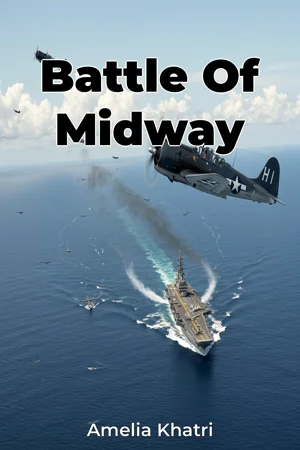
Could a single naval engagement truly alter the course of a global conflict? This book, "Battle of Midway," argues precisely that, examining how this clash in the Pacific served as a crucial turning point in World War II, effectively halting Japanese expansion and shifting the strategic initiative to the United States. This is not just a chronicle of naval tactics; it's an exploration of intelligence successes, leadership decisions, and the sheer determination of the American forces that combined to produce an improbable victory. Within these pages, we will dissect three primary interconnected topics: the breaking of Japanese naval codes, the strategic miscalculations of Admiral Yamamoto, and the tactical brilliance and resilience of the U.S. Navy. Understanding these elements is vital to grasping the battle's significance. The codebreaking effort, known as "Magic," provided critical foreknowledge of Japanese intentions. Yamamoto's ambitious, yet flawed, plan aimed to lure and destroy the remaining American carriers. Finally, the U.S. Navy, despite being outnumbered and facing initial setbacks, demonstrated remarkable adaptability and combat effectiveness. To fully appreciate the Battle of Midway, one needs a basic understanding of the geopolitical landscape of the Pacific in 1942. Following the attack on Pearl Harbor, Japan enjoyed a string of uninterrupted victories. Their seemingly unstoppable advance threatened vital Allied interests across the region. The Battle of the Coral Sea, though a tactical draw, had checked the Japanese advance towards Australia, setting the stage for the decisive confrontation at Midway. We will further consider the prevalent naval doctrines of the era, which heavily emphasized carrier-based aviation, and the devastating impact it had on traditional battleship warfare. The central thesis of this book is that the Battle of Midway was not merely a victory, but a pivotal strategic inflection point that reversed the momentum of the Pacific War. It argues that without this victory, the war in the Pacific could have stretched on considerably longer, with potentially catastrophic consequences for the Allied powers. The importance of this argument lies in its challenge to simplistic narratives of inevitability. Victory at Midway was far from assured and hinged on a confluence of fortunate circumstances and dedicated effort. The book unfolds in a structured manner. First, we establish the historical context, detailing the events that led to the battle and introducing key figures on both sides. Then, we delve into the intelligence war, revealing the codebreaking breakthroughs that provided the Americans with invaluable insight into Japanese plans. Next, we analyze the battle itself, examining the strategic decisions, tactical maneuvers, and individual acts of heroism that shaped the outcome. This section includes detailed accounts of the air battles and the sinking of the four Japanese carriers. Finally, we assess the long-term consequences of the battle, demonstrating how it irrevocably altered the course of the war and set the stage for the eventual Allied victory. The analysis presented in this book relies heavily on primary source materials, including official naval records, personal accounts from veterans, and decoded Japanese communications. We also draw upon secondary scholarship, integrating the work of leading historians to provide a comprehensive and balanced perspective. Crucially, the book incorporates newly declassified material to offer fresh insights into the battle's complexities. The Battle of Midway extends beyond the realm of military history, touching upon elements of cryptology, strategic decision-making, and leadership studies. The codebreaking aspect connects to the broader field of intelligence analysis, while the examination of strategic miscalculations offers valuable lessons for contemporary leaders. Additionally, the book explores the psychological impact of war on the participants, linking it to themes of resilience, courage, and sacrifice. This book offers a unique perspective by combining detailed tactical analysis with a broader strategic assessment. It moves beyond simply recounting the events of the battle, instead focusing on the underlying factors that determined its outcome and its far-reaching consequences. The book adopts a narrative non-fiction style, aiming to be both informative and engaging. Complex technical details are explained in a clear and accessible manner, while the human stories of the sailors and aviators involved add emotional depth. The target audience includes history enthusiasts, military history buffs, and anyone interested in World War II. It will be particularly valuable to those seeking a deeper understanding of the Pacific War and the strategic factors that shaped its outcome. As a work of military history, this book adheres to rigorous standards of accuracy and objectivity. It presents a balanced account of the battle, acknowledging both the successes and failures of each side. While focusing on the American perspective, it also strives to provide a fair portrayal of the Japanese perspective, in an effort to promote greater understanding. The scope of this work is intentionally limited to the Battle of Midway and its immediate aftermath, but also touches on decisions leading up to the battle. This focus allows for a more in-depth examination of the key events and personalities involved. It does not attempt to provide a comprehensive history of the entire Pacific War, but instead uses Midway as a lens through which to examine broader themes of strategy, technology, and human agency. The lessons learned from the Battle of Midway remain relevant today. The importance of intelligence, the dangers of strategic overreach, and the value of adaptability are all timeless principles that can be applied in a variety of contexts. By studying the battle, readers can gain a deeper understanding of these principles and their implications for contemporary challenges. The Battle of Midway continues to be a subject of debate among historians, particularly regarding the relative importance of various factors that contributed to the American victory. This book acknowledges these debates and offers its own interpretations, supported by evidence and analysis. It aims to provide a comprehensive and nuanced account of the battle, while also stimulating further discussion and research.
Could a single naval engagement truly alter the course of a global conflict? This book, "Battle of Midway," argues precisely that, examining how this clash in the Pacific served as a crucial turning point in World War II, effectively halting Japanese expansion and shifting the strategic initiative to the United States. This is not just a chronicle of naval tactics; it's an exploration of intelligence successes, leadership decisions, and the sheer determination of the American forces that combined to produce an improbable victory. Within these pages, we will dissect three primary interconnected topics: the breaking of Japanese naval codes, the strategic miscalculations of Admiral Yamamoto, and the tactical brilliance and resilience of the U.S. Navy. Understanding these elements is vital to grasping the battle's significance. The codebreaking effort, known as "Magic," provided critical foreknowledge of Japanese intentions. Yamamoto's ambitious, yet flawed, plan aimed to lure and destroy the remaining American carriers. Finally, the U.S. Navy, despite being outnumbered and facing initial setbacks, demonstrated remarkable adaptability and combat effectiveness. To fully appreciate the Battle of Midway, one needs a basic understanding of the geopolitical landscape of the Pacific in 1942. Following the attack on Pearl Harbor, Japan enjoyed a string of uninterrupted victories. Their seemingly unstoppable advance threatened vital Allied interests across the region. The Battle of the Coral Sea, though a tactical draw, had checked the Japanese advance towards Australia, setting the stage for the decisive confrontation at Midway. We will further consider the prevalent naval doctrines of the era, which heavily emphasized carrier-based aviation, and the devastating impact it had on traditional battleship warfare. The central thesis of this book is that the Battle of Midway was not merely a victory, but a pivotal strategic inflection point that reversed the momentum of the Pacific War. It argues that without this victory, the war in the Pacific could have stretched on considerably longer, with potentially catastrophic consequences for the Allied powers. The importance of this argument lies in its challenge to simplistic narratives of inevitability. Victory at Midway was far from assured and hinged on a confluence of fortunate circumstances and dedicated effort. The book unfolds in a structured manner. First, we establish the historical context, detailing the events that led to the battle and introducing key figures on both sides. Then, we delve into the intelligence war, revealing the codebreaking breakthroughs that provided the Americans with invaluable insight into Japanese plans. Next, we analyze the battle itself, examining the strategic decisions, tactical maneuvers, and individual acts of heroism that shaped the outcome. This section includes detailed accounts of the air battles and the sinking of the four Japanese carriers. Finally, we assess the long-term consequences of the battle, demonstrating how it irrevocably altered the course of the war and set the stage for the eventual Allied victory. The analysis presented in this book relies heavily on primary source materials, including official naval records, personal accounts from veterans, and decoded Japanese communications. We also draw upon secondary scholarship, integrating the work of leading historians to provide a comprehensive and balanced perspective. Crucially, the book incorporates newly declassified material to offer fresh insights into the battle's complexities. The Battle of Midway extends beyond the realm of military history, touching upon elements of cryptology, strategic decision-making, and leadership studies. The codebreaking aspect connects to the broader field of intelligence analysis, while the examination of strategic miscalculations offers valuable lessons for contemporary leaders. Additionally, the book explores the psychological impact of war on the participants, linking it to themes of resilience, courage, and sacrifice. This book offers a unique perspective by combining detailed tactical analysis with a broader strategic assessment. It moves beyond simply recounting the events of the battle, instead focusing on the underlying factors that determined its outcome and its far-reaching consequences. The book adopts a narrative non-fiction style, aiming to be both informative and engaging. Complex technical details are explained in a clear and accessible manner, while the human stories of the sailors and aviators involved add emotional depth. The target audience includes history enthusiasts, military history buffs, and anyone interested in World War II. It will be particularly valuable to those seeking a deeper understanding of the Pacific War and the strategic factors that shaped its outcome. As a work of military history, this book adheres to rigorous standards of accuracy and objectivity. It presents a balanced account of the battle, acknowledging both the successes and failures of each side. While focusing on the American perspective, it also strives to provide a fair portrayal of the Japanese perspective, in an effort to promote greater understanding. The scope of this work is intentionally limited to the Battle of Midway and its immediate aftermath, but also touches on decisions leading up to the battle. This focus allows for a more in-depth examination of the key events and personalities involved. It does not attempt to provide a comprehensive history of the entire Pacific War, but instead uses Midway as a lens through which to examine broader themes of strategy, technology, and human agency. The lessons learned from the Battle of Midway remain relevant today. The importance of intelligence, the dangers of strategic overreach, and the value of adaptability are all timeless principles that can be applied in a variety of contexts. By studying the battle, readers can gain a deeper understanding of these principles and their implications for contemporary challenges. The Battle of Midway continues to be a subject of debate among historians, particularly regarding the relative importance of various factors that contributed to the American victory. This book acknowledges these debates and offers its own interpretations, supported by evidence and analysis. It aims to provide a comprehensive and nuanced account of the battle, while also stimulating further discussion and research.
"Battle Of Midway" vividly recounts the pivotal clash in the Pacific during World War II, a turning point where the US Navy decisively halted Japanese expansion. This book analyzes how codebreaking, specifically the "Magic" operation, provided invaluable intelligence, revealing Japanese intentions. It further explores Admiral Yamamoto's strategic miscalculations and the remarkable resilience of the US Navy amidst initial setbacks. This account emphasizes that victory was not inevitable, but a result of fortunate circumstances and dedicated effort, altering the course of the Pacific War and setting the stage for Allied victory. The book progresses systematically, beginning with the historical context and key figures, then delving into the intelligence war and codebreaking breakthroughs. It analyzes the battle itself, including strategic decisions, tactical maneuvers, and acts of heroism, highlighting air battles and the sinking of Japanese carriers. Finally, it assesses the long-term consequences, demonstrating how the Battle of Midway irrevocably altered the war's trajectory. The book uniquely combines detailed tactical analysis with a broader strategic assessment, offering a fresh perspective on this crucial naval engagement.
Book Details
ISBN
9788233966638
Publisher
Publifye AS
Your Licenses
You don't own any licenses for this book
Purchase a license below to unlock this book and download the EPUB.
Purchase License
Select a tier to unlock this book
Need bulk licensing?
Contact us for enterprise agreements.