
About This Book
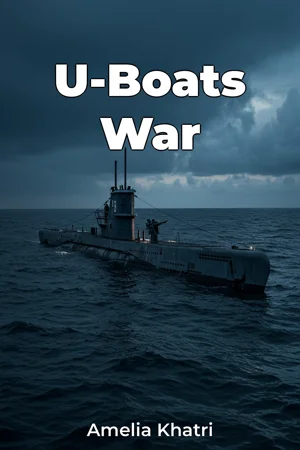
Imagine the vast expanse of the Atlantic Ocean during World War I and World War II, a lifeline for Allied forces, but also a hunting ground for silent predators lurking beneath the waves: German U-boats. This book, "U-Boats War," delves into the chilling reality of Germany's submarine warfare campaigns and their perilous impact on Allied supply lines. The central argument of this book is that the German U-boat strategy represented a significant threat to Allied victory, almost succeeding in disrupting vital supply routes and requiring a massive and multifaceted response to overcome. The book will demonstrate the evolution of U-boat technology, tactics, and the Allied countermeasures designed to neutralize them. Understanding these undersea battles is crucial for comprehending the full scope of 20th-century naval warfare and its impact on global geopolitics. We will begin by exploring the historical context of U-boat development and deployment from World War I through World War II. This includes detailing the technological advancements in submarine design, such as increased range, improved torpedoes, and the introduction of the snorkel, which allowed for extended underwater operations. We will also examine the strategic doctrines employed by the German naval command, including the controversial unrestricted submarine warfare policy and the evolution of "wolfpack" tactics. The book will then focus on the human element, exploring the lives and experiences of U-boat crews and their Allied counterparts in the merchant marine and naval forces. This section will analyze the psychological toll of constant danger, isolation, and the moral ambiguities of unrestricted warfare. Furthermore, the book will investigate the Allied response to the U-boat threat, examining the development of convoy systems, anti-submarine warfare technologies like sonar and radar, and dedicated hunter-killer groups designed to seek out and destroy U-boats. We will assess the effectiveness of each countermeasure and their impact on the overall course of the Battle of the Atlantic. "U-Boats War" relies on a wealth of primary and secondary sources, including official naval records, personal diaries and memoirs of U-boat sailors and Allied merchant seamen, technical specifications of submarines and anti-submarine weaponry, and scholarly analyses of naval strategy. The book also incorporates data on ship sinkings, convoy routes, and U-boat deployment patterns to provide a comprehensive and evidence-based account. This book connects to broader fields of study, including military history, maritime history, and the history of technology. By examining the U-boat war, we can gain insights into the complex interplay between technological innovation, strategic thinking, and human experience in armed conflict. The book also touches on themes of international law and morality, specifically the ethical implications of unrestricted submarine warfare. "U-Boats War" offers a fresh perspective by combining technical analysis with human stories, providing a nuanced understanding of the challenges and sacrifices involved in this critical naval campaign. It is written in a clear and accessible style, suitable for both academic researchers and general readers interested in military history. The target audience includes military history enthusiasts, naval historians, students of World War I and World War II, and anyone interested in the technological and strategic aspects of undersea warfare. The book fulfills the conventions of the military history genre by providing a detailed account of specific battles, technological developments, and strategic decisions, while also exploring the human side of the conflict. The book's scope is limited to the German U-boat campaigns of World War I and World War II, with a particular focus on the Battle of the Atlantic. It does not delve into the submarine warfare strategies of other nations or subsequent conflicts. The information presented in "U-Boats War" has real-world applications for understanding modern naval warfare and the ongoing challenges of maritime security. By studying the successes and failures of past submarine campaigns, we can gain valuable insights into the evolving nature of naval technology and strategy. Furthermore, the book contributes to the ongoing debate about the ethical implications of warfare and the importance of international law in regulating armed conflict.
Imagine the vast expanse of the Atlantic Ocean during World War I and World War II, a lifeline for Allied forces, but also a hunting ground for silent predators lurking beneath the waves: German U-boats. This book, "U-Boats War," delves into the chilling reality of Germany's submarine warfare campaigns and their perilous impact on Allied supply lines. The central argument of this book is that the German U-boat strategy represented a significant threat to Allied victory, almost succeeding in disrupting vital supply routes and requiring a massive and multifaceted response to overcome. The book will demonstrate the evolution of U-boat technology, tactics, and the Allied countermeasures designed to neutralize them. Understanding these undersea battles is crucial for comprehending the full scope of 20th-century naval warfare and its impact on global geopolitics. We will begin by exploring the historical context of U-boat development and deployment from World War I through World War II. This includes detailing the technological advancements in submarine design, such as increased range, improved torpedoes, and the introduction of the snorkel, which allowed for extended underwater operations. We will also examine the strategic doctrines employed by the German naval command, including the controversial unrestricted submarine warfare policy and the evolution of "wolfpack" tactics. The book will then focus on the human element, exploring the lives and experiences of U-boat crews and their Allied counterparts in the merchant marine and naval forces. This section will analyze the psychological toll of constant danger, isolation, and the moral ambiguities of unrestricted warfare. Furthermore, the book will investigate the Allied response to the U-boat threat, examining the development of convoy systems, anti-submarine warfare technologies like sonar and radar, and dedicated hunter-killer groups designed to seek out and destroy U-boats. We will assess the effectiveness of each countermeasure and their impact on the overall course of the Battle of the Atlantic. "U-Boats War" relies on a wealth of primary and secondary sources, including official naval records, personal diaries and memoirs of U-boat sailors and Allied merchant seamen, technical specifications of submarines and anti-submarine weaponry, and scholarly analyses of naval strategy. The book also incorporates data on ship sinkings, convoy routes, and U-boat deployment patterns to provide a comprehensive and evidence-based account. This book connects to broader fields of study, including military history, maritime history, and the history of technology. By examining the U-boat war, we can gain insights into the complex interplay between technological innovation, strategic thinking, and human experience in armed conflict. The book also touches on themes of international law and morality, specifically the ethical implications of unrestricted submarine warfare. "U-Boats War" offers a fresh perspective by combining technical analysis with human stories, providing a nuanced understanding of the challenges and sacrifices involved in this critical naval campaign. It is written in a clear and accessible style, suitable for both academic researchers and general readers interested in military history. The target audience includes military history enthusiasts, naval historians, students of World War I and World War II, and anyone interested in the technological and strategic aspects of undersea warfare. The book fulfills the conventions of the military history genre by providing a detailed account of specific battles, technological developments, and strategic decisions, while also exploring the human side of the conflict. The book's scope is limited to the German U-boat campaigns of World War I and World War II, with a particular focus on the Battle of the Atlantic. It does not delve into the submarine warfare strategies of other nations or subsequent conflicts. The information presented in "U-Boats War" has real-world applications for understanding modern naval warfare and the ongoing challenges of maritime security. By studying the successes and failures of past submarine campaigns, we can gain valuable insights into the evolving nature of naval technology and strategy. Furthermore, the book contributes to the ongoing debate about the ethical implications of warfare and the importance of international law in regulating armed conflict.
"U-Boats War" explores Germany's formidable U-boat campaigns during World War I and World War II, focusing on their strategic importance and impact on Allied supply lines. The narrative delves into the technological advancements of U-boats, such as the snorkel, allowing for extended underwater operations, and the evolution of "wolfpack" tactics, which posed a significant threat in the Battle of the Atlantic. A key insight is the examination of Allied countermeasures, including the development of sonar and convoy systems, highlighting the constant technological and strategic race between the hunters and the hunted. The book uniquely combines technical analysis with personal accounts of U-boat crews and Allied sailors, revealing the psychological toll of submarine warfare. It progresses chronologically, detailing U-boat development, strategic doctrines, and human experiences, before analyzing Allied responses and their effectiveness. Through primary and secondary sources, "U-Boats War" gives a comprehensive view of submarine warfare and its critical role in shaping 20th-century naval history.
Book Details
ISBN
9788233966621
Publisher
Publifye AS
Your Licenses
You don't own any licenses for this book
Purchase a license below to unlock this book and download the EPUB.
Purchase License
Select a tier to unlock this book
Need bulk licensing?
Contact us for enterprise agreements.