
About This Book
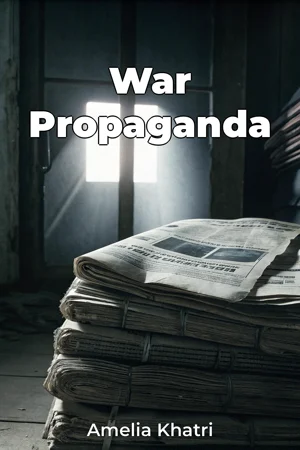
How did nations convince their citizens to embrace war, sacrifice their lives, and support policies that reshaped societies? This book, "War Propaganda," delves into the multifaceted role of propaganda in shaping public opinion, bolstering morale, and driving recruitment efforts during the two World Wars. Understanding war propaganda is crucial because it reveals the power of persuasion, the manipulation of emotions, and the construction of narratives that can mobilize entire populations for conflict, with lasting consequences for global political landscapes. This book will primarily explore two key topics. First, it analyzes the specific techniques employed in war propaganda, from emotionally charged imagery and demonization of the enemy to the selective dissemination of information and the construction of heroic narratives. Second, it examines the impact of propaganda on various segments of society, including soldiers, civilians, and political leaders. Examining these dynamics is essential to understanding the social and psychological mechanisms that enable large-scale conflicts. Historically, the rise of mass media in the 20th century provided unprecedented opportunities for governments to influence public sentiment. The First World War witnessed the first large-scale deployment of systematic propaganda campaigns, with each side attempting to sway both domestic and international opinion. The Second World War saw an even more sophisticated and intensified use of these techniques, fueled by technological advancements in communication. This book assumes a basic understanding of the historical timelines and major events of both World Wars. The central argument of "War Propaganda" is that propaganda was not merely a supplementary tool, but a critical component of warfare, functioning as an instrument to shape perceptions, control behavior, and ultimately, achieve strategic objectives. This argument challenges conventional understandings of war that focus solely on military strategies and economic factors, and instead posits that the manipulation of public consciousness was equally vital. The book's structure will follow a logical progression. The introduction will define propaganda and outline its historical roots. Following introductory concepts, the book will then dedicate chapters to several major points. It will analyze the specific propaganda techniques used by various nations, examining how they differed across contexts and evolved over time. It will also investigate the effects of propaganda on morale, recruitment, and public support for the war effort. Finally, the book will explore the long-term implications of war propaganda. The evidence presented throughout this book is drawn from a wide array of sources, including official government documents, propaganda posters and films, newspaper articles, personal diaries, and survey data that reflect public sentiment. Methodologically, the book will employ a combination of historical analysis, media studies, and social psychology to provide a nuanced understanding of the subject matter. This book also connects to other fields such as political science, sociology, and communication studies. By examining the intersections between these disciplines, the book offers a more holistic perspective on the role of propaganda in shaping social and political realities. "War Propaganda" takes a unique perspective by adopting a comparative approach, analyzing propaganda across different nations and time periods to identify common strategies and contextual variations. This perspective enhances the argument by revealing universal principles of persuasion while also acknowledging the unique historical and cultural factors that shape propaganda campaigns. The tone of this book is academic but accessible, aiming to present complex information in a clear and engaging manner. It is intended for students, scholars, and general readers interested in history, politics, media studies, and the dynamics of warfare. This book will be valuable to them because it provides a comprehensive and insightful analysis of a topic that continues to be relevant in contemporary society. As a work of history and military history, "War Propaganda" adheres to the genre's emphasis on factual accuracy, historical context, and scholarly rigor. The scope of the book focuses on propaganda efforts in the participating nations and their effects. The information in this book can be applied practically by readers seeking to understand contemporary political communication, media manipulation, and the psychological effects of propaganda. In today's world, where disinformation and propaganda are rampant, the ability to critically analyze information and identify manipulative techniques is more crucial than ever. While many studies have explored specific aspects of war propaganda, this book also addresses ongoing debates about the extent to which propaganda can truly shape public opinion and behavior. By presenting a balanced and evidence-based analysis, the book contributes to a more informed understanding of this complex issue.
How did nations convince their citizens to embrace war, sacrifice their lives, and support policies that reshaped societies? This book, "War Propaganda," delves into the multifaceted role of propaganda in shaping public opinion, bolstering morale, and driving recruitment efforts during the two World Wars. Understanding war propaganda is crucial because it reveals the power of persuasion, the manipulation of emotions, and the construction of narratives that can mobilize entire populations for conflict, with lasting consequences for global political landscapes. This book will primarily explore two key topics. First, it analyzes the specific techniques employed in war propaganda, from emotionally charged imagery and demonization of the enemy to the selective dissemination of information and the construction of heroic narratives. Second, it examines the impact of propaganda on various segments of society, including soldiers, civilians, and political leaders. Examining these dynamics is essential to understanding the social and psychological mechanisms that enable large-scale conflicts. Historically, the rise of mass media in the 20th century provided unprecedented opportunities for governments to influence public sentiment. The First World War witnessed the first large-scale deployment of systematic propaganda campaigns, with each side attempting to sway both domestic and international opinion. The Second World War saw an even more sophisticated and intensified use of these techniques, fueled by technological advancements in communication. This book assumes a basic understanding of the historical timelines and major events of both World Wars. The central argument of "War Propaganda" is that propaganda was not merely a supplementary tool, but a critical component of warfare, functioning as an instrument to shape perceptions, control behavior, and ultimately, achieve strategic objectives. This argument challenges conventional understandings of war that focus solely on military strategies and economic factors, and instead posits that the manipulation of public consciousness was equally vital. The book's structure will follow a logical progression. The introduction will define propaganda and outline its historical roots. Following introductory concepts, the book will then dedicate chapters to several major points. It will analyze the specific propaganda techniques used by various nations, examining how they differed across contexts and evolved over time. It will also investigate the effects of propaganda on morale, recruitment, and public support for the war effort. Finally, the book will explore the long-term implications of war propaganda. The evidence presented throughout this book is drawn from a wide array of sources, including official government documents, propaganda posters and films, newspaper articles, personal diaries, and survey data that reflect public sentiment. Methodologically, the book will employ a combination of historical analysis, media studies, and social psychology to provide a nuanced understanding of the subject matter. This book also connects to other fields such as political science, sociology, and communication studies. By examining the intersections between these disciplines, the book offers a more holistic perspective on the role of propaganda in shaping social and political realities. "War Propaganda" takes a unique perspective by adopting a comparative approach, analyzing propaganda across different nations and time periods to identify common strategies and contextual variations. This perspective enhances the argument by revealing universal principles of persuasion while also acknowledging the unique historical and cultural factors that shape propaganda campaigns. The tone of this book is academic but accessible, aiming to present complex information in a clear and engaging manner. It is intended for students, scholars, and general readers interested in history, politics, media studies, and the dynamics of warfare. This book will be valuable to them because it provides a comprehensive and insightful analysis of a topic that continues to be relevant in contemporary society. As a work of history and military history, "War Propaganda" adheres to the genre's emphasis on factual accuracy, historical context, and scholarly rigor. The scope of the book focuses on propaganda efforts in the participating nations and their effects. The information in this book can be applied practically by readers seeking to understand contemporary political communication, media manipulation, and the psychological effects of propaganda. In today's world, where disinformation and propaganda are rampant, the ability to critically analyze information and identify manipulative techniques is more crucial than ever. While many studies have explored specific aspects of war propaganda, this book also addresses ongoing debates about the extent to which propaganda can truly shape public opinion and behavior. By presenting a balanced and evidence-based analysis, the book contributes to a more informed understanding of this complex issue.
"War Propaganda" explores how nations mobilized public support during the World Wars, examining the techniques used to shape opinions and encourage participation. The book delves into emotionally charged imagery, the demonization of enemies, and the selective dissemination of information, revealing how these methods influenced soldiers, civilians, and political leaders alike. Understanding war propaganda is essential because it showcases the power of persuasion and manipulation in large-scale conflicts. The book analyzes specific propaganda techniques across different nations, highlighting both common strategies and contextual variations. By drawing from government documents, posters, films, and personal accounts, it investigates propaganda's impact on morale, recruitment, and public support. This approach challenges conventional understandings of war by asserting that manipulating public consciousness was as crucial as military strategies. The book progresses logically, starting with a definition of propaganda and its historical roots, then moves to analyze specific techniques and their effects. By combining historical analysis, media studies, and social psychology, "War Propaganda" offers a nuanced perspective on this complex subject. This book's exploration of historical events provides readers with a framework for understanding contemporary political communication and media manipulation.
Book Details
ISBN
9788233966584
Publisher
Publifye AS
Your Licenses
You don't own any licenses for this book
Purchase a license below to unlock this book and download the EPUB.
Purchase License
Select a tier to unlock this book
Need bulk licensing?
Contact us for enterprise agreements.