
About This Book
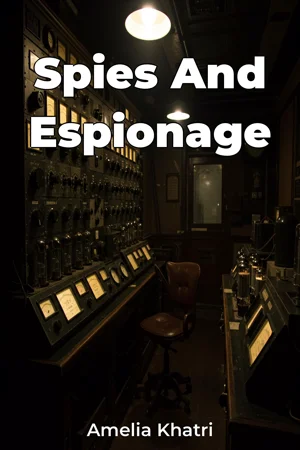
How did espionage shape the course of 20th-century global conflicts? "Spies and Espionage" delves into the clandestine world of intelligence gathering, secret operations, and the intricate networks that played a pivotal, yet often unseen, role in shaping world history, particularly during the World Wars and Cold War era. This book explores the crucial significance of espionage in military history and overall world history, highlighting its impact beyond simple information gathering to influencing political decisions and dictating military strategies. The narratives within uncover the history of espionage, beginning with its emergence as a critical element of warfare and international relations. A broad historical context is provided, detailing the evolution of espionage tactics from simple reconnaissance to complex technological surveillance. The reader requires no prior specialized knowledge; historical events and technological advancements are clarified. The book's central argument emphasizes espionage as a decisive, though frequently overlooked, factor in 20th-century conflicts. By examining specific operations and the individuals involved—from codebreakers to double agents—the book posits that intelligence operations frequently determined the outcome of key battles and influenced crucial policy formulations. The broad structure of the book progresses from an introduction outlining key concepts such as codebreaking, counterintelligence, and the psychology of spies, to detailed examinations of specific historical events. Major points include: an analysis of codebreaking efforts during World War II, focusing on Bletchley Park and the breaking of the Enigma code; the role of spies and spy networks in influencing the Eastern Front; covert operations during the Cold War era, including the Berlin Tunnel and the Cuban Missile Crisis; and the evolution of espionage technology, including the use of aerial reconnaissance and satellite surveillance. The arguments culminate in an analysis of ethical implications and the long-term impact of espionage on international relations. "Spies and Espionage" relies on a wide range of primary and secondary sources. These include declassified government documents, personal memoirs of intelligence officers, and academic research. The book also utilizes detailed analyses of specific intelligence operations, supported by maps, photographs, and diagrams, to illustrate the complexities of the trade. This book connects to other areas of study, including political science, sociology, and technology studies. The study of espionage intersects with political science by examining the influence of intelligence on foreign policy decision-making. It relates to sociology through the analysis of group dynamics and the motivations of individuals involved in espionage activities. Connections to technology studies are evident in the examination of surveillance technologies and their impact. A unique perspective offered is the evaluation of espionage operations not merely as isolated events, but as complex human endeavors shaped by individual psychology, technological advancements, and ethical constraints. The book addresses ongoing debates in the field, such as the balance between national security and individual privacy, and the ethical considerations of espionage tactics. "Spies and Espionage" is written in a professional yet accessible style. The tone is informative and analytical, aiming to engage the reader while maintaining academic rigor. The target audience includes history enthusiasts, students, and anyone interested in military history and international relations. The book will appeal to readers seeking a comprehensive, fact-based account of espionage. As a work of historical non-fiction, the book adheres to journalistic standards of accuracy and objectivity. The scope is broad, covering major espionage operations across the globe, with some limitations in the depth of coverage for specific minor operations. The book avoids sensationalism and concentrates on presenting a balanced and nuanced perspective, offering readers a clear understanding of the methods, motivations, and consequences of espionage.
How did espionage shape the course of 20th-century global conflicts? "Spies and Espionage" delves into the clandestine world of intelligence gathering, secret operations, and the intricate networks that played a pivotal, yet often unseen, role in shaping world history, particularly during the World Wars and Cold War era. This book explores the crucial significance of espionage in military history and overall world history, highlighting its impact beyond simple information gathering to influencing political decisions and dictating military strategies. The narratives within uncover the history of espionage, beginning with its emergence as a critical element of warfare and international relations. A broad historical context is provided, detailing the evolution of espionage tactics from simple reconnaissance to complex technological surveillance. The reader requires no prior specialized knowledge; historical events and technological advancements are clarified. The book's central argument emphasizes espionage as a decisive, though frequently overlooked, factor in 20th-century conflicts. By examining specific operations and the individuals involved—from codebreakers to double agents—the book posits that intelligence operations frequently determined the outcome of key battles and influenced crucial policy formulations. The broad structure of the book progresses from an introduction outlining key concepts such as codebreaking, counterintelligence, and the psychology of spies, to detailed examinations of specific historical events. Major points include: an analysis of codebreaking efforts during World War II, focusing on Bletchley Park and the breaking of the Enigma code; the role of spies and spy networks in influencing the Eastern Front; covert operations during the Cold War era, including the Berlin Tunnel and the Cuban Missile Crisis; and the evolution of espionage technology, including the use of aerial reconnaissance and satellite surveillance. The arguments culminate in an analysis of ethical implications and the long-term impact of espionage on international relations. "Spies and Espionage" relies on a wide range of primary and secondary sources. These include declassified government documents, personal memoirs of intelligence officers, and academic research. The book also utilizes detailed analyses of specific intelligence operations, supported by maps, photographs, and diagrams, to illustrate the complexities of the trade. This book connects to other areas of study, including political science, sociology, and technology studies. The study of espionage intersects with political science by examining the influence of intelligence on foreign policy decision-making. It relates to sociology through the analysis of group dynamics and the motivations of individuals involved in espionage activities. Connections to technology studies are evident in the examination of surveillance technologies and their impact. A unique perspective offered is the evaluation of espionage operations not merely as isolated events, but as complex human endeavors shaped by individual psychology, technological advancements, and ethical constraints. The book addresses ongoing debates in the field, such as the balance between national security and individual privacy, and the ethical considerations of espionage tactics. "Spies and Espionage" is written in a professional yet accessible style. The tone is informative and analytical, aiming to engage the reader while maintaining academic rigor. The target audience includes history enthusiasts, students, and anyone interested in military history and international relations. The book will appeal to readers seeking a comprehensive, fact-based account of espionage. As a work of historical non-fiction, the book adheres to journalistic standards of accuracy and objectivity. The scope is broad, covering major espionage operations across the globe, with some limitations in the depth of coverage for specific minor operations. The book avoids sensationalism and concentrates on presenting a balanced and nuanced perspective, offering readers a clear understanding of the methods, motivations, and consequences of espionage.
"Spies and Espionage" explores the hidden world of intelligence gathering and its profound impact on 20th-century conflicts. Examining espionage as more than just information collection, the book reveals how it influenced critical political decisions and military strategies during events like World War II and the Cold War. It highlights the evolution of espionage tactics, from basic reconnaissance to sophisticated technological surveillance, emphasizing its decisive role in shaping historical outcomes. For example, codebreaking efforts at Bletchley Park significantly altered the course of World War II, showcasing the power of intelligence in military history. The book progresses from foundational concepts like codebreaking and counterintelligence to detailed analyses of specific historical events. It investigates the role of spy networks on the Eastern Front and covert operations like the Berlin Tunnel, illustrating the complexities of secret operations. Relying on declassified documents and personal memoirs, "Spies and Espionage" offers a balanced perspective on the methods, motivations, and consequences of espionage, making it valuable for history enthusiasts and those interested in international relations.
Book Details
ISBN
9788233966492
Publisher
Publifye AS
Your Licenses
You don't own any licenses for this book
Purchase a license below to unlock this book and download the EPUB.
Purchase License
Select a tier to unlock this book
Need bulk licensing?
Contact us for enterprise agreements.