
About This Book
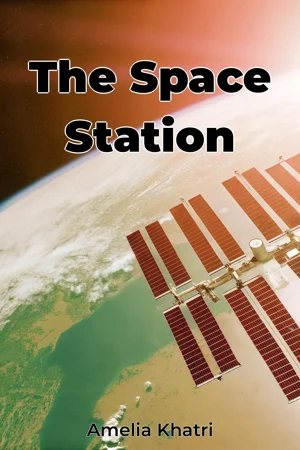
Have you ever looked up at the night sky and wondered about the incredible feat of engineering and international collaboration orbiting above us? "The Space Station" delves into the compelling history, scientific significance, and human challenges inherent in the International Space Station (ISS). This book explores not only how the ISS came to be, but also why it represents a pivotal moment in space exploration and what its existence reveals about the future of humanity's endeavors beyond Earth. Central to understanding the ISS are several key topics. First, its historical development, tracing the evolution from initial concepts to its current multinational structure. Second, its profound scientific contributions across various disciplines, including biology, physics, and medicine, offering unparalleled research opportunities in a microgravity environment. Third, the relentless challenges faced by astronauts living and working in space, from psychological isolation to the physiological effects of long-duration spaceflight. These topics are important because the ISS stands as a testament to global cooperation in the face of complex scientific and logistical hurdles. We begin by providing essential background, detailing the Cold War space race that initially spurred rapid advancements in space technology, and later, the shift towards collaborative international efforts. The book assumes no prior in-depth knowledge of astrophysics, but familiarity with basic scientific principles will enhance the reader's understanding. The central argument of "The Space Station" highlights its importance as a stepping stone for future space exploration and a model for international cooperation. The book asserts that the ISS, despite its challenges and costs, is crucial for testing technologies, understanding human adaptation to space, and fostering partnerships necessary for more ambitious missions, such as lunar bases or journeys to Mars. The book's structure begins with an introduction to space exploration and the initial conceptualization of space stations. We then explore the political and technological factors that led to the ISS's construction and assembly, dedicating chapters to the contributions of each participating nation. Major sections then delve into the scientific research conducted onboard, showcasing experiments and their implications for life on Earth and in space. A significant portion of the book is devoted to the experiences of astronauts, drawing upon interviews, mission logs, and scientific studies to paint a realistic picture of life in orbit. Finally, we assess the future of the ISS, considering its potential successors and its role in shaping future space endeavors. The evidence presented is drawn from a compilation of sources, including NASA reports, scientific publications, firsthand accounts from astronauts, and historical archives. The book utilizes data from experiments conducted on the ISS to support claims about the effects of microgravity on various systems, and includes interviews with key figures involved in the ISS program. "The Space Station" intersects with different fields of study. Firstly, political science, by examining the complexities of international collaboration and the role of space exploration in global relations. Secondly, engineering, by delving into the design and technological innovations necessary to build and maintain a habitable space station. Thirdly, medicine, by exploring the physiological and psychological effects of spaceflight on the human body and developing countermeasures. What distinguishes "The Space Station" is its dual focus on the human element as well as the scientific and technological aspects of the ISS. By integrating the voices and experiences of astronauts alongside detailed scientific data, the book offers a holistic understanding of this remarkable endeavor. The tone is informative and accessible, aiming to engage a broad audience while maintaining scientific accuracy. The intended readership includes space enthusiasts, students, and anyone curious about the ISS and its significance. As a work of non-fiction history and science, "The Space Station" adheres to principles of accuracy, objectivity, and evidence-based analysis. While the book covers a broad range of topics related to the ISS, it intentionally avoids overly speculative discussions about future space technologies beyond those directly connected to the ISS program. The information shared can be applied practically by readers interested in space-related careers or those seeking to understand the challenges and rewards of international scientific collaboration. The book touches on debates surrounding the cost-effectiveness of the ISS relative to other space exploration initiatives, presenting different perspectives and arguments.
Have you ever looked up at the night sky and wondered about the incredible feat of engineering and international collaboration orbiting above us? "The Space Station" delves into the compelling history, scientific significance, and human challenges inherent in the International Space Station (ISS). This book explores not only how the ISS came to be, but also why it represents a pivotal moment in space exploration and what its existence reveals about the future of humanity's endeavors beyond Earth. Central to understanding the ISS are several key topics. First, its historical development, tracing the evolution from initial concepts to its current multinational structure. Second, its profound scientific contributions across various disciplines, including biology, physics, and medicine, offering unparalleled research opportunities in a microgravity environment. Third, the relentless challenges faced by astronauts living and working in space, from psychological isolation to the physiological effects of long-duration spaceflight. These topics are important because the ISS stands as a testament to global cooperation in the face of complex scientific and logistical hurdles. We begin by providing essential background, detailing the Cold War space race that initially spurred rapid advancements in space technology, and later, the shift towards collaborative international efforts. The book assumes no prior in-depth knowledge of astrophysics, but familiarity with basic scientific principles will enhance the reader's understanding. The central argument of "The Space Station" highlights its importance as a stepping stone for future space exploration and a model for international cooperation. The book asserts that the ISS, despite its challenges and costs, is crucial for testing technologies, understanding human adaptation to space, and fostering partnerships necessary for more ambitious missions, such as lunar bases or journeys to Mars. The book's structure begins with an introduction to space exploration and the initial conceptualization of space stations. We then explore the political and technological factors that led to the ISS's construction and assembly, dedicating chapters to the contributions of each participating nation. Major sections then delve into the scientific research conducted onboard, showcasing experiments and their implications for life on Earth and in space. A significant portion of the book is devoted to the experiences of astronauts, drawing upon interviews, mission logs, and scientific studies to paint a realistic picture of life in orbit. Finally, we assess the future of the ISS, considering its potential successors and its role in shaping future space endeavors. The evidence presented is drawn from a compilation of sources, including NASA reports, scientific publications, firsthand accounts from astronauts, and historical archives. The book utilizes data from experiments conducted on the ISS to support claims about the effects of microgravity on various systems, and includes interviews with key figures involved in the ISS program. "The Space Station" intersects with different fields of study. Firstly, political science, by examining the complexities of international collaboration and the role of space exploration in global relations. Secondly, engineering, by delving into the design and technological innovations necessary to build and maintain a habitable space station. Thirdly, medicine, by exploring the physiological and psychological effects of spaceflight on the human body and developing countermeasures. What distinguishes "The Space Station" is its dual focus on the human element as well as the scientific and technological aspects of the ISS. By integrating the voices and experiences of astronauts alongside detailed scientific data, the book offers a holistic understanding of this remarkable endeavor. The tone is informative and accessible, aiming to engage a broad audience while maintaining scientific accuracy. The intended readership includes space enthusiasts, students, and anyone curious about the ISS and its significance. As a work of non-fiction history and science, "The Space Station" adheres to principles of accuracy, objectivity, and evidence-based analysis. While the book covers a broad range of topics related to the ISS, it intentionally avoids overly speculative discussions about future space technologies beyond those directly connected to the ISS program. The information shared can be applied practically by readers interested in space-related careers or those seeking to understand the challenges and rewards of international scientific collaboration. The book touches on debates surrounding the cost-effectiveness of the ISS relative to other space exploration initiatives, presenting different perspectives and arguments.
"The Space Station" explores the history, science, and human stories behind the International Space Station (ISS). It highlights the ISS as a symbol of international collaboration and a crucial platform for scientific research in microgravity, impacting fields from biology to medicine. The book reveals how the ISS overcame political and technological hurdles, evolving from Cold War space race origins to a cooperative global endeavor. Discover how astronauts face challenges like psychological isolation and physiological changes, contributing invaluable data for future space missions. The book begins with the early concepts of space stations and the political climate that spurred the ISS's creation. It dedicates sections to the contributions of different nations and showcases the scientific research conducted on board, emphasizing its implications for life on Earth and in space. Drawing from NASA reports, astronaut interviews, and scientific publications, the book paints a holistic picture of life in orbit. The book stands out by balancing scientific detail with the personal experiences of astronauts, offering a unique perspective on this remarkable feat of engineering and human endeavor.
Book Details
ISBN
9788233966409
Publisher
Publifye AS
Your Licenses
You don't own any licenses for this book
Purchase a license below to unlock this book and download the EPUB.
Purchase License
Select a tier to unlock this book
Need bulk licensing?
Contact us for enterprise agreements.