
About This Book
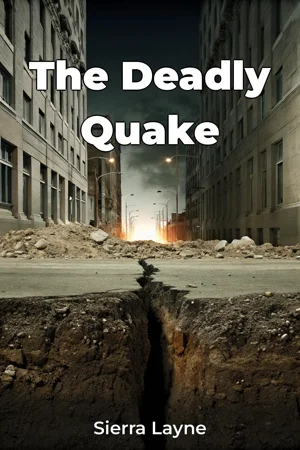
Imagine the earth suddenly lurching beneath your feet, buildings crumbling, and the very ground transforming into a deadly, undulating wave. This is the terrifying reality of major earthquakes, events that have reshaped landscapes and human history. "The Deadly Quake" delves into the heart of these natural disasters, exploring their devastating impact and the intricate science that attempts to explain them. This book examines two key areas: the science of seismology, which seeks to understand the causes and mechanics of earthquakes; and the human impact of these events, detailing the social, economic, and environmental consequences of some of the world’s most powerful tremors. Understanding both aspects is crucial. While science strives to predict and mitigate the effects of earthquakes, comprehending their impact on communities allows for better preparedness and resilience. The context for this investigation lies in the Earth's dynamic geological processes. Readers will gain insights into plate tectonics, fault lines, and the buildup of stress within the Earth's crust. No prior expertise in geology is needed. The book presents fundamental concepts in an accessible manner. The central argument of "The Deadly Quake" is that while we cannot prevent earthquakes, a comprehensive understanding of their science and impact is essential for minimizing their destructive potential on human lives and infrastructure. This knowledge empowers communities, informs policy decisions, and drives innovation in earthquake-resistant design. The book begins by introducing the basic principles of seismology, explaining how earthquakes occur, how their magnitude is measured, and how seismic waves propagate through the Earth. It then explores some of the most significant earthquakes in recorded history, examining the geological settings that triggered them and the resulting devastation. Events like the 1906 San Francisco earthquake, the 2004 Indian Ocean tsunami-generating earthquake, and the 2011 Tohoku earthquake and tsunami in Japan are analyzed in detail. The book culminates in a discussion of earthquake prediction, mitigation strategies, and the role of building codes and disaster preparedness in reducing vulnerability. Throughout the book, case studies are presented, illustrating the human cost of earthquakes and the challenges of recovery. The evidence presented draws from seismic data, historical records, eyewitness accounts, and scientific research papers. Data from global seismic networks are used to visualize earthquake locations and magnitudes. The study contains photographs and maps to help illustrate the impact of the quakes. "The Deadly Quake" connects to several other fields. It touches upon engineering, exploring earthquake-resistant building designs and infrastructure development. It intersects with sociology and disaster management, examining how communities respond to and recover from earthquakes. The book also relates to public policy and governance, as effective earthquake preparedness requires informed decision-making at all levels. This book offers a multidisciplinary perspective, combining scientific analysis with human stories to provide a complete exploration of the world's most devastating earthquakes. The book's tone is informative and balanced, presenting scientific concepts in a way that is accessible to a broad readership while remaining factually correct. Personal accounts and case studies are interspersed to add a human dimension. The intended audience is anyone interested in earth sciences, natural disasters, or the impact of geological events on society. It is also relevant to students, policymakers, and emergency management professionals. As a work of geography and earth sciences, "The Deadly Quake" adheres to the genre's conventions of accuracy, objectivity, and evidence-based analysis. The scope of the book is global, encompassing earthquakes from different regions and geological settings. However, it focuses on major earthquakes with significant impacts, rather than attempting to provide an exhaustive catalog of every seismic event. Readers will learn about earthquake-resistant construction techniques, disaster preparedness strategies, and the importance of community resilience. They will gain a deeper appreciation for the power of natural forces and the importance of understanding and mitigating their impacts. The field of earthquake prediction remains a subject of ongoing debate and research. While short-term prediction remains elusive, "The Deadly Quake" explores the potential of long-term forecasting and the use of early warning systems.
Imagine the earth suddenly lurching beneath your feet, buildings crumbling, and the very ground transforming into a deadly, undulating wave. This is the terrifying reality of major earthquakes, events that have reshaped landscapes and human history. "The Deadly Quake" delves into the heart of these natural disasters, exploring their devastating impact and the intricate science that attempts to explain them. This book examines two key areas: the science of seismology, which seeks to understand the causes and mechanics of earthquakes; and the human impact of these events, detailing the social, economic, and environmental consequences of some of the world’s most powerful tremors. Understanding both aspects is crucial. While science strives to predict and mitigate the effects of earthquakes, comprehending their impact on communities allows for better preparedness and resilience. The context for this investigation lies in the Earth's dynamic geological processes. Readers will gain insights into plate tectonics, fault lines, and the buildup of stress within the Earth's crust. No prior expertise in geology is needed. The book presents fundamental concepts in an accessible manner. The central argument of "The Deadly Quake" is that while we cannot prevent earthquakes, a comprehensive understanding of their science and impact is essential for minimizing their destructive potential on human lives and infrastructure. This knowledge empowers communities, informs policy decisions, and drives innovation in earthquake-resistant design. The book begins by introducing the basic principles of seismology, explaining how earthquakes occur, how their magnitude is measured, and how seismic waves propagate through the Earth. It then explores some of the most significant earthquakes in recorded history, examining the geological settings that triggered them and the resulting devastation. Events like the 1906 San Francisco earthquake, the 2004 Indian Ocean tsunami-generating earthquake, and the 2011 Tohoku earthquake and tsunami in Japan are analyzed in detail. The book culminates in a discussion of earthquake prediction, mitigation strategies, and the role of building codes and disaster preparedness in reducing vulnerability. Throughout the book, case studies are presented, illustrating the human cost of earthquakes and the challenges of recovery. The evidence presented draws from seismic data, historical records, eyewitness accounts, and scientific research papers. Data from global seismic networks are used to visualize earthquake locations and magnitudes. The study contains photographs and maps to help illustrate the impact of the quakes. "The Deadly Quake" connects to several other fields. It touches upon engineering, exploring earthquake-resistant building designs and infrastructure development. It intersects with sociology and disaster management, examining how communities respond to and recover from earthquakes. The book also relates to public policy and governance, as effective earthquake preparedness requires informed decision-making at all levels. This book offers a multidisciplinary perspective, combining scientific analysis with human stories to provide a complete exploration of the world's most devastating earthquakes. The book's tone is informative and balanced, presenting scientific concepts in a way that is accessible to a broad readership while remaining factually correct. Personal accounts and case studies are interspersed to add a human dimension. The intended audience is anyone interested in earth sciences, natural disasters, or the impact of geological events on society. It is also relevant to students, policymakers, and emergency management professionals. As a work of geography and earth sciences, "The Deadly Quake" adheres to the genre's conventions of accuracy, objectivity, and evidence-based analysis. The scope of the book is global, encompassing earthquakes from different regions and geological settings. However, it focuses on major earthquakes with significant impacts, rather than attempting to provide an exhaustive catalog of every seismic event. Readers will learn about earthquake-resistant construction techniques, disaster preparedness strategies, and the importance of community resilience. They will gain a deeper appreciation for the power of natural forces and the importance of understanding and mitigating their impacts. The field of earthquake prediction remains a subject of ongoing debate and research. While short-term prediction remains elusive, "The Deadly Quake" explores the potential of long-term forecasting and the use of early warning systems.
"The Deadly Quake" explores the science and devastating impact of earthquakes, major natural disasters that reshape our world. It delves into seismology, explaining how these geological events occur due to plate tectonics and fault lines, releasing powerful seismic waves. The book highlights the importance of understanding both the science and the human impact to improve disaster preparedness. The book examines significant earthquakes throughout history, detailing their geological settings, magnitude, and resulting devastation. For example, the book notes that the 2004 Indian Ocean earthquake triggered a massive tsunami, and the 1906 San Francisco earthquake led to widespread destruction. It emphasizes the need for earthquake-resistant design and community resilience. Progressing from the basic principles to mitigation strategies, the book uses seismic data, historical records, and case studies to provide a comprehensive overview. This book is unique because it offers a multidisciplinary perspective, combining Earth science with human stories. It connects to fields such as engineering, sociology, and public policy. By exploring earthquake prediction debates and early warning systems, "The Deadly Quake" empowers readers with knowledge to minimize the potential destruction of future earthquakes.
Book Details
ISBN
9788233966317
Publisher
Publifye AS
Your Licenses
You don't own any licenses for this book
Purchase a license below to unlock this book and download the EPUB.
Purchase License
Select a tier to unlock this book
Need bulk licensing?
Contact us for enterprise agreements.