
About This Book
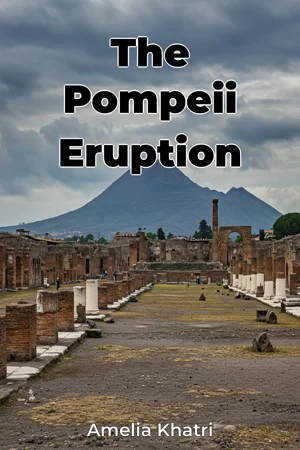
Imagine a city frozen in time, its inhabitants captured in their final moments, their lives abruptly ended and yet remarkably preserved. What secrets can this ancient tragedy reveal about Roman life, volcanic forces, and the enduring power of nature's destructive capabilities? "The Pompeii Eruption" delves into the catastrophic eruption of Mount Vesuvius in 79 AD, an event that buried Pompeii and its surrounding areas under layers of ash and pumice, inadvertently creating an unparalleled archaeological site. This book explores three central themes. First, it provides an Earth Sciences Geography perspective, carefully deconstructing the geological processes behind the eruption of Mount Vesuvius. This includes detailing the volcano's structure, the types of magma involved, the mechanics of the explosive eruption, and the dispersal patterns of volcanic materials. Understanding these facets is vital for appreciating the sheer force and deadly reach of the event. Second, the narrative examines the daily lives and culture of the people of Pompeii, offering a unique glimpse into Roman society at its peak. The book analyzes the city's architecture, infrastructure, economy, social structure, and artistic endeavors, all of which were meticulously preserved under the volcanic debris. Finally, the book presents a History-driven account of the eruption's impact on the broader Roman world. It investigates how this catastrophe was perceived and recorded by contemporary historians, and the long-term consequences for the region. To fully appreciate the events, the book begins with a concise overview of volcanology and Roman history. Specifically, it covers basic concepts related to plate tectonics, volcanic activity, and the social and political landscape of the Roman Empire during the first century AD. The central argument of "The Pompeii Eruption" is that the preservation of Pompeii, while tragic, offers an unparalleled opportunity to understand both the destructive power of natural phenomena and the intricacies of a complex and vibrant ancient civilization. The book first introduces the geological and geographical context of Mount Vesuvius and the Bay of Naples. It outlines the science behind stratovolcanoes and the specific conditions that led to the 79 AD eruption. The narrative then shifts to a detailed exploration of Pompeii itself, reconstructing its urban environment based on archaeological evidence. It dedicates attention to the city's houses, public buildings, businesses, and religious sites, providing a vivid portrait of daily life. The final section of the book focuses on the eruption itself, meticulously reconstructing the sequence of events based on geological data and historical accounts, culminating in the city's entombment and subsequent rediscovery. The evidence presented draws from a wide array of sources, including geological surveys, archaeological excavations, ancient Roman texts (such as Pliny the Younger's letters), and modern scientific analyses of the volcanic ash and human remains. Unique data sources include detailed LiDAR scans of the site and advanced chemical analyses of the pyroclastic flows. This book connects earth sciences Geography with history and archaeology, providing a holistic analysis of the eruption and its consequences. It further delves into the field of disaster studies, offering insights into how societies respond to and are shaped by large-scale natural disasters. By taking an interdisciplinary approach, "The Pompeii Eruption" presents a far more nuanced and complete picture of this pivotal event than a single-discipline study could achieve. The narrative is presented in a fact-based, non-narrative style, striving for a balance between scholarly rigor and engaging prose. The approach aims to be both informative and accessible, appealing to a broad audience with an interest in history, archaeology, and earth sciences. The target audience includes students, history enthusiasts, volcanology aficionados, and anyone interested in learning about the fascinating intersection of natural disasters and human civilization. This book is valuable to them because it provides a comprehensive, up-to-date, and scientifically grounded account of the Pompeii eruption, synthesizing multiple perspectives into a single cohesive narrative. As a work of fact-based non-fiction, this book adheres to the genre's conventions by prioritizing accuracy, objectivity, and evidence-based arguments. While the book strives for comprehensive coverage, it acknowledges certain limitations. The primary focus remains on the eruption's impact on Pompeii, with less emphasis on other affected areas, such as Herculaneum. Furthermore, the book does not delve into the complex ethical issues surrounding the excavation and display of human remains, focusing instead on the scientific and historical significance of the finds. The information contained within this book has real-world applications for understanding and mitigating volcanic hazards in the present day. It showcases the importance of monitoring active volcanoes, understanding eruption dynamics, and developing effective evacuation strategies. The book also touches upon the ongoing debates regarding the interpretation of archaeological evidence and the reconstruction of past events, while maintaining a neutral and evidence-based stance.
Imagine a city frozen in time, its inhabitants captured in their final moments, their lives abruptly ended and yet remarkably preserved. What secrets can this ancient tragedy reveal about Roman life, volcanic forces, and the enduring power of nature's destructive capabilities? "The Pompeii Eruption" delves into the catastrophic eruption of Mount Vesuvius in 79 AD, an event that buried Pompeii and its surrounding areas under layers of ash and pumice, inadvertently creating an unparalleled archaeological site. This book explores three central themes. First, it provides an Earth Sciences Geography perspective, carefully deconstructing the geological processes behind the eruption of Mount Vesuvius. This includes detailing the volcano's structure, the types of magma involved, the mechanics of the explosive eruption, and the dispersal patterns of volcanic materials. Understanding these facets is vital for appreciating the sheer force and deadly reach of the event. Second, the narrative examines the daily lives and culture of the people of Pompeii, offering a unique glimpse into Roman society at its peak. The book analyzes the city's architecture, infrastructure, economy, social structure, and artistic endeavors, all of which were meticulously preserved under the volcanic debris. Finally, the book presents a History-driven account of the eruption's impact on the broader Roman world. It investigates how this catastrophe was perceived and recorded by contemporary historians, and the long-term consequences for the region. To fully appreciate the events, the book begins with a concise overview of volcanology and Roman history. Specifically, it covers basic concepts related to plate tectonics, volcanic activity, and the social and political landscape of the Roman Empire during the first century AD. The central argument of "The Pompeii Eruption" is that the preservation of Pompeii, while tragic, offers an unparalleled opportunity to understand both the destructive power of natural phenomena and the intricacies of a complex and vibrant ancient civilization. The book first introduces the geological and geographical context of Mount Vesuvius and the Bay of Naples. It outlines the science behind stratovolcanoes and the specific conditions that led to the 79 AD eruption. The narrative then shifts to a detailed exploration of Pompeii itself, reconstructing its urban environment based on archaeological evidence. It dedicates attention to the city's houses, public buildings, businesses, and religious sites, providing a vivid portrait of daily life. The final section of the book focuses on the eruption itself, meticulously reconstructing the sequence of events based on geological data and historical accounts, culminating in the city's entombment and subsequent rediscovery. The evidence presented draws from a wide array of sources, including geological surveys, archaeological excavations, ancient Roman texts (such as Pliny the Younger's letters), and modern scientific analyses of the volcanic ash and human remains. Unique data sources include detailed LiDAR scans of the site and advanced chemical analyses of the pyroclastic flows. This book connects earth sciences Geography with history and archaeology, providing a holistic analysis of the eruption and its consequences. It further delves into the field of disaster studies, offering insights into how societies respond to and are shaped by large-scale natural disasters. By taking an interdisciplinary approach, "The Pompeii Eruption" presents a far more nuanced and complete picture of this pivotal event than a single-discipline study could achieve. The narrative is presented in a fact-based, non-narrative style, striving for a balance between scholarly rigor and engaging prose. The approach aims to be both informative and accessible, appealing to a broad audience with an interest in history, archaeology, and earth sciences. The target audience includes students, history enthusiasts, volcanology aficionados, and anyone interested in learning about the fascinating intersection of natural disasters and human civilization. This book is valuable to them because it provides a comprehensive, up-to-date, and scientifically grounded account of the Pompeii eruption, synthesizing multiple perspectives into a single cohesive narrative. As a work of fact-based non-fiction, this book adheres to the genre's conventions by prioritizing accuracy, objectivity, and evidence-based arguments. While the book strives for comprehensive coverage, it acknowledges certain limitations. The primary focus remains on the eruption's impact on Pompeii, with less emphasis on other affected areas, such as Herculaneum. Furthermore, the book does not delve into the complex ethical issues surrounding the excavation and display of human remains, focusing instead on the scientific and historical significance of the finds. The information contained within this book has real-world applications for understanding and mitigating volcanic hazards in the present day. It showcases the importance of monitoring active volcanoes, understanding eruption dynamics, and developing effective evacuation strategies. The book also touches upon the ongoing debates regarding the interpretation of archaeological evidence and the reconstruction of past events, while maintaining a neutral and evidence-based stance.
"The Pompeii Eruption" explores the devastating 79 AD eruption of Mount Vesuvius and its profound impact. The book provides a multidisciplinary examination of this pivotal event, blending Earth Sciences Geography, History, and Archaeology. It unveils the geological processes behind the eruption, offers a glimpse into the daily lives of Pompeii's inhabitants, and examines the catastrophe's far-reaching consequences on the Roman world. The book highlights how the eruption, while tragic, created a unique archaeological site, preserving an ancient civilization in remarkable detail. The book begins by setting the stage with an overview of volcanology and Roman history, before delving into the specific geological conditions and geographical context of Mount Vesuvius. It then reconstructs Pompeii's urban environment, showcasing its architecture, social structures, and economic activities. A key insight involves the examination of pyroclastic flows, revealing their speed and devastating impact. The book culminates with a meticulous reconstruction of the eruption's sequence of events, drawing upon geological data and historical accounts like Pliny the Younger's letters. This book emphasizes the importance of understanding volcanic hazards and their impact on societies.
Book Details
ISBN
9788233966287
Publisher
Publifye AS
Your Licenses
You don't own any licenses for this book
Purchase a license below to unlock this book and download the EPUB.
Purchase License
Select a tier to unlock this book
Need bulk licensing?
Contact us for enterprise agreements.