
About This Book
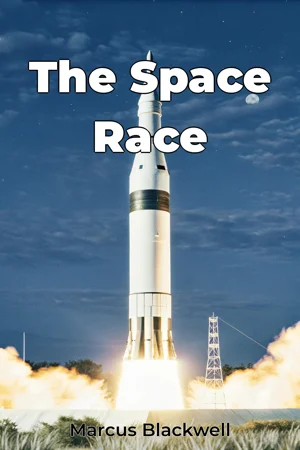
What if the Cold War had been fought not with bullets, but with rockets? "The Space Race" explores the intense rivalry between the United States and the Soviet Union as they embarked on a relentless quest to conquer the final frontier. This historical narrative delves into the political, social, and scientific forces that propelled these two superpowers into a high-stakes competition, culminating in the historic first moon landing. This book illuminates how the Space Race became a crucial battleground in the larger Cold War, reflecting each nation's ambitions, ideologies, and technological prowess. The book centers on three main topics: the ideological clash between the U.S. and the Soviet Union, the rapid advancements in rocketry and space technology, and the human stories behind the scientists, engineers, and astronauts who made it all possible. These topics are profoundly relevant because they demonstrate how geopolitical tensions can drive innovation and push the boundaries of human achievement, while also revealing the personal sacrifices and triumphs of those involved. To understand the Space Race, it is essential to consider the historical context of World War II and its aftermath. The Cold War created a world where technological superiority equaled national security, and space became the ultimate symbol of that superiority. Prior knowledge of basic physics, rocketry, and Cold War history will enhance the reader's understanding, though all concepts are explained clearly. The central argument of "The Space Race" is that the competition was significantly influenced by political and propaganda objectives, not purely driven by scientific exploration. This argument is important because it challenges the conventional narrative of purely scientific advancement, revealing the extent to which political motivations shaped technological development and national priorities. This book is structured to provide a comprehensive view of this era. It begins by introducing the initial stages of rocketry development, including the influence of German scientists. It then develops the narrative through major points: the launch of Sputnik and its impact on American psyche and education, Project Mercury and the race to put a human in space, and Project Gemini's essential steps toward lunar missions. The narrative culminates with the Apollo program and the first moon landing, analyzing its global impact. The book further explores the practical implications of the Space Race, including the development of satellite technology and its lasting effects on communication, navigation, and environmental monitoring. The book draws upon diverse evidence, including declassified documents from both the U.S. and Soviet space programs, personal accounts from astronauts and engineers, and scientific publications from the period. Unique data sources of images and recovered audio further inform the narrative. "The Space Race" has interdisciplinary connections with political science, engineering, and sociology. It examines how political ideologies shaped technological development, explores the engineering challenges of space travel, and analyzes the social impact of the Space Race on national identity and culture. These connections enhance the book's argument by showing how the Space Race was not just a scientific endeavor but a complex interplay of political, technological, and societal forces. This book adopts a chronological approach but focuses on comparing and contrasting both American and Soviet strategies, challenges, and achievements. The book will appeal to readers interested in history, science, and Cold War politics. It would be valuable to students, researchers, and anyone seeking a comprehensive understanding of one of the most transformative periods in human history. As a work of history, "The Space Race" adheres to rigorous standards of accuracy and objectivity. While the book covers major events and figures, it also acknowledges and corrects existing misconceptions surrounding the Space Race, particularly regarding Soviet achievements and contributions. The information in this book can be applied to understanding present space exploration endeavors. Furthermore, it provides applicable lessons in international relations and highlights the potential for technological innovation when driven by both competition and collaboration. The book also delves into some controversies, such as debates surrounding the true motivations behind the Apollo program, accusations of espionage and sabotage, and discussions on the ethical implications of prioritizing space exploration over other social needs. The scope of the book is intentionally limited to the period between the end of World War II and the end of the Apollo program. This restriction allows for a deep dive into the specific dynamics of the U.S.-Soviet rivalry and its immediate consequences.
What if the Cold War had been fought not with bullets, but with rockets? "The Space Race" explores the intense rivalry between the United States and the Soviet Union as they embarked on a relentless quest to conquer the final frontier. This historical narrative delves into the political, social, and scientific forces that propelled these two superpowers into a high-stakes competition, culminating in the historic first moon landing. This book illuminates how the Space Race became a crucial battleground in the larger Cold War, reflecting each nation's ambitions, ideologies, and technological prowess. The book centers on three main topics: the ideological clash between the U.S. and the Soviet Union, the rapid advancements in rocketry and space technology, and the human stories behind the scientists, engineers, and astronauts who made it all possible. These topics are profoundly relevant because they demonstrate how geopolitical tensions can drive innovation and push the boundaries of human achievement, while also revealing the personal sacrifices and triumphs of those involved. To understand the Space Race, it is essential to consider the historical context of World War II and its aftermath. The Cold War created a world where technological superiority equaled national security, and space became the ultimate symbol of that superiority. Prior knowledge of basic physics, rocketry, and Cold War history will enhance the reader's understanding, though all concepts are explained clearly. The central argument of "The Space Race" is that the competition was significantly influenced by political and propaganda objectives, not purely driven by scientific exploration. This argument is important because it challenges the conventional narrative of purely scientific advancement, revealing the extent to which political motivations shaped technological development and national priorities. This book is structured to provide a comprehensive view of this era. It begins by introducing the initial stages of rocketry development, including the influence of German scientists. It then develops the narrative through major points: the launch of Sputnik and its impact on American psyche and education, Project Mercury and the race to put a human in space, and Project Gemini's essential steps toward lunar missions. The narrative culminates with the Apollo program and the first moon landing, analyzing its global impact. The book further explores the practical implications of the Space Race, including the development of satellite technology and its lasting effects on communication, navigation, and environmental monitoring. The book draws upon diverse evidence, including declassified documents from both the U.S. and Soviet space programs, personal accounts from astronauts and engineers, and scientific publications from the period. Unique data sources of images and recovered audio further inform the narrative. "The Space Race" has interdisciplinary connections with political science, engineering, and sociology. It examines how political ideologies shaped technological development, explores the engineering challenges of space travel, and analyzes the social impact of the Space Race on national identity and culture. These connections enhance the book's argument by showing how the Space Race was not just a scientific endeavor but a complex interplay of political, technological, and societal forces. This book adopts a chronological approach but focuses on comparing and contrasting both American and Soviet strategies, challenges, and achievements. The book will appeal to readers interested in history, science, and Cold War politics. It would be valuable to students, researchers, and anyone seeking a comprehensive understanding of one of the most transformative periods in human history. As a work of history, "The Space Race" adheres to rigorous standards of accuracy and objectivity. While the book covers major events and figures, it also acknowledges and corrects existing misconceptions surrounding the Space Race, particularly regarding Soviet achievements and contributions. The information in this book can be applied to understanding present space exploration endeavors. Furthermore, it provides applicable lessons in international relations and highlights the potential for technological innovation when driven by both competition and collaboration. The book also delves into some controversies, such as debates surrounding the true motivations behind the Apollo program, accusations of espionage and sabotage, and discussions on the ethical implications of prioritizing space exploration over other social needs. The scope of the book is intentionally limited to the period between the end of World War II and the end of the Apollo program. This restriction allows for a deep dive into the specific dynamics of the U.S.-Soviet rivalry and its immediate consequences.
"The Space Race" explores the intense rivalry between the United States and the Soviet Union during the Cold War, focusing on their relentless pursuit to conquer space. This historical narrative investigates the political, social, and scientific forces driving this high-stakes competition, which culminated in the iconic moon landing. The book reveals how the Space Race became a crucial battleground reflecting each nation's ambitions and technological prowess. Central to this era was the rapid advancement in rocketry, fueled by the ideological clash between the two superpowers. It wasn't just about science; the political and propaganda objectives significantly influenced the competition. The book begins by examining early rocketry development and the influence of German scientists, then progresses through pivotal moments like the launch of Sputnik, Project Mercury, Project Gemini, and the Apollo program. It draws upon diverse evidence, including declassified documents and personal accounts, to provide a comprehensive view. By contrasting American and Soviet strategies, the book offers a valuable understanding of this transformative period in world history, highlighting the lasting impact of space exploration on communication, navigation, and environmental monitoring.
Book Details
ISBN
9788233966232
Publisher
Publifye AS
Your Licenses
You don't own any licenses for this book
Purchase a license below to unlock this book and download the EPUB.
Purchase License
Select a tier to unlock this book
Need bulk licensing?
Contact us for enterprise agreements.