
About This Book
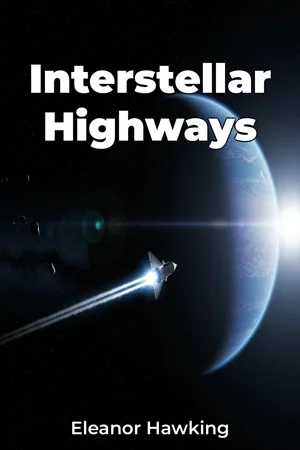
Could humanity one day traverse the vast interstellar gulfs separating us from other star systems, realizing the dream of widespread space exploration and perhaps even contact with extraterrestrial life? This book, "Interstellar Highways," explores the theoretical and practical possibilities of achieving faster-than-ever space travel, focusing on gravitational assists, warp drives, and the potential existence of space highways. These topics are crucial because they represent the cutting edge of our understanding of physics and offer potential pathways to overcome the limitations of conventional propulsion methods, which currently restrict interstellar voyages to timescales far exceeding human lifespans. We begin by placing our current capabilities within a historical context, examining the evolution of rocketry and space travel from early experiments to modern-day missions. We then delve into the theoretical underpinnings necessary to understand the concepts of faster-than-light travel. This includes a review of Einstein’s theory of relativity, its limitations, and potential loopholes exploited by advanced propulsion systems. No prior knowledge of advanced physics is required, as we build upon established concepts gradually and comprehensively. The central argument of "Interstellar Highways" is that while interstellar travel currently remains beyond our technological reach, ongoing research and theoretical developments offer tangible possibilities for accelerating space travel in the future. It underscores the fact that continued investment in scientific research and technological innovation is vital for unlocking these possibilities and realizing the next giant leap for humankind. The book is structured to guide the reader through a logical progression of ideas. First, it introduces the concept of gravitational assists, a technique already in use to accelerate spacecraft by leveraging the gravitational fields of planets. We examine the physics behind this method and its limitations, showcasing how future missions could optimize these maneuvers for maximum efficiency. Next, we explore the more speculative, yet intensely researched, concept of warp drives. This involves theoretical frameworks currently explored to bend spacetime, allowing for faster-than-light travel without violating the laws of physics as we know them. Finally, we examine the possibility of "space highways," hypothetical pathways through the cosmos where gravitational forces and spacetime geometries could facilitate easier and faster travel between distant points, potentially exploiting wormholes or other topological features of space. The book concludes by considering the practical applications and implications of these technologies, discussing the potential impact on future space exploration, resource utilization, and the search for extraterrestrial intelligence. Throughout the book, we rely on a combination of theoretical models, simulation data, and experimental results from current space missions to support our arguments. We draw upon data from NASA, ESA, and other relevant organizations, as well as published research in physics, engineering, and astrophysics journals. Examples of spacecraft trajectory data, visualizations of spacetime curvature, and energy requirements for various propulsion systems are provided. "Interstellar Highways" bridges the gap between theoretical physics and practical engineering, connecting fields like cosmology, materials science, and propulsion technology. The book's argument is enhanced by considering the economic and social impacts of interstellar travel, highlighting the potential for collaboration and innovation across different scientific disciplines. The book presents a balanced and thoroughly researched perspective, carefully distinguishing between established scientific principles and speculative theories. It encourages critical thinking and emphasizes the importance of continued research and development in the pursuit of interstellar travel. The style is informative yet accessible, aimed at a general audience with an interest in science and space exploration. The book avoids jargon where possible and provides clear explanations of complex concepts. The target audience includes science enthusiasts, students, researchers, and anyone with a curiosity about the future of space travel. It is valuable because it consolidates current knowledge and theoretical developments in this rapidly evolving field, providing a comprehensive overview of the challenges and possibilities that lie ahead. As a work of non-fiction, "Interstellar Highways" emphasizes accuracy, objectivity, and verifiable evidence. It adheres to the genre's convention of providing thorough citations and references for all claims and data presented. The scope of the book is limited to the scientific and technological aspects of achieving faster space travel, focusing on the physics and engineering challenges. It does not delve into the philosophical or ethical implications of interstellar contact or colonization. The information presented in the book can be applied to ongoing research efforts, informing the development of new propulsion technologies and space mission designs. It can also serve as a valuable resource for educators and students interested in space exploration and physics. We address the ongoing debates surrounding the feasibility of warp drives and the existence of wormholes, presenting both sides of the argument and highlighting the areas where further research is needed.
Could humanity one day traverse the vast interstellar gulfs separating us from other star systems, realizing the dream of widespread space exploration and perhaps even contact with extraterrestrial life? This book, "Interstellar Highways," explores the theoretical and practical possibilities of achieving faster-than-ever space travel, focusing on gravitational assists, warp drives, and the potential existence of space highways. These topics are crucial because they represent the cutting edge of our understanding of physics and offer potential pathways to overcome the limitations of conventional propulsion methods, which currently restrict interstellar voyages to timescales far exceeding human lifespans. We begin by placing our current capabilities within a historical context, examining the evolution of rocketry and space travel from early experiments to modern-day missions. We then delve into the theoretical underpinnings necessary to understand the concepts of faster-than-light travel. This includes a review of Einstein’s theory of relativity, its limitations, and potential loopholes exploited by advanced propulsion systems. No prior knowledge of advanced physics is required, as we build upon established concepts gradually and comprehensively. The central argument of "Interstellar Highways" is that while interstellar travel currently remains beyond our technological reach, ongoing research and theoretical developments offer tangible possibilities for accelerating space travel in the future. It underscores the fact that continued investment in scientific research and technological innovation is vital for unlocking these possibilities and realizing the next giant leap for humankind. The book is structured to guide the reader through a logical progression of ideas. First, it introduces the concept of gravitational assists, a technique already in use to accelerate spacecraft by leveraging the gravitational fields of planets. We examine the physics behind this method and its limitations, showcasing how future missions could optimize these maneuvers for maximum efficiency. Next, we explore the more speculative, yet intensely researched, concept of warp drives. This involves theoretical frameworks currently explored to bend spacetime, allowing for faster-than-light travel without violating the laws of physics as we know them. Finally, we examine the possibility of "space highways," hypothetical pathways through the cosmos where gravitational forces and spacetime geometries could facilitate easier and faster travel between distant points, potentially exploiting wormholes or other topological features of space. The book concludes by considering the practical applications and implications of these technologies, discussing the potential impact on future space exploration, resource utilization, and the search for extraterrestrial intelligence. Throughout the book, we rely on a combination of theoretical models, simulation data, and experimental results from current space missions to support our arguments. We draw upon data from NASA, ESA, and other relevant organizations, as well as published research in physics, engineering, and astrophysics journals. Examples of spacecraft trajectory data, visualizations of spacetime curvature, and energy requirements for various propulsion systems are provided. "Interstellar Highways" bridges the gap between theoretical physics and practical engineering, connecting fields like cosmology, materials science, and propulsion technology. The book's argument is enhanced by considering the economic and social impacts of interstellar travel, highlighting the potential for collaboration and innovation across different scientific disciplines. The book presents a balanced and thoroughly researched perspective, carefully distinguishing between established scientific principles and speculative theories. It encourages critical thinking and emphasizes the importance of continued research and development in the pursuit of interstellar travel. The style is informative yet accessible, aimed at a general audience with an interest in science and space exploration. The book avoids jargon where possible and provides clear explanations of complex concepts. The target audience includes science enthusiasts, students, researchers, and anyone with a curiosity about the future of space travel. It is valuable because it consolidates current knowledge and theoretical developments in this rapidly evolving field, providing a comprehensive overview of the challenges and possibilities that lie ahead. As a work of non-fiction, "Interstellar Highways" emphasizes accuracy, objectivity, and verifiable evidence. It adheres to the genre's convention of providing thorough citations and references for all claims and data presented. The scope of the book is limited to the scientific and technological aspects of achieving faster space travel, focusing on the physics and engineering challenges. It does not delve into the philosophical or ethical implications of interstellar contact or colonization. The information presented in the book can be applied to ongoing research efforts, informing the development of new propulsion technologies and space mission designs. It can also serve as a valuable resource for educators and students interested in space exploration and physics. We address the ongoing debates surrounding the feasibility of warp drives and the existence of wormholes, presenting both sides of the argument and highlighting the areas where further research is needed.
"Interstellar Highways" delves into the captivating possibilities of interstellar travel, exploring how humanity might one day traverse the vast distances separating us from other star systems. The book investigates cutting-edge concepts like gravitational assists, warp drives, and hypothetical space highways, aiming to overcome limitations of conventional propulsion. It underscores that while faster-than-light travel remains theoretical, ongoing research offers tangible possibilities for accelerating space exploration. The book progressively builds upon established concepts, requiring no prior knowledge of advanced physics, and uses Einstein's theory of relativity as a framework. The book begins by examining the historical evolution of space travel and rocketry, then transitions into theoretical underpinnings. It explores gravitational assists, a technique already in use, and more speculative concepts like warp drives that involve bending spacetime. It further discusses the potential of space highways, where gravitational forces and spacetime geometries could facilitate faster travel, possibly through wormholes. "Interstellar Highways" bridges theoretical physics and practical engineering, providing a comprehensive overview of the challenges and possibilities in this evolving field, supported by data from organizations like NASA and ESA.
Book Details
ISBN
9788233966096
Publisher
Publifye AS
Your Licenses
You don't own any licenses for this book
Purchase a license below to unlock this book and download the EPUB.
Purchase License
Select a tier to unlock this book
Need bulk licensing?
Contact us for enterprise agreements.