
About This Book
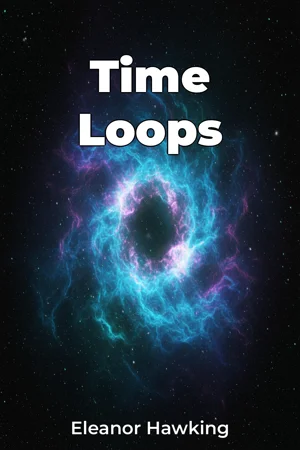
What if time, the seemingly linear progression we all experience, isn't so linear after all? This book, "Time Loops," delves into the captivating realm of theoretical physics to explore the possibility of time repeating itself, the existence of closed timelike curves, and the fascinating implications of time loops. We will investigate the scientific theories that both support and challenge these concepts, providing a comprehensive overview of one of the most perplexing and intriguing areas of modern physics. This exploration is important because understanding the nature of time is crucial for comprehending the fundamental laws of the universe. Furthermore, the concept of time travel, while often relegated to science fiction, has profound implications for causality, determinism, and the very fabric of reality. We will start by laying a foundation in the established theories of physics, including Einstein's theory of relativity, which forms the backbone of our understanding of spacetime. No prior expertise in advanced physics is required; we will carefully introduce the key concepts, such as spacetime curvature and the speed of light, ensuring that the reader is equipped to follow the more complex arguments presented later. The central argument of "Time Loops" is that while current physical laws do not definitively preclude the existence of time loops and closed timelike curves, the conditions necessary for their formation are so extreme and hypothetical that their actual existence remains highly speculative. The importance of this argument lies in its rigorous examination of the boundaries of our current knowledge, prompting further research and pushing the limits of theoretical physics. The first few chapters of "Time Loops" will introduce the fundamental principles of spacetime and causality. We will then delve into the theoretical constructs that permit the possibility of time loops, such as wormholes and cosmic strings, examining the mathematical models and thought experiments that underpin these ideas. A significant portion of the book will be devoted to exploring the paradoxes that arise from time travel, such as the grandfather paradox, and the various proposed resolutions, including the many-worlds interpretation of quantum mechanics. Finally, we conclude by examining the implications of time loops for our understanding of determinism and free will. The book will present evidence from a variety of sources, including peer-reviewed scientific papers, mathematical models, and observational data from astrophysics. We will critically assess the strengths and weaknesses of each line of evidence, providing a balanced and nuanced perspective on the topic. "Time Loops" has interdisciplinary connections to philosophy, particularly in the areas of metaphysics and ethics, exploring the philosophical implications of time travel paradoxes and the nature of causality. It also connects to computer science through discussions on computational models of spacetime and the potential for simulating time loops. Furthermore, the book touches on the history of science, examining how our understanding of time has evolved over centuries. A unique aspect of this book is its focus on the inherent limitations of our current models. Rather than presenting time loops as a fait accompli, we emphasize the speculative nature of these concepts and the many unanswered questions that remain. The book is written in a clear and accessible style, avoiding jargon wherever possible and providing detailed explanations of complex concepts. The intended audience includes science enthusiasts, students of physics and philosophy, and anyone curious about the nature of time and the possibilities of time travel. It serves as a valuable resource for anyone seeking a comprehensive and up-to-date overview of this fascinating field. The scope of "Time Loops" is limited to the scientific and philosophical aspects of time loops and closed timelike curves. It does not delve into the fictional representations of time travel in literature and film, except when used as illustrative examples. The concepts discussed in "Time Loops" have real-world applications in fields such as quantum computing. Understanding the behavior of quantum systems in non-linear time could lead to new computational paradigms. Furthermore, the exploration of causality and determinism has implications for artificial intelligence and the design of autonomous systems. The book will address ongoing debates within the physics community regarding the viability of different models of time travel and the interpretation of quantum mechanics. It presents these debates fairly, highlighting the different viewpoints and the evidence supporting each side.
What if time, the seemingly linear progression we all experience, isn't so linear after all? This book, "Time Loops," delves into the captivating realm of theoretical physics to explore the possibility of time repeating itself, the existence of closed timelike curves, and the fascinating implications of time loops. We will investigate the scientific theories that both support and challenge these concepts, providing a comprehensive overview of one of the most perplexing and intriguing areas of modern physics. This exploration is important because understanding the nature of time is crucial for comprehending the fundamental laws of the universe. Furthermore, the concept of time travel, while often relegated to science fiction, has profound implications for causality, determinism, and the very fabric of reality. We will start by laying a foundation in the established theories of physics, including Einstein's theory of relativity, which forms the backbone of our understanding of spacetime. No prior expertise in advanced physics is required; we will carefully introduce the key concepts, such as spacetime curvature and the speed of light, ensuring that the reader is equipped to follow the more complex arguments presented later. The central argument of "Time Loops" is that while current physical laws do not definitively preclude the existence of time loops and closed timelike curves, the conditions necessary for their formation are so extreme and hypothetical that their actual existence remains highly speculative. The importance of this argument lies in its rigorous examination of the boundaries of our current knowledge, prompting further research and pushing the limits of theoretical physics. The first few chapters of "Time Loops" will introduce the fundamental principles of spacetime and causality. We will then delve into the theoretical constructs that permit the possibility of time loops, such as wormholes and cosmic strings, examining the mathematical models and thought experiments that underpin these ideas. A significant portion of the book will be devoted to exploring the paradoxes that arise from time travel, such as the grandfather paradox, and the various proposed resolutions, including the many-worlds interpretation of quantum mechanics. Finally, we conclude by examining the implications of time loops for our understanding of determinism and free will. The book will present evidence from a variety of sources, including peer-reviewed scientific papers, mathematical models, and observational data from astrophysics. We will critically assess the strengths and weaknesses of each line of evidence, providing a balanced and nuanced perspective on the topic. "Time Loops" has interdisciplinary connections to philosophy, particularly in the areas of metaphysics and ethics, exploring the philosophical implications of time travel paradoxes and the nature of causality. It also connects to computer science through discussions on computational models of spacetime and the potential for simulating time loops. Furthermore, the book touches on the history of science, examining how our understanding of time has evolved over centuries. A unique aspect of this book is its focus on the inherent limitations of our current models. Rather than presenting time loops as a fait accompli, we emphasize the speculative nature of these concepts and the many unanswered questions that remain. The book is written in a clear and accessible style, avoiding jargon wherever possible and providing detailed explanations of complex concepts. The intended audience includes science enthusiasts, students of physics and philosophy, and anyone curious about the nature of time and the possibilities of time travel. It serves as a valuable resource for anyone seeking a comprehensive and up-to-date overview of this fascinating field. The scope of "Time Loops" is limited to the scientific and philosophical aspects of time loops and closed timelike curves. It does not delve into the fictional representations of time travel in literature and film, except when used as illustrative examples. The concepts discussed in "Time Loops" have real-world applications in fields such as quantum computing. Understanding the behavior of quantum systems in non-linear time could lead to new computational paradigms. Furthermore, the exploration of causality and determinism has implications for artificial intelligence and the design of autonomous systems. The book will address ongoing debates within the physics community regarding the viability of different models of time travel and the interpretation of quantum mechanics. It presents these debates fairly, highlighting the different viewpoints and the evidence supporting each side.
"Time Loops" explores the captivating, yet speculative, realm of theoretical physics, focusing on the possibility of time repeating itself through closed timelike curves. The book delves into the scientific theories that both support and challenge the concept of time loops, offering a comprehensive overview of this perplexing area. Intrigued readers will learn about the implications of time travel, which has profound effects on causality, determinism, and the very fabric of reality. The book begins by grounding readers in established physics, including Einstein's theory of relativity and spacetime, before moving into theoretical constructs like wormholes and cosmic strings that might permit time loops. A significant portion of the book examines the paradoxes that arise from time travel, such as the grandfather paradox, and the proposed resolutions, including the many-worlds interpretation of quantum mechanics. The approach emphasizes the inherent limitations of our current models, highlighting the speculative nature of time loops and the many unanswered questions that remain. It concludes by examining the implications of time loops for our understanding of determinism and free will.
Book Details
ISBN
9788233966010
Publisher
Publifye AS
Your Licenses
You don't own any licenses for this book
Purchase a license below to unlock this book and download the EPUB.
Purchase License
Select a tier to unlock this book
Need bulk licensing?
Contact us for enterprise agreements.