
About This Book
Have you ever considered that the seemingly static, star-studded sky is actually a dynamic arena of cosmic collisions? "Galactic Collisions" explores the fascinating and complex interactions that occur when galaxies, the largest structures in the universe, collide and merge. It's a process that reshapes not only the galaxies themselves but also influences the formation of stars and the distribution of matter on a grand scale, directly impacting the future evolution of the universe. Understanding these collisions is vital as it helps us piece together the history of our own galaxy, the Milky Way, and predict its eventual fate. This book delves into the heart of galactic encounters, addressing key questions about the mechanics of these collisions, their effects on stellar populations, and the broader cosmological implications. We will examine the gravitational forces at play, the role of dark matter, and the surprising resilience of stars amidst such cataclysmic events. The importance of these topics lies in their ability to unlock secrets about galaxy formation, the evolution of supermassive black holes, and the distribution of dark matter within galactic halos. To fully appreciate the impact of galactic collisions, we'll first provide necessary background on the structure of galaxies, the nature of gravity, and the principles of astrophysics. We'll touch upon the historical development of our understanding of galaxies, from their initial classification by Edwin Hubble to modern simulations of galaxy mergers. No prior expertise is required, as we will build the essential knowledge base step-by-step. The central argument presented in "Galactic Collisions" is that galactic mergers are a fundamental driving force in the evolution of the cosmos, shaping the morphologies of galaxies, triggering star formation, and fueling the growth of supermassive black holes at their centers. This argument challenges the notion of galaxies as isolated islands and highlights the interconnectedness of cosmic structures. It also provides a framework for understanding the diversity of galaxy types observed in the universe. The book is structured to provide a clear and comprehensive exploration of galactic collisions. First, we introduce the basic concepts of galaxy structure, dark matter halos, and gravitational dynamics. Second, we delve into the physics of galaxy mergers, exploring the different types of collisions (major vs. minor) and their characteristic features. This section uses simulations and observational data to illustrate the effects of these collisions. Third, we focus on the impact of mergers on star formation, examining how these events can trigger bursts of star formation or quench star formation altogether. Finally, we discuss the role of mergers in the evolution of supermassive black holes, highlighting their importance in the growth and activity of active galactic nuclei (AGN). We culminate by detailing the eventual collision between the Milky Way and Andromeda galaxies, the likely long-term consequences and its significance within the broader context of cosmic evolution. The evidence presented throughout this book comes from a variety of sources, including observational data from telescopes like the Hubble Space Telescope and the James Webb Space Telescope. We will also use research from advanced computer simulations of galaxy mergers. These simulations, based on the laws of physics, allow us to model the complex interactions that occur during collisions and test our understanding of these processes. "Galactic Collisions" connects to other fields such as cosmology, particle physics, and computational astrophysics. The study of galactic collisions relies on cosmological models to understand the large-scale structure of the universe. The inclusion of dark matter within the simulations requires insight from particle physics. The reliance on computational methods connects with the field of computational astrophysics. These connections enrich our understanding of the subject matter and highlight the interdisciplinary nature of modern astrophysics. This book provides a comprehensive overview of galactic collisions, using a balanced approach that combines observational data, theoretical models, and computer simulations to provide a clear and accessible explanation of these complex phenomena. The target audience for this book includes undergraduate students in physics and astronomy, amateur astronomers interested in learning more about galaxy evolution, and general science enthusiasts eager to explore the latest discoveries in astrophysics. This book provides valuable insight into our universe. As a work of non-fiction science writing, "Galactic Collisions" adheres to the conventions of accuracy, objectivity, and clarity. The scope of the book is limited to the physics and astrophysics of galactic collisions, with less focus on the philosophical or sociological implications. The knowledge gained from this book can be applied to improve our understanding of the evolution of our own galaxy, the Milky Way, and to interpret the observations of distant galaxies. While the basic physics governing galactic collisions are well-established, there are ongoing debates about the precise details of how mergers trigger star formation and fuel the growth of supermassive black holes. This book will highlight these areas of active research and present different perspectives on these unresolved questions.
Have you ever considered that the seemingly static, star-studded sky is actually a dynamic arena of cosmic collisions? "Galactic Collisions" explores the fascinating and complex interactions that occur when galaxies, the largest structures in the universe, collide and merge. It's a process that reshapes not only the galaxies themselves but also influences the formation of stars and the distribution of matter on a grand scale, directly impacting the future evolution of the universe. Understanding these collisions is vital as it helps us piece together the history of our own galaxy, the Milky Way, and predict its eventual fate. This book delves into the heart of galactic encounters, addressing key questions about the mechanics of these collisions, their effects on stellar populations, and the broader cosmological implications. We will examine the gravitational forces at play, the role of dark matter, and the surprising resilience of stars amidst such cataclysmic events. The importance of these topics lies in their ability to unlock secrets about galaxy formation, the evolution of supermassive black holes, and the distribution of dark matter within galactic halos. To fully appreciate the impact of galactic collisions, we'll first provide necessary background on the structure of galaxies, the nature of gravity, and the principles of astrophysics. We'll touch upon the historical development of our understanding of galaxies, from their initial classification by Edwin Hubble to modern simulations of galaxy mergers. No prior expertise is required, as we will build the essential knowledge base step-by-step. The central argument presented in "Galactic Collisions" is that galactic mergers are a fundamental driving force in the evolution of the cosmos, shaping the morphologies of galaxies, triggering star formation, and fueling the growth of supermassive black holes at their centers. This argument challenges the notion of galaxies as isolated islands and highlights the interconnectedness of cosmic structures. It also provides a framework for understanding the diversity of galaxy types observed in the universe. The book is structured to provide a clear and comprehensive exploration of galactic collisions. First, we introduce the basic concepts of galaxy structure, dark matter halos, and gravitational dynamics. Second, we delve into the physics of galaxy mergers, exploring the different types of collisions (major vs. minor) and their characteristic features. This section uses simulations and observational data to illustrate the effects of these collisions. Third, we focus on the impact of mergers on star formation, examining how these events can trigger bursts of star formation or quench star formation altogether. Finally, we discuss the role of mergers in the evolution of supermassive black holes, highlighting their importance in the growth and activity of active galactic nuclei (AGN). We culminate by detailing the eventual collision between the Milky Way and Andromeda galaxies, the likely long-term consequences and its significance within the broader context of cosmic evolution. The evidence presented throughout this book comes from a variety of sources, including observational data from telescopes like the Hubble Space Telescope and the James Webb Space Telescope. We will also use research from advanced computer simulations of galaxy mergers. These simulations, based on the laws of physics, allow us to model the complex interactions that occur during collisions and test our understanding of these processes. "Galactic Collisions" connects to other fields such as cosmology, particle physics, and computational astrophysics. The study of galactic collisions relies on cosmological models to understand the large-scale structure of the universe. The inclusion of dark matter within the simulations requires insight from particle physics. The reliance on computational methods connects with the field of computational astrophysics. These connections enrich our understanding of the subject matter and highlight the interdisciplinary nature of modern astrophysics. This book provides a comprehensive overview of galactic collisions, using a balanced approach that combines observational data, theoretical models, and computer simulations to provide a clear and accessible explanation of these complex phenomena. The target audience for this book includes undergraduate students in physics and astronomy, amateur astronomers interested in learning more about galaxy evolution, and general science enthusiasts eager to explore the latest discoveries in astrophysics. This book provides valuable insight into our universe. As a work of non-fiction science writing, "Galactic Collisions" adheres to the conventions of accuracy, objectivity, and clarity. The scope of the book is limited to the physics and astrophysics of galactic collisions, with less focus on the philosophical or sociological implications. The knowledge gained from this book can be applied to improve our understanding of the evolution of our own galaxy, the Milky Way, and to interpret the observations of distant galaxies. While the basic physics governing galactic collisions are well-established, there are ongoing debates about the precise details of how mergers trigger star formation and fuel the growth of supermassive black holes. This book will highlight these areas of active research and present different perspectives on these unresolved questions.
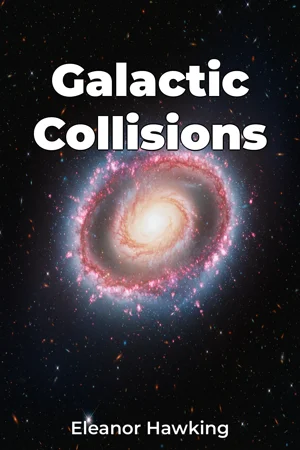
"Galactic Collisions" explores the dynamic realm of galaxy interactions, revealing how these cosmic events drive galaxy evolution and influence the universe's structure. It highlights how galactic mergers reshape galaxies, trigger star formation, and fuel supermassive black holes at their centers. These collisions challenge the notion of galaxies as isolated entities, emphasizing the interconnectedness of cosmic structures. Did you know that stars rarely collide during galaxy mergers due to the vast distances between them, or that tidal forces during these events can create stunning features like tidal tails? The book begins by establishing a foundational understanding of galaxy structure, dark matter halos, and gravitational dynamics. It then progresses into an examination of the physics underlying galaxy mergers, classifying different collision types and their unique characteristics. Observational data from telescopes like the Hubble Space Telescope is combined with advanced computer simulations to illustrate these complex processes. The book concludes with a detailed look at the future collision between the Milky Way and the Andromeda galaxy, offering insights into the long-term consequences and its place in cosmic evolution.
Book Details
ISBN
9788233965945
Publisher
Publifye AS
Your Licenses
You don't own any licenses for this book
Purchase a license below to unlock this book and download the EPUB.
Purchase License
Select a tier to unlock this book
Need bulk licensing?
Contact us for enterprise agreements.