
About This Book
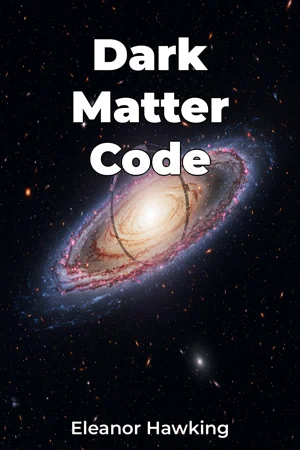
Have you ever looked up at the night sky and wondered what makes up the vast majority of the universe? The answer, surprisingly, is something we can't directly see: dark matter. "Dark Matter Code" delves into the enigmatic world of this invisible substance, exploring its profound influence on the cosmos and the ongoing quest to unravel its secrets. This book tackles three main concepts: the nature of dark matter itself, its role in shaping galaxies and large-scale cosmic structures, and the experimental and theoretical efforts to detect and understand it. These topics are crucial because dark matter constitutes approximately 85% of the universe's mass, yet its composition remains unknown. Understanding it promises to revolutionize our understanding of physics, cosmology, and the evolution of the universe. To fully appreciate the significance of dark matter, we begin with a historical overview of its discovery, tracing back to early observations of galactic rotation curves that defied Newtonian physics. We explain the concept of gravitational lensing and the Cosmic Microwave Background, providing the reader with a firm foundation in the astronomical observations that point toward dark matter's existence. The central argument of "Dark Matter Code" is that despite the absence of direct detection, the accumulated indirect evidence overwhelmingly supports the existence of dark matter, and that a multi-pronged approach – combining astrophysical observations, particle physics experiments, and advanced simulations – is essential to cracking the 'Dark Matter Code'. This assertion is significant because it counters alternative theories that attempt to explain the same phenomena without invoking dark matter, emphasizing the robustness and explanatory power of the standard cosmological model. The book is structured to guide the reader through this complex subject in a clear and logical way. First, the introduction lays out the fundamental evidence for dark matter and introduces the various candidate particles proposed to constitute it, such as WIMPs (Weakly Interacting Massive Particles) and axions. Second, subsequent chapters delve into the role of dark matter in galaxy formation and the large-scale structure of the universe. We will explore how simulations of cosmic evolution, incorporating dark matter, accurately reproduce the observed distribution of galaxies. Third, the heart of the book focuses on the diverse experimental efforts aimed at directly detecting dark matter particles, from underground detectors designed to capture rare interactions to collider experiments seeking to create dark matter in the lab. Finally, we discuss the implications of dark matter research for our understanding of fundamental physics and the future of cosmology. The book draws upon a wide range of data, including observational data from telescopes like Hubble and James Webb Space Telescope, results from particle physics experiments such as the Large Hadron Collider, and data from underground dark matter detectors. It also includes visualizations generated from complex cosmological simulations, enabling the reader to grasp the large-scale effects of dark matter. "Dark Matter Code" connects to several interdisciplinary fields. Particle physics provides theoretical frameworks for dark matter candidates, cosmology offers the astrophysical context for dark matter's influence, and computer science enables the massive simulations needed to model dark matter's effects on cosmic structure. This book distinguishes itself by presenting a balanced view of the field, acknowledging both the successes and the challenges of dark matter research. It avoids sensationalism, instead focusing on a rigorous and evidence-based approach, while highlighting the inherent uncertainties and open questions driving current research. The tone is both informative and engaging, aiming to be accessible to readers with a general science background while still providing sufficient depth for those with more specialized knowledge. The target audience includes students, science enthusiasts, and researchers in related fields who seek a comprehensive and up-to-date overview of dark matter. No prior knowledge of particle physics or cosmology is assumed, though a basic understanding of algebra and physics would be helpful. As a work of science non-fiction, "Dark Matter Code" adheres to standards of accuracy, objectivity, and clear communication. It presents complex topics in an understandable manner, supported by evidence and citations. The scope of the book is limited to the observational evidence for dark matter, its role in structure formation, and the direct and indirect search efforts. It does not delve into alternative theories of gravity, such as Modified Newtonian Dynamics (MOND), in detail, although these are acknowledged when relevant. The real-world applications of dark matter research extend beyond fundamental science. The technologies developed for dark matter detection have applications in other fields, such as medical imaging and materials science. While the existence of dark matter is widely accepted within the scientific community, the nature of dark matter remains a subject of intense debate. The book addresses these controversies, presenting different viewpoints and evaluating the strengths and weaknesses of each.
Have you ever looked up at the night sky and wondered what makes up the vast majority of the universe? The answer, surprisingly, is something we can't directly see: dark matter. "Dark Matter Code" delves into the enigmatic world of this invisible substance, exploring its profound influence on the cosmos and the ongoing quest to unravel its secrets. This book tackles three main concepts: the nature of dark matter itself, its role in shaping galaxies and large-scale cosmic structures, and the experimental and theoretical efforts to detect and understand it. These topics are crucial because dark matter constitutes approximately 85% of the universe's mass, yet its composition remains unknown. Understanding it promises to revolutionize our understanding of physics, cosmology, and the evolution of the universe. To fully appreciate the significance of dark matter, we begin with a historical overview of its discovery, tracing back to early observations of galactic rotation curves that defied Newtonian physics. We explain the concept of gravitational lensing and the Cosmic Microwave Background, providing the reader with a firm foundation in the astronomical observations that point toward dark matter's existence. The central argument of "Dark Matter Code" is that despite the absence of direct detection, the accumulated indirect evidence overwhelmingly supports the existence of dark matter, and that a multi-pronged approach – combining astrophysical observations, particle physics experiments, and advanced simulations – is essential to cracking the 'Dark Matter Code'. This assertion is significant because it counters alternative theories that attempt to explain the same phenomena without invoking dark matter, emphasizing the robustness and explanatory power of the standard cosmological model. The book is structured to guide the reader through this complex subject in a clear and logical way. First, the introduction lays out the fundamental evidence for dark matter and introduces the various candidate particles proposed to constitute it, such as WIMPs (Weakly Interacting Massive Particles) and axions. Second, subsequent chapters delve into the role of dark matter in galaxy formation and the large-scale structure of the universe. We will explore how simulations of cosmic evolution, incorporating dark matter, accurately reproduce the observed distribution of galaxies. Third, the heart of the book focuses on the diverse experimental efforts aimed at directly detecting dark matter particles, from underground detectors designed to capture rare interactions to collider experiments seeking to create dark matter in the lab. Finally, we discuss the implications of dark matter research for our understanding of fundamental physics and the future of cosmology. The book draws upon a wide range of data, including observational data from telescopes like Hubble and James Webb Space Telescope, results from particle physics experiments such as the Large Hadron Collider, and data from underground dark matter detectors. It also includes visualizations generated from complex cosmological simulations, enabling the reader to grasp the large-scale effects of dark matter. "Dark Matter Code" connects to several interdisciplinary fields. Particle physics provides theoretical frameworks for dark matter candidates, cosmology offers the astrophysical context for dark matter's influence, and computer science enables the massive simulations needed to model dark matter's effects on cosmic structure. This book distinguishes itself by presenting a balanced view of the field, acknowledging both the successes and the challenges of dark matter research. It avoids sensationalism, instead focusing on a rigorous and evidence-based approach, while highlighting the inherent uncertainties and open questions driving current research. The tone is both informative and engaging, aiming to be accessible to readers with a general science background while still providing sufficient depth for those with more specialized knowledge. The target audience includes students, science enthusiasts, and researchers in related fields who seek a comprehensive and up-to-date overview of dark matter. No prior knowledge of particle physics or cosmology is assumed, though a basic understanding of algebra and physics would be helpful. As a work of science non-fiction, "Dark Matter Code" adheres to standards of accuracy, objectivity, and clear communication. It presents complex topics in an understandable manner, supported by evidence and citations. The scope of the book is limited to the observational evidence for dark matter, its role in structure formation, and the direct and indirect search efforts. It does not delve into alternative theories of gravity, such as Modified Newtonian Dynamics (MOND), in detail, although these are acknowledged when relevant. The real-world applications of dark matter research extend beyond fundamental science. The technologies developed for dark matter detection have applications in other fields, such as medical imaging and materials science. While the existence of dark matter is widely accepted within the scientific community, the nature of dark matter remains a subject of intense debate. The book addresses these controversies, presenting different viewpoints and evaluating the strengths and weaknesses of each.
"Dark Matter Code" explores the compelling mystery of dark matter, the invisible substance constituting most of the universe's mass. The book investigates the nature of dark matter, its critical role in shaping galaxies and cosmic structures, and the various efforts to detect and understand it. Intriguingly, evidence suggests dark matter makes up roughly 85% of the universe, yet its composition remains unknown. This exploration is crucial as understanding dark matter could revolutionize our grasp of physics and the evolution of the cosmos. The book starts with a historical perspective, tracing the discovery of dark matter through observations like galactic rotation curves and gravitational lensing. It then progresses to examine the role of dark matter in galaxy formation, supported by complex cosmological simulations. Finally, the book delves into the experiments designed to directly detect dark matter particles, such as WIMPs and axions, via underground detectors and the Large Hadron Collider. This approach enables the reader to appreciate the interdisciplinary nature of dark matter research, bridging particle physics, astrophysics, and cosmology.
Book Details
ISBN
9788233965921
Publisher
Publifye AS
Your Licenses
You don't own any licenses for this book
Purchase a license below to unlock this book and download the EPUB.
Purchase License
Select a tier to unlock this book
Need bulk licensing?
Contact us for enterprise agreements.