
About This Book
What truly defines a cycling team's legacy in the crucible of Grand Tour competition? "Team Race Glory" delves into the strategies, sacrifices, and synergies that underpin cycling team victories in the major tours – the Tour de France, Giro d'Italia, and Vuelta a España – from 1980 to the present day. This book is significant because it moves beyond individual rider narratives to examine the collective effort that shapes success in professional cycling's most demanding races. Understanding the dynamics of teamwork, leadership, and tactical execution provides insights relevant not only to sports enthusiasts but also to anyone interested in high-performance team environments. The book operates within a historical context profoundly shaped by technological advancements in cycling equipment, evolving training methodologies, and the increasingly global nature of the sport. Readers will benefit from a basic understanding of cycling race formats, team roles (e.g., domestique, sprinter, climber), and the scoring systems used in Grand Tours. "Team Race Glory" argues that sustained success in Grand Tours is not solely determined by individual talent, but by the meticulous construction and management of a cohesive team. The strength of the collective, the wisdom of strategic planning, and the ability to adapt to unforeseen circumstances ultimately decide which teams etch their names into cycling history. The book unfolds in three major sections. First, we introduce the key concepts of team dynamics in cycling, exploring different team structures, leadership styles, and communication strategies. Second, through detailed case studies of various winning teams, we analyze pivotal race moments, tactical decisions, and the contributions of individual riders to the collective goal. These case studies will highlight successes and failures, providing a balanced perspective on the complexities of team management in high-stakes situations. Finally, the book culminates in a comprehensive analysis of the factors that consistently contribute to team success in Grand Tours, identifying best practices and offering insights into future trends in team-based cycling. To support its arguments, "Team Race Glory" relies on official race documentation, including stage results, team rosters, and race reports. It also draws on interviews with former riders, team managers, and cycling analysts, providing firsthand accounts of the triumphs and tribulations of racing at the highest level. The book also utilizes statistical analysis to identify correlations between team composition, tactical choices, and race outcomes. The subject matter connects to fields such as sports management, organizational behavior, and even military strategy, where teamwork and strategic planning are paramount. Applying principles from these disciplines enriches our understanding of the complex dynamics at play within cycling teams. The book's innovative approach lies in its focus on team-level analysis, which is often overshadowed by the emphasis on individual riders. By shifting the focus to the collective, "Team Race Glory" provides a fresh perspective on the factors that drive success in professional cycling. Written in a professional yet accessible style, "Team Race Glory" is designed to appeal to a broad audience, including cycling enthusiasts, sports historians, and those interested in the dynamics of teamwork and leadership. It offers valuable insights for anyone seeking to understand the factors that contribute to success in competitive environments. As a work of sports history, the book adheres to the genre's conventions of accuracy, objectivity, and thorough research. It presents factual information in a clear and engaging manner, avoiding sensationalism and hyperbole. The book’s scope is intentionally limited to the three major Grand Tours since 1980 to allow for in-depth analysis and a manageable dataset. While other significant races exist, focusing on the Grand Tours offers a representative sample of professional cycling's most prestigious and demanding events. The principles of team building and strategic planning discussed in "Team Race Glory" can be applied to various real-world contexts, from business organizations to non-profit groups. Understanding how to foster collaboration, leadership, and adaptability can benefit any team striving for success. While the book does not delve into controversies such as doping, it acknowledges their existence and focuses on aspects of team strategy that remain relevant regardless of such issues giving a complete focus to teamwork.
What truly defines a cycling team's legacy in the crucible of Grand Tour competition? "Team Race Glory" delves into the strategies, sacrifices, and synergies that underpin cycling team victories in the major tours – the Tour de France, Giro d'Italia, and Vuelta a España – from 1980 to the present day. This book is significant because it moves beyond individual rider narratives to examine the collective effort that shapes success in professional cycling's most demanding races. Understanding the dynamics of teamwork, leadership, and tactical execution provides insights relevant not only to sports enthusiasts but also to anyone interested in high-performance team environments. The book operates within a historical context profoundly shaped by technological advancements in cycling equipment, evolving training methodologies, and the increasingly global nature of the sport. Readers will benefit from a basic understanding of cycling race formats, team roles (e.g., domestique, sprinter, climber), and the scoring systems used in Grand Tours. "Team Race Glory" argues that sustained success in Grand Tours is not solely determined by individual talent, but by the meticulous construction and management of a cohesive team. The strength of the collective, the wisdom of strategic planning, and the ability to adapt to unforeseen circumstances ultimately decide which teams etch their names into cycling history. The book unfolds in three major sections. First, we introduce the key concepts of team dynamics in cycling, exploring different team structures, leadership styles, and communication strategies. Second, through detailed case studies of various winning teams, we analyze pivotal race moments, tactical decisions, and the contributions of individual riders to the collective goal. These case studies will highlight successes and failures, providing a balanced perspective on the complexities of team management in high-stakes situations. Finally, the book culminates in a comprehensive analysis of the factors that consistently contribute to team success in Grand Tours, identifying best practices and offering insights into future trends in team-based cycling. To support its arguments, "Team Race Glory" relies on official race documentation, including stage results, team rosters, and race reports. It also draws on interviews with former riders, team managers, and cycling analysts, providing firsthand accounts of the triumphs and tribulations of racing at the highest level. The book also utilizes statistical analysis to identify correlations between team composition, tactical choices, and race outcomes. The subject matter connects to fields such as sports management, organizational behavior, and even military strategy, where teamwork and strategic planning are paramount. Applying principles from these disciplines enriches our understanding of the complex dynamics at play within cycling teams. The book's innovative approach lies in its focus on team-level analysis, which is often overshadowed by the emphasis on individual riders. By shifting the focus to the collective, "Team Race Glory" provides a fresh perspective on the factors that drive success in professional cycling. Written in a professional yet accessible style, "Team Race Glory" is designed to appeal to a broad audience, including cycling enthusiasts, sports historians, and those interested in the dynamics of teamwork and leadership. It offers valuable insights for anyone seeking to understand the factors that contribute to success in competitive environments. As a work of sports history, the book adheres to the genre's conventions of accuracy, objectivity, and thorough research. It presents factual information in a clear and engaging manner, avoiding sensationalism and hyperbole. The book’s scope is intentionally limited to the three major Grand Tours since 1980 to allow for in-depth analysis and a manageable dataset. While other significant races exist, focusing on the Grand Tours offers a representative sample of professional cycling's most prestigious and demanding events. The principles of team building and strategic planning discussed in "Team Race Glory" can be applied to various real-world contexts, from business organizations to non-profit groups. Understanding how to foster collaboration, leadership, and adaptability can benefit any team striving for success. While the book does not delve into controversies such as doping, it acknowledges their existence and focuses on aspects of team strategy that remain relevant regardless of such issues giving a complete focus to teamwork.
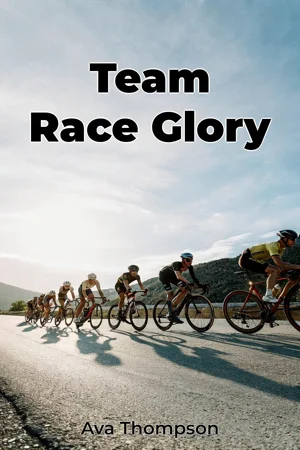
"Team Race Glory" explores the crucial role of teamwork and strategy in determining success in cycling's prestigious Grand Tours, such as the Tour de France and Giro d'Italia, since 1980. Moving beyond the focus on individual riders, the book analyzes how effective team dynamics, leadership, and tactical execution contribute to victory. Readers will gain insights into the blend of sports history and organizational behavior, discovering how the evolution of cycling equipment and training methodologies has shaped team strategies over time. The book unfolds by first introducing key concepts of team dynamics, then presenting detailed case studies of winning teams, highlighting pivotal race moments and tactical decisions. Finally, it offers a comprehensive analysis of factors consistently contributing to team success. By examining official race documentation and interviews with riders and managers, "Team Race Glory" uncovers the intricate strategies and sacrifices that underpin glory in professional cycling.
Book Details
ISBN
9788233965648
Publisher
Publifye AS
Your Licenses
You don't own any licenses for this book
Purchase a license below to unlock this book and download the EPUB.
Purchase License
Select a tier to unlock this book
Need bulk licensing?
Contact us for enterprise agreements.