
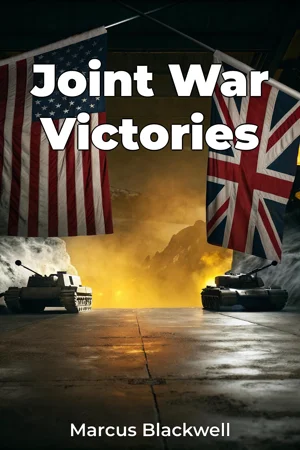
About This Book
How did the Allied powers manage to forge a victorious coalition against the Axis threat during World War II, despite significant ideological and strategic differences? "Joint War Victories" delves into the intricate web of military alliances and their strategic cooperation, offering a detailed analysis of how these partnerships shaped the outcome of the global conflict. This book explores the crucial role of coalition warfare, the challenges of coordinating diverse military forces, and the specific strategies that led to the Allied triumph. This study examines the major Allied powers: the United States, Great Britain, and the Soviet Union. It analyzes their individual strengths and weaknesses, the often-contentious negotiations that defined their collaboration, and the impact of these relationships on key military campaigns. Crucially, this book argues that the Allied victory was not simply a result of superior resources, but also a product of their ability to overcome inherent tensions and forge a common strategic purpose, however fragile that purpose sometimes was. Understanding this complex dynamic is essential for comprehending the entirety of the Second World War and gleaning lessons applicable to contemporary international relations. "Joint War Victories" is structured to provide a comprehensive understanding of the Allied war effort. The book begins by outlining the historical context of pre-war alliances and the divergent geopolitical goals of each major player. It then transitions into an examination of key strategic decisions, such as the prioritization of theaters of war, the allocation of resources, and the development of joint operational plans like Operation Overlord. Subsequent chapters analyze specific campaigns, highlighting instances of successful cooperation and instances of conflict. The book concludes with an assessment of the long-term implications of Allied cooperation and its relevance to contemporary international security. The analysis presented in "Joint War Victories" draws upon a wealth of primary source material, including military records, wartime correspondence, and strategic planning documents from the national archives of the United States, Great Britain, and Russia. It also incorporates secondary sources from both Western and Eastern perspectives, ensuring a balanced and nuanced interpretation of events. The book employs a comparative approach, analyzing the successes and failures of different Allied strategies. This study intersects meaningfully with fields such as political science, international relations, and leadership studies. By examining the political underpinnings of military alliances, the book illuminates the complex interplay between national interests and collective security. The study also relates to leadership studies by analyzing the command structures, personalities, and decision-making processes of key military and political figures. "Joint War Victories" will appeal to military historians, students of World War II, and anyone interested in international relations and coalition warfare. The book provides a rigorous yet accessible account of a pivotal period in history, offering new insights into the challenges and opportunities of strategic cooperation. While the book focuses primarily on the military aspects of the Allied effort, it acknowledges the importance of economic, political, and social factors, and their role in the eventual victory. The book deliberately does not delve into the moral or ethical considerations of the war, concentrating instead on the operational and strategic dimensions of Allied cooperation. It recognizes the ongoing debates surrounding the conduct of the war, particularly regarding the strategic bombing campaigns.
How did the Allied powers manage to forge a victorious coalition against the Axis threat during World War II, despite significant ideological and strategic differences? "Joint War Victories" delves into the intricate web of military alliances and their strategic cooperation, offering a detailed analysis of how these partnerships shaped the outcome of the global conflict. This book explores the crucial role of coalition warfare, the challenges of coordinating diverse military forces, and the specific strategies that led to the Allied triumph. This study examines the major Allied powers: the United States, Great Britain, and the Soviet Union. It analyzes their individual strengths and weaknesses, the often-contentious negotiations that defined their collaboration, and the impact of these relationships on key military campaigns. Crucially, this book argues that the Allied victory was not simply a result of superior resources, but also a product of their ability to overcome inherent tensions and forge a common strategic purpose, however fragile that purpose sometimes was. Understanding this complex dynamic is essential for comprehending the entirety of the Second World War and gleaning lessons applicable to contemporary international relations. "Joint War Victories" is structured to provide a comprehensive understanding of the Allied war effort. The book begins by outlining the historical context of pre-war alliances and the divergent geopolitical goals of each major player. It then transitions into an examination of key strategic decisions, such as the prioritization of theaters of war, the allocation of resources, and the development of joint operational plans like Operation Overlord. Subsequent chapters analyze specific campaigns, highlighting instances of successful cooperation and instances of conflict. The book concludes with an assessment of the long-term implications of Allied cooperation and its relevance to contemporary international security. The analysis presented in "Joint War Victories" draws upon a wealth of primary source material, including military records, wartime correspondence, and strategic planning documents from the national archives of the United States, Great Britain, and Russia. It also incorporates secondary sources from both Western and Eastern perspectives, ensuring a balanced and nuanced interpretation of events. The book employs a comparative approach, analyzing the successes and failures of different Allied strategies. This study intersects meaningfully with fields such as political science, international relations, and leadership studies. By examining the political underpinnings of military alliances, the book illuminates the complex interplay between national interests and collective security. The study also relates to leadership studies by analyzing the command structures, personalities, and decision-making processes of key military and political figures. "Joint War Victories" will appeal to military historians, students of World War II, and anyone interested in international relations and coalition warfare. The book provides a rigorous yet accessible account of a pivotal period in history, offering new insights into the challenges and opportunities of strategic cooperation. While the book focuses primarily on the military aspects of the Allied effort, it acknowledges the importance of economic, political, and social factors, and their role in the eventual victory. The book deliberately does not delve into the moral or ethical considerations of the war, concentrating instead on the operational and strategic dimensions of Allied cooperation. It recognizes the ongoing debates surrounding the conduct of the war, particularly regarding the strategic bombing campaigns.
"Joint War Victories" examines how the Allied Powers—the United States, Great Britain, and the Soviet Union—forged a winning coalition against the Axis during World War II, despite their differing ideologies and strategic goals. It highlights the critical role of military alliances and strategic cooperation in overcoming the Axis threat. The book argues that Allied triumph stemmed not just from superior resources but also from their ability to manage inherent tensions and develop a common strategic purpose, such as seen in Operation Overlord. This exploration of coalition warfare delves into the challenges of coordinating varied military forces and the strategies that ultimately led to victory. It analyzes key strategic decisions, including the prioritization of war theaters and resource allocation, while also examining specific campaigns to illustrate both successful cooperation and points of conflict. By drawing on primary source material from multiple national archives, the book provides a balanced view of the Allied war effort and its long-term implications for international relations and military history. It progresses chronologically from pre-war alliances to post-war assessments, offering valuable insights into the dynamics of strategic partnerships.
Book Details
ISBN
9788233965464
Publisher
Publifye AS
Your Licenses
You don't own any licenses for this book
Purchase a license below to unlock this book and download the EPUB.
Purchase License
Select a tier to unlock this book
Need bulk licensing?
Contact us for enterprise agreements.