
About This Book
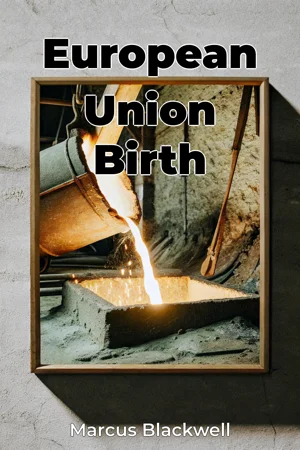
How did a continent ravaged by centuries of conflict forge a union that reshaped global politics and economics? This book, "European Union Birth," meticulously documents the complex and often turbulent formation process of the European Union, tracing its origins from the ashes of World War II to the implementation of the Maastricht Treaty. It delves into the motivations, compromises, and crises that defined this unique experiment in international cooperation. The book primarily focuses on understanding the intricate interplay of political ambition, economic necessity, and historical context which drove the integration process. Understanding the EU's formation is crucial in today's world, as it provides valuable lessons on international cooperation, the challenges of sovereignty, and the dynamics of globalization; and the implications of successful and unsuccessful integration attempts. This book navigates the key events and milestones, starting with the 1951 Treaty of Paris that established the European Coal and Steel Community (ECSC). The ECSC, born out of a desire to prevent future wars by integrating vital industries, laid the foundation for deeper integration. The narrative then explores the subsequent treaties of Rome (1957), which created the European Economic Community (EEC) and the European Atomic Energy Community (EURATOM), expanding cooperation into broader economic spheres. Crucially, the book addresses the periods of stagnation and crisis, such as the "empty chair crisis" of the 1960s, highlighting the enduring tensions between national sovereignty and supranational governance. The book comprehensively analyzes the factors that propelled the integration forward, including the desire for economic growth, the need to address common challenges such as environmental degradation, and the evolving geopolitical landscape of the Cold War. The central argument underscores that the EU's formation was not a linear progression toward a predetermined goal, but rather a series of pragmatic responses to specific challenges and opportunities, shaped by the competing interests of member states and the shifting dynamics of international relations. This argument provides a framework for understanding the EU's current complexities and the ongoing debates about its future direction. The book unfolds chronologically, beginning with an examination of the post-war context and the initial motivations for integration. It then proceeds to analyze each major treaty and its impact on the EU's development. Specific chapters delve into the economic integration process, the evolution of the EU's political institutions, and the challenges of balancing national sovereignty with supranational authority. The book culminates with an analysis of the Maastricht Treaty and its implications for European integration, including the creation of the Euro and the establishment of the three-pillar structure of the EU. It explores the debates surrounding the treaty's ratification and its long-term consequences for the EU project. The analysis is supported by extensive research, drawing on primary sources such as treaty texts, government documents, and archival materials, as well as secondary sources from leading scholars in European integration studies. The book integrates insights from political science, economics, and history to provide a comprehensive and interdisciplinary perspective on the EU's formation. The book connects to the fields of international relations by examining the EU's role in global governance and its relationship with other international organizations. It also links to the field of comparative politics by comparing the EU's integration process with other regional integration efforts around the world. This book offers a unique perspective by focusing on the interplay of agency and structure in the EU's formation. It examines how the actions of key individuals and institutions shaped the integration process within the broader context of historical, economic, and political forces. The tone is academic yet accessible, aiming to engage both scholars and informed readers interested in understanding the history and dynamics of European integration. The target audience includes students of European studies, political science, and history, policymakers, and anyone seeking a deeper understanding of the EU's origins and evolution. This book will provide readers with the historical context necessary to understand the EU's current challenges and debates, and it will offer valuable insights into the dynamics of international cooperation. The book’s scope is limited to the period leading up to the Maastricht Treaty, as it aims to provide an in-depth analysis of the EU's initial formation. The lessons learned from the EU's formation are highly relevant today, as countries around the world grapple with the challenges of globalization, regional integration, and the need for international cooperation. The book also addresses the ongoing debates about the EU's future, including questions about its democratic legitimacy, its economic competitiveness, and its role in the world.
How did a continent ravaged by centuries of conflict forge a union that reshaped global politics and economics? This book, "European Union Birth," meticulously documents the complex and often turbulent formation process of the European Union, tracing its origins from the ashes of World War II to the implementation of the Maastricht Treaty. It delves into the motivations, compromises, and crises that defined this unique experiment in international cooperation. The book primarily focuses on understanding the intricate interplay of political ambition, economic necessity, and historical context which drove the integration process. Understanding the EU's formation is crucial in today's world, as it provides valuable lessons on international cooperation, the challenges of sovereignty, and the dynamics of globalization; and the implications of successful and unsuccessful integration attempts. This book navigates the key events and milestones, starting with the 1951 Treaty of Paris that established the European Coal and Steel Community (ECSC). The ECSC, born out of a desire to prevent future wars by integrating vital industries, laid the foundation for deeper integration. The narrative then explores the subsequent treaties of Rome (1957), which created the European Economic Community (EEC) and the European Atomic Energy Community (EURATOM), expanding cooperation into broader economic spheres. Crucially, the book addresses the periods of stagnation and crisis, such as the "empty chair crisis" of the 1960s, highlighting the enduring tensions between national sovereignty and supranational governance. The book comprehensively analyzes the factors that propelled the integration forward, including the desire for economic growth, the need to address common challenges such as environmental degradation, and the evolving geopolitical landscape of the Cold War. The central argument underscores that the EU's formation was not a linear progression toward a predetermined goal, but rather a series of pragmatic responses to specific challenges and opportunities, shaped by the competing interests of member states and the shifting dynamics of international relations. This argument provides a framework for understanding the EU's current complexities and the ongoing debates about its future direction. The book unfolds chronologically, beginning with an examination of the post-war context and the initial motivations for integration. It then proceeds to analyze each major treaty and its impact on the EU's development. Specific chapters delve into the economic integration process, the evolution of the EU's political institutions, and the challenges of balancing national sovereignty with supranational authority. The book culminates with an analysis of the Maastricht Treaty and its implications for European integration, including the creation of the Euro and the establishment of the three-pillar structure of the EU. It explores the debates surrounding the treaty's ratification and its long-term consequences for the EU project. The analysis is supported by extensive research, drawing on primary sources such as treaty texts, government documents, and archival materials, as well as secondary sources from leading scholars in European integration studies. The book integrates insights from political science, economics, and history to provide a comprehensive and interdisciplinary perspective on the EU's formation. The book connects to the fields of international relations by examining the EU's role in global governance and its relationship with other international organizations. It also links to the field of comparative politics by comparing the EU's integration process with other regional integration efforts around the world. This book offers a unique perspective by focusing on the interplay of agency and structure in the EU's formation. It examines how the actions of key individuals and institutions shaped the integration process within the broader context of historical, economic, and political forces. The tone is academic yet accessible, aiming to engage both scholars and informed readers interested in understanding the history and dynamics of European integration. The target audience includes students of European studies, political science, and history, policymakers, and anyone seeking a deeper understanding of the EU's origins and evolution. This book will provide readers with the historical context necessary to understand the EU's current challenges and debates, and it will offer valuable insights into the dynamics of international cooperation. The book’s scope is limited to the period leading up to the Maastricht Treaty, as it aims to provide an in-depth analysis of the EU's initial formation. The lessons learned from the EU's formation are highly relevant today, as countries around the world grapple with the challenges of globalization, regional integration, and the need for international cooperation. The book also addresses the ongoing debates about the EU's future, including questions about its democratic legitimacy, its economic competitiveness, and its role in the world.
"European Union Birth" meticulously chronicles the EU's complex origins, from post-World War II aspirations to the Maastricht Treaty. It reveals how political ambition, economic necessity, and historical context intertwined to shape this unique experiment in international cooperation. The book emphasizes that the EU's formation wasn't a straightforward path but a series of pragmatic responses to specific challenges. For example, the establishment of the European Coal and Steel Community (ECSC) aimed to prevent future wars by integrating vital industries, laying the groundwork for broader economic cooperation. The book explores key events and milestones, like the Treaties of Rome, while also addressing periods of crisis that tested the balance between national sovereignty and supranational governance. It underscores that the EU's evolution was shaped by competing interests and shifting international dynamics. Unfolding chronologically, each chapter analyzes major treaties and their impact, culminating in an analysis of the Maastricht Treaty and its implications. This approach provides readers with a comprehensive understanding of the EU's formation and its relevance to today's global challenges.
Book Details
ISBN
9788233965365
Publisher
Publifye AS
Your Licenses
You don't own any licenses for this book
Purchase a license below to unlock this book and download the EPUB.
Purchase License
Select a tier to unlock this book
Need bulk licensing?
Contact us for enterprise agreements.