
About This Book
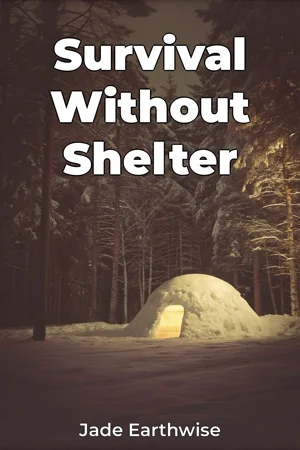
Imagine finding yourself unexpectedly exposed to the raw power of nature, stripped of the perceived security of modern gear. Could you survive a blizzard, a scorching desert sun, or a torrential downpour without the shelter of a tent, cabin, or any manufactured structure? "Survival Without Shelter" is dedicated to answering this question, serving as a comprehensive guide to enduring extreme weather conditions using only natural resources and knowledge. This book delves into the art and science of staying alive when your only refuge is the environment itself. This book focuses on three central themes: understanding weather patterns, mastering natural shelter construction, and regulating the body in extreme temperatures. Understanding weather is paramount because predicting changes enables proactive preparation. Mastering natural shelter construction equips you with the skills to create immediate protection from the elements. Temperature regulation explores how to use the environment to your advantage for maintaining core body temperature, preventing hypothermia and hyperthermia, the ultimate threat to survival. These topics are crucial because unpreparedness in extreme weather leads to rapid physical decline and increased risk of mortality. The knowledge presented is rooted in a blend of historical survival techniques employed by indigenous cultures and modern scientific understanding of physiology and meteorology. The reader will benefit from an understanding of basic concepts, such as heat transfer (conduction, convection, radiation, and evaporation), wind chill, the dew point, and the impact of humidity on thermal regulation. Our central argument is that survival in extreme weather, without conventional shelter, is not merely about luck or brute strength, but about knowledge, adaptability, and a deep connection with the natural world. This book provides the reader with the knowledge and techniques to turn a potentially fatal situation into a manageable one. "Survival Without Shelter" is structured into three major sections. The first section lays the groundwork by introducing essential survival psychology and the importance of pre-planning and mental resilience. It then moves into detailed weather forecasting using natural indicators, from cloud formations to animal behavior. The second section focuses on practical shelter construction using diverse natural materials, detailing the construction of debris huts, snow caves, and thermal shelters in various environments. It will provide detailed information on the specific plants and materials that can be used in construction. The third section delves into methods for regulating body temperature, including fire starting in challenging conditions, water sourcing and purification, and strategies for adapting to both extreme cold and extreme heat. The book culminates with real-world survival scenarios and case studies, demonstrating the application of these techniques in diverse geographical locations. The content is supported by extensive research, including meteorological data, historical accounts of survival, and scientific studies on human physiology in extreme environments. Original field research, documenting the effectiveness of various shelter designs in simulated conditions, supplements the research. This book connects with diverse fields of study. Meteorology provides the scientific foundation for understanding weather patterns. Botany and ecology offer insights into the properties and distribution of natural materials. Physiology explains how the human body responds to environmental stressors. These interdisciplinary connections enrich the reader's understanding and enhance the effectiveness of the survival strategies presented. "Survival Without Shelter" stands out by emphasizing a holistic approach to survival, focusing not only on the physical skills but also on the mental fortitude and environmental awareness necessary for success. It goes beyond basic techniques, providing the reader with a deep understanding of the underlying principles that govern survival in the wild. As the book follows a conversational, practical approach, it is aimed at outdoor enthusiasts, survivalists, hikers, campers, and anyone who seeks to enhance their self-reliance and preparedness in the face of unexpected challenges. It is also ideal for those interested in bushcraft and primitive skills. While the techniques apply globally, the focus is on temperate, arctic, desert, and tropical environments. Detailed information focuses on regions in North America, Europe, and Asia. The book does not delve into specialized survival in specific disaster scenarios, such as earthquakes or tsunamis, but focuses solely on weather-related survival. The skills taught can be applied immediately – from building a simple sun shelter on a hot day to constructing a snow cave for overnight protection in a winter environment. The ability to construct and adapt to the natural environment allows one to live comfortably and safely in any outdoor situation. While the field of survival skills generally agrees on the core principles of prioritizing shelter, water, and fire, there are ongoing debates regarding the ethics of resource extraction in wilderness areas. This book addresses these concerns by advocating for sustainable practices and minimizing environmental impact.
Imagine finding yourself unexpectedly exposed to the raw power of nature, stripped of the perceived security of modern gear. Could you survive a blizzard, a scorching desert sun, or a torrential downpour without the shelter of a tent, cabin, or any manufactured structure? "Survival Without Shelter" is dedicated to answering this question, serving as a comprehensive guide to enduring extreme weather conditions using only natural resources and knowledge. This book delves into the art and science of staying alive when your only refuge is the environment itself. This book focuses on three central themes: understanding weather patterns, mastering natural shelter construction, and regulating the body in extreme temperatures. Understanding weather is paramount because predicting changes enables proactive preparation. Mastering natural shelter construction equips you with the skills to create immediate protection from the elements. Temperature regulation explores how to use the environment to your advantage for maintaining core body temperature, preventing hypothermia and hyperthermia, the ultimate threat to survival. These topics are crucial because unpreparedness in extreme weather leads to rapid physical decline and increased risk of mortality. The knowledge presented is rooted in a blend of historical survival techniques employed by indigenous cultures and modern scientific understanding of physiology and meteorology. The reader will benefit from an understanding of basic concepts, such as heat transfer (conduction, convection, radiation, and evaporation), wind chill, the dew point, and the impact of humidity on thermal regulation. Our central argument is that survival in extreme weather, without conventional shelter, is not merely about luck or brute strength, but about knowledge, adaptability, and a deep connection with the natural world. This book provides the reader with the knowledge and techniques to turn a potentially fatal situation into a manageable one. "Survival Without Shelter" is structured into three major sections. The first section lays the groundwork by introducing essential survival psychology and the importance of pre-planning and mental resilience. It then moves into detailed weather forecasting using natural indicators, from cloud formations to animal behavior. The second section focuses on practical shelter construction using diverse natural materials, detailing the construction of debris huts, snow caves, and thermal shelters in various environments. It will provide detailed information on the specific plants and materials that can be used in construction. The third section delves into methods for regulating body temperature, including fire starting in challenging conditions, water sourcing and purification, and strategies for adapting to both extreme cold and extreme heat. The book culminates with real-world survival scenarios and case studies, demonstrating the application of these techniques in diverse geographical locations. The content is supported by extensive research, including meteorological data, historical accounts of survival, and scientific studies on human physiology in extreme environments. Original field research, documenting the effectiveness of various shelter designs in simulated conditions, supplements the research. This book connects with diverse fields of study. Meteorology provides the scientific foundation for understanding weather patterns. Botany and ecology offer insights into the properties and distribution of natural materials. Physiology explains how the human body responds to environmental stressors. These interdisciplinary connections enrich the reader's understanding and enhance the effectiveness of the survival strategies presented. "Survival Without Shelter" stands out by emphasizing a holistic approach to survival, focusing not only on the physical skills but also on the mental fortitude and environmental awareness necessary for success. It goes beyond basic techniques, providing the reader with a deep understanding of the underlying principles that govern survival in the wild. As the book follows a conversational, practical approach, it is aimed at outdoor enthusiasts, survivalists, hikers, campers, and anyone who seeks to enhance their self-reliance and preparedness in the face of unexpected challenges. It is also ideal for those interested in bushcraft and primitive skills. While the techniques apply globally, the focus is on temperate, arctic, desert, and tropical environments. Detailed information focuses on regions in North America, Europe, and Asia. The book does not delve into specialized survival in specific disaster scenarios, such as earthquakes or tsunamis, but focuses solely on weather-related survival. The skills taught can be applied immediately – from building a simple sun shelter on a hot day to constructing a snow cave for overnight protection in a winter environment. The ability to construct and adapt to the natural environment allows one to live comfortably and safely in any outdoor situation. While the field of survival skills generally agrees on the core principles of prioritizing shelter, water, and fire, there are ongoing debates regarding the ethics of resource extraction in wilderness areas. This book addresses these concerns by advocating for sustainable practices and minimizing environmental impact.
"Survival Without Shelter" offers a comprehensive guide to surviving extreme weather conditions using only natural resources. It focuses on understanding weather patterns, mastering natural shelter construction, and regulating body temperature, critical skills when modern gear is unavailable. The book blends historical survival techniques with modern science, showing how knowledge and adaptability are keys to transforming a potentially fatal situation into a manageable one. The book uniquely details how to forecast weather using natural indicators and construct shelters like debris huts and snow caves. It examines the principles of heat transfer and explains how to use the environment to prevent hypothermia and hyperthermia. Organized into three sections, the book first establishes survival psychology and weather forecasting. It then progresses to shelter construction, and concludes with temperature regulation techniques, supported by research and case studies.
Book Details
ISBN
9788233965273
Publisher
Publifye AS
Your Licenses
You don't own any licenses for this book
Purchase a license below to unlock this book and download the EPUB.
Purchase License
Select a tier to unlock this book
Need bulk licensing?
Contact us for enterprise agreements.