
About This Book
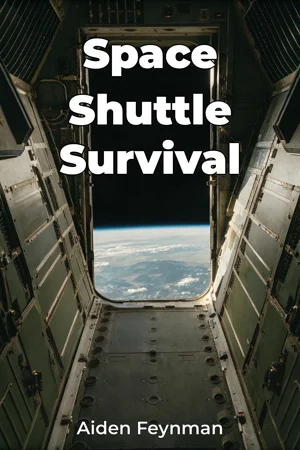
Have you ever wondered what happens when things go wrong hundreds of miles above the Earth, traveling at thousands of miles per hour? "Space Shuttle Survival" delves into the high-stakes world of spaceflight, offering a detailed examination of the potential emergencies astronauts face and the critical systems designed to ensure their survival. This book focuses on two core topics: emergency protocols for astronauts in crisis situations and the intricate engineering of shuttle systems, highlighting their vulnerabilities and redundancies. These topics are vital because they underscore the inherent risks of space exploration and the immense effort dedicated to mitigating those risks, providing a comprehensive understanding of the challenges and triumphs in human spaceflight. Setting the stage, this book explores NASA’s historical context, the evolution of space shuttle technology, and the rigorous training astronauts undergo. While no prior specialized engineering knowledge is explicitly needed, a general interest in space exploration or basic scientific principles will enhance the reader’s understanding. The book’s central argument is that the success of space shuttle missions, even those marred by accidents, is largely attributable to meticulous planning, robust engineering, and the adaptability of flight crews. We aim to demonstrate that a deep understanding of potential failure modes and well-rehearsed emergency procedures are paramount to astronaut safety and mission success. "Space Shuttle Survival" begins by introducing the core concepts of shuttle operation and the spectrum of potential emergencies, including in-flight abort scenarios, system failures, and unexpected hazards like micrometeoroid strikes. The book then develops these ideas through detailed chapters on specific shuttle systems, such as the life support, propulsion, and thermal protection systems, analyzing their design limitations and historical failure points. Subsequently, it examines the critical role of astronaut training and emergency procedures, with case studies of past missions where these protocols were tested. The culmination of the book argues for continuous improvement in shuttle design and operational procedures, learning from both successes and failures. Finally, it explores practical implications for future space missions and long-term space habitation. The book relies on a range of evidence, including NASA technical reports, accident investigation findings, astronaut memoirs, and engineering schematics. Unique data sources include previously declassified mission transcripts and interviews with engineers and flight controllers involved in the Space Shuttle Program. "Space Shuttle Survival" connects to other fields, such as materials science (in discussing thermal protection systems), human physiology (in examining the effects of space on the body), and risk management (in evaluating the probabilities and consequences of system failures). These interdisciplinary connections enrich the book's argument by illustrating the complex interaction of technological and human factors in spaceflight. The book offers a unique perspective by not just celebrating successes but also critically analyzing failures to extract lessons learned. This book presents information in a factual, accessible style suited to both general readers and those with a technical background. The target audience includes space enthusiasts, students, engineers, and anyone interested in the history and technology of space exploration. It will be valuable to them by providing a deeper appreciation of the challenges and complexities of spaceflight. As a work of non-fiction, it adheres to genre expectations by presenting accurate information, citing sources, and maintaining objectivity. The scope of the book encompasses the entire Space Shuttle Program, from its inception to its retirement, but intentionally limits its coverage to the design and operation of the shuttle itself, rather than delving into the broader political or economic context of the program. The information in this book can be applied in practical ways, such as informing the design and operation of future spacecraft, improving astronaut training programs, and enhancing risk management strategies for space missions. While the book addresses historical events, it also touches on ongoing debates about the future of human spaceflight and the balance between risk and reward in pushing the boundaries of exploration.
Have you ever wondered what happens when things go wrong hundreds of miles above the Earth, traveling at thousands of miles per hour? "Space Shuttle Survival" delves into the high-stakes world of spaceflight, offering a detailed examination of the potential emergencies astronauts face and the critical systems designed to ensure their survival. This book focuses on two core topics: emergency protocols for astronauts in crisis situations and the intricate engineering of shuttle systems, highlighting their vulnerabilities and redundancies. These topics are vital because they underscore the inherent risks of space exploration and the immense effort dedicated to mitigating those risks, providing a comprehensive understanding of the challenges and triumphs in human spaceflight. Setting the stage, this book explores NASA’s historical context, the evolution of space shuttle technology, and the rigorous training astronauts undergo. While no prior specialized engineering knowledge is explicitly needed, a general interest in space exploration or basic scientific principles will enhance the reader’s understanding. The book’s central argument is that the success of space shuttle missions, even those marred by accidents, is largely attributable to meticulous planning, robust engineering, and the adaptability of flight crews. We aim to demonstrate that a deep understanding of potential failure modes and well-rehearsed emergency procedures are paramount to astronaut safety and mission success. "Space Shuttle Survival" begins by introducing the core concepts of shuttle operation and the spectrum of potential emergencies, including in-flight abort scenarios, system failures, and unexpected hazards like micrometeoroid strikes. The book then develops these ideas through detailed chapters on specific shuttle systems, such as the life support, propulsion, and thermal protection systems, analyzing their design limitations and historical failure points. Subsequently, it examines the critical role of astronaut training and emergency procedures, with case studies of past missions where these protocols were tested. The culmination of the book argues for continuous improvement in shuttle design and operational procedures, learning from both successes and failures. Finally, it explores practical implications for future space missions and long-term space habitation. The book relies on a range of evidence, including NASA technical reports, accident investigation findings, astronaut memoirs, and engineering schematics. Unique data sources include previously declassified mission transcripts and interviews with engineers and flight controllers involved in the Space Shuttle Program. "Space Shuttle Survival" connects to other fields, such as materials science (in discussing thermal protection systems), human physiology (in examining the effects of space on the body), and risk management (in evaluating the probabilities and consequences of system failures). These interdisciplinary connections enrich the book's argument by illustrating the complex interaction of technological and human factors in spaceflight. The book offers a unique perspective by not just celebrating successes but also critically analyzing failures to extract lessons learned. This book presents information in a factual, accessible style suited to both general readers and those with a technical background. The target audience includes space enthusiasts, students, engineers, and anyone interested in the history and technology of space exploration. It will be valuable to them by providing a deeper appreciation of the challenges and complexities of spaceflight. As a work of non-fiction, it adheres to genre expectations by presenting accurate information, citing sources, and maintaining objectivity. The scope of the book encompasses the entire Space Shuttle Program, from its inception to its retirement, but intentionally limits its coverage to the design and operation of the shuttle itself, rather than delving into the broader political or economic context of the program. The information in this book can be applied in practical ways, such as informing the design and operation of future spacecraft, improving astronaut training programs, and enhancing risk management strategies for space missions. While the book addresses historical events, it also touches on ongoing debates about the future of human spaceflight and the balance between risk and reward in pushing the boundaries of exploration.
"Space Shuttle Survival" explores the perilous world of spaceflight, detailing potential astronaut emergencies and the complex engineering designed to ensure their survival. It highlights the critical emergency protocols and intricate shuttle systems, emphasizing the inherent risks of space exploration and the dedication required to mitigate them. Astronaut training is a cornerstone, preparing flight crews for unexpected hazards like system failures and micrometeoroid strikes. A key insight reveals how meticulous planning and robust engineering are vital for mission success, even when accidents occur. The book begins by introducing shuttle operations and potential emergencies, progressing through chapters on specific systems like life support and thermal protection, analyzing design limitations and historical failures. It examines astronaut training and emergency procedures, using case studies of past missions to illustrate how these protocols are tested in real-world scenarios. Through NASA technical reports, accident investigations, and astronaut memoirs, "Space Shuttle Survival" presents a factual, accessible account of the challenges and triumphs of the Space Shuttle Program.
Book Details
ISBN
9788233965259
Publisher
Publifye AS
Your Licenses
You don't own any licenses for this book
Purchase a license below to unlock this book and download the EPUB.
Purchase License
Select a tier to unlock this book
Need bulk licensing?
Contact us for enterprise agreements.