
About This Book
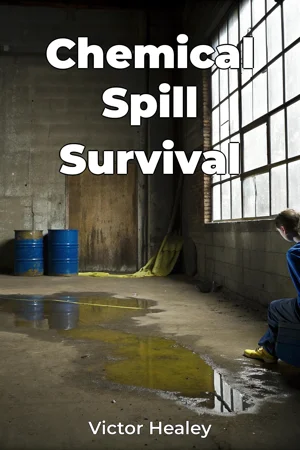
Are you prepared to navigate the invisible threats lurking within industrial zones? "Chemical Spill Survival" is your comprehensive guide to understanding and mitigating the dangers of chemical leaks, exposure risks, and effective evacuation strategies in the event of industrial accidents. This book examines the critical intersection of environmental safety and public health, offering readers the knowledge and tools necessary to protect themselves, their communities, and the environment. This book addresses three fundamental areas: understanding chemical hazards and their impact, assessing exposure risks in various scenarios, and implementing effective evacuation and emergency response plans. Recognizing the potential for catastrophic consequences from chemical spills, it is vital to equip individuals and communities with the knowledge to act decisively and minimize harm. "Chemical Spill Survival" delves into the history of industrial accidents, examining past events to identify patterns, failures, and ultimately, lessons learned. We explore the scientific principles behind chemical toxicity, dispersion, and environmental impact, providing readers with a foundational understanding necessary to comprehend the risks involved. This includes an exploration of relevant regulations such as OSHA and the EPA and their effectiveness. The central argument of this book is that informed preparedness is the most effective strategy for mitigating the devastating effects of chemical spills. By understanding the nature of chemical hazards, assessing exposure risks, and developing comprehensive evacuation plans, individuals and communities can significantly reduce the potential for injury, illness, and environmental damage. The book begins by introducing fundamental concepts in toxicology, industrial safety, and environmental science. It then examines various types of chemical spills, considering factors such as the specific chemicals involved, the location of the spill, and prevailing weather conditions. The book then analyzes exposure pathways and potential health effects, discussing both acute and chronic conditions. A significant portion of the book is dedicated to developing and implementing effective evacuation plans, addressing issues such as communication strategies, shelter-in-place procedures, and post-exposure medical care. The book culminates in a section dedicated to practical application with case studies and accessible checklists, enabling readers to translate knowledge into actionable steps. The evidence presented in "Chemical Spill Survival" is drawn from a variety of sources, including government reports, scientific studies, industry best practices, and firsthand accounts of chemical spill events. We analyze data from the EPA's Toxic Release Inventory (TRI) and other databases to identify trends in chemical spills and assess the effectiveness of regulatory interventions. This book also explores the intersection of environmental science, public health, and emergency management. It will draw connections to fields such as epidemiology, risk communication, and environmental policy. The relationship between environmental injustice and differential exposure to chemical hazards is also explored. "Chemical Spill Survival" offers a unique perspective by integrating scientific analysis with practical guidance. It bridges the gap between abstract scientific knowledge and actionable strategies for protecting oneself and one's community. The book's conversational yet informative tone makes complex information accessible to a wide audience, fostering deeper understanding of the topic. This book is intended for a broad audience, including community leaders, environmental advocates, emergency responders, industrial workers, and concerned citizens. Anyone living near or working in areas with potential for chemical spills will find this book valuable. As a work of non-fiction in the environment and public health genres, "Chemical Spill Survival" adheres to principles of accuracy, objectivity, and transparency. It presents factual information supported by evidence and cites sources clearly and appropriately. The scope of this book is limited to addressing the immediate risks and responses related to chemical spills. It does not delve into topics such as long-term environmental remediation or policy advocacy, although these are touched on briefly. Readers will learn how to assess the risks of chemical spills in their communities, develop personal and community evacuation plans, and respond effectively in the event of an emergency. Checklists, templates, and real-world examples are provided to facilitate practical application of the information presented. While there is general agreement on basic safety principles, ongoing debates exist regarding the effectiveness of existing regulations, the role of industry in preventing spills, and the best approaches to risk communication. This book addresses these debates from a balanced and objective perspective, highlighting different viewpoints and presenting available evidence.
Are you prepared to navigate the invisible threats lurking within industrial zones? "Chemical Spill Survival" is your comprehensive guide to understanding and mitigating the dangers of chemical leaks, exposure risks, and effective evacuation strategies in the event of industrial accidents. This book examines the critical intersection of environmental safety and public health, offering readers the knowledge and tools necessary to protect themselves, their communities, and the environment. This book addresses three fundamental areas: understanding chemical hazards and their impact, assessing exposure risks in various scenarios, and implementing effective evacuation and emergency response plans. Recognizing the potential for catastrophic consequences from chemical spills, it is vital to equip individuals and communities with the knowledge to act decisively and minimize harm. "Chemical Spill Survival" delves into the history of industrial accidents, examining past events to identify patterns, failures, and ultimately, lessons learned. We explore the scientific principles behind chemical toxicity, dispersion, and environmental impact, providing readers with a foundational understanding necessary to comprehend the risks involved. This includes an exploration of relevant regulations such as OSHA and the EPA and their effectiveness. The central argument of this book is that informed preparedness is the most effective strategy for mitigating the devastating effects of chemical spills. By understanding the nature of chemical hazards, assessing exposure risks, and developing comprehensive evacuation plans, individuals and communities can significantly reduce the potential for injury, illness, and environmental damage. The book begins by introducing fundamental concepts in toxicology, industrial safety, and environmental science. It then examines various types of chemical spills, considering factors such as the specific chemicals involved, the location of the spill, and prevailing weather conditions. The book then analyzes exposure pathways and potential health effects, discussing both acute and chronic conditions. A significant portion of the book is dedicated to developing and implementing effective evacuation plans, addressing issues such as communication strategies, shelter-in-place procedures, and post-exposure medical care. The book culminates in a section dedicated to practical application with case studies and accessible checklists, enabling readers to translate knowledge into actionable steps. The evidence presented in "Chemical Spill Survival" is drawn from a variety of sources, including government reports, scientific studies, industry best practices, and firsthand accounts of chemical spill events. We analyze data from the EPA's Toxic Release Inventory (TRI) and other databases to identify trends in chemical spills and assess the effectiveness of regulatory interventions. This book also explores the intersection of environmental science, public health, and emergency management. It will draw connections to fields such as epidemiology, risk communication, and environmental policy. The relationship between environmental injustice and differential exposure to chemical hazards is also explored. "Chemical Spill Survival" offers a unique perspective by integrating scientific analysis with practical guidance. It bridges the gap between abstract scientific knowledge and actionable strategies for protecting oneself and one's community. The book's conversational yet informative tone makes complex information accessible to a wide audience, fostering deeper understanding of the topic. This book is intended for a broad audience, including community leaders, environmental advocates, emergency responders, industrial workers, and concerned citizens. Anyone living near or working in areas with potential for chemical spills will find this book valuable. As a work of non-fiction in the environment and public health genres, "Chemical Spill Survival" adheres to principles of accuracy, objectivity, and transparency. It presents factual information supported by evidence and cites sources clearly and appropriately. The scope of this book is limited to addressing the immediate risks and responses related to chemical spills. It does not delve into topics such as long-term environmental remediation or policy advocacy, although these are touched on briefly. Readers will learn how to assess the risks of chemical spills in their communities, develop personal and community evacuation plans, and respond effectively in the event of an emergency. Checklists, templates, and real-world examples are provided to facilitate practical application of the information presented. While there is general agreement on basic safety principles, ongoing debates exist regarding the effectiveness of existing regulations, the role of industry in preventing spills, and the best approaches to risk communication. This book addresses these debates from a balanced and objective perspective, highlighting different viewpoints and presenting available evidence.
"Chemical Spill Survival" addresses the critical need for preparedness in the face of increasing chemical hazards and industrial accidents. This book offers a comprehensive exploration of environmental safety and public health, providing readers with practical knowledge to navigate the risks associated with chemical spills. Highlighting the importance of understanding chemical toxicity, dispersion, and environmental impact, the book stresses that informed preparedness is the most effective strategy for mitigating devastating effects. The book uniquely integrates scientific analysis with actionable guidance, bridging the gap between complex information and practical steps. It explores the history of industrial accidents, examines exposure risks, and helps readers develop comprehensive evacuation plans. Beginning with fundamental concepts, it progresses through types of spills, exposure pathways, and health effects, culminating in case studies and checklists. The book emphasizes assessing community risks, developing evacuation strategies, and understanding emergency response. By providing a framework for understanding and action, "Chemical Spill Survival" equips individuals and communities with the tools to protect themselves and the environment.
Book Details
ISBN
9788233965181
Publisher
Publifye AS
Your Licenses
You don't own any licenses for this book
Purchase a license below to unlock this book and download the EPUB.
Purchase License
Select a tier to unlock this book
Need bulk licensing?
Contact us for enterprise agreements.