
About This Book
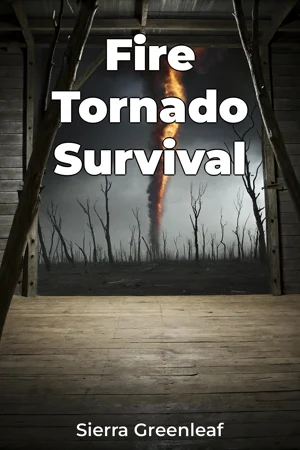
Imagine a swirling vortex of fire, capable of incinerating everything in its path. Fire tornadoes, or fire whirls, represent one of nature's most terrifying and least understood phenomena. "Fire Tornado Survival" aims to provide a comprehensive understanding of these destructive forces, equipping readers with the knowledge necessary to recognize, avoid, and potentially survive encounters with them. This book delves into two core themes: the science behind fire tornado formation and practical survival strategies. Understanding the meteorological and environmental conditions that give rise to these whirlwinds is paramount. Equally crucial is knowing how to react when faced with such a dangerous event. These topics are vital due to the increasing frequency and intensity of wildfires globally, driven by climate change and land management practices. We will explore the history of documented fire tornado events, from anecdotal accounts to scientifically studied cases, providing a context for understanding their behavior and impact. The book assumes a basic understanding of weather patterns and fire behavior, but will explain complex scientific concepts in an accessible manner. The central argument is that understanding the dynamics of fire tornadoes, coupled with preparedness and informed decision-making, significantly enhances survival prospects. This argument is critical because traditional wildfire safety protocols often fail to account for the unique threats posed by fire-generated vortices. The book is structured to guide the reader through a logical progression of information. It begins by introducing the fundamental principles of fire behavior and atmospheric dynamics, showing how these elements converge to create fire tornadoes. We will then examine the different types of fire tornadoes, their formation triggers, and the factors influencing their intensity and longevity. Major sections cover: 1. The Genesis of Fire Tornadoes: Exploring the atmospheric conditions, fuel sources, and ignition mechanisms that lead to their formation. 2. Behavior and Characteristics: An in-depth analysis of their movement patterns, intensity fluctuations, and the environmental impact. 3. Survival Strategies: Practical guidelines on how to identify potential fire tornado threats, evacuate safely, and seek appropriate shelter. The discussion culminates in a practical guide to fire safety planning in fire-prone areas, emphasizing the importance of community preparedness and individual responsibility. The evidence presented draws from a range of sources, including peer-reviewed scientific publications, government reports, eyewitness accounts, and case studies of fire tornado incidents. Unique data sources will include computational fluid dynamics (CFD) models used to simulate fire tornado behavior and analysis of satellite imagery capturing the development of large-scale fire whirls. "Fire Tornado Survival" connects to several interdisciplinary fields, including meteorology, engineering, and disaster management. Meteorological principles explain the atmospheric conditions, engineering provides insight into structural vulnerability, and disaster management informs effective emergency response strategies. These connections enhance the book's argument by providing a holistic understanding of the fire tornado phenomenon. A unique aspect of this book is its integration of scientific research with practical survival advice. It bridges the gap between theoretical understanding and real-world application, offering actionable steps for mitigating the risks associated with fire tornadoes. The tone is informative and cautionary, balancing scientific accuracy with clear, accessible language. The writing style is direct and concise, avoiding jargon and technical terms whenever possible. The target audience includes residents of fire-prone regions, firefighters, emergency responders, meteorologists, and anyone interested in understanding extreme weather phenomena. The book is valuable to them because it provides a comprehensive, evidence-based guide to protecting themselves and their communities from this emerging threat. As a work of non-fiction in the Earth Sciences and Geography genres, "Fire Tornado Survival" adheres to the conventions of presenting factual information, citing sources, and maintaining objectivity. It also incorporates elements of the Nature genre by exploring the power and unpredictability of natural forces. The scope of the book is limited to fire-generated tornadoes and does not cover other types of tornadoes or general wildfire behavior in detail. This intentional limitation allows for a focused and in-depth examination of the specific risks and survival strategies associated with fire tornadoes. The information in this book can be applied to enhance wildfire safety planning, improve emergency response protocols, and educate the public about the dangers of fire tornadoes. It empowers readers to make informed decisions and take proactive steps to protect themselves and their communities. While the scientific understanding of fire tornado formation is still evolving, the book will address the ongoing debates about the precise mechanisms that trigger these events and the factors that influence their intensity. We acknowledge the uncertainties in current research while providing the best available knowledge to guide safety practices. The key takeaway is that with knowledge and preparation, the risks associated with fire tornadoes can be significantly reduced.
Imagine a swirling vortex of fire, capable of incinerating everything in its path. Fire tornadoes, or fire whirls, represent one of nature's most terrifying and least understood phenomena. "Fire Tornado Survival" aims to provide a comprehensive understanding of these destructive forces, equipping readers with the knowledge necessary to recognize, avoid, and potentially survive encounters with them. This book delves into two core themes: the science behind fire tornado formation and practical survival strategies. Understanding the meteorological and environmental conditions that give rise to these whirlwinds is paramount. Equally crucial is knowing how to react when faced with such a dangerous event. These topics are vital due to the increasing frequency and intensity of wildfires globally, driven by climate change and land management practices. We will explore the history of documented fire tornado events, from anecdotal accounts to scientifically studied cases, providing a context for understanding their behavior and impact. The book assumes a basic understanding of weather patterns and fire behavior, but will explain complex scientific concepts in an accessible manner. The central argument is that understanding the dynamics of fire tornadoes, coupled with preparedness and informed decision-making, significantly enhances survival prospects. This argument is critical because traditional wildfire safety protocols often fail to account for the unique threats posed by fire-generated vortices. The book is structured to guide the reader through a logical progression of information. It begins by introducing the fundamental principles of fire behavior and atmospheric dynamics, showing how these elements converge to create fire tornadoes. We will then examine the different types of fire tornadoes, their formation triggers, and the factors influencing their intensity and longevity. Major sections cover: 1. The Genesis of Fire Tornadoes: Exploring the atmospheric conditions, fuel sources, and ignition mechanisms that lead to their formation. 2. Behavior and Characteristics: An in-depth analysis of their movement patterns, intensity fluctuations, and the environmental impact. 3. Survival Strategies: Practical guidelines on how to identify potential fire tornado threats, evacuate safely, and seek appropriate shelter. The discussion culminates in a practical guide to fire safety planning in fire-prone areas, emphasizing the importance of community preparedness and individual responsibility. The evidence presented draws from a range of sources, including peer-reviewed scientific publications, government reports, eyewitness accounts, and case studies of fire tornado incidents. Unique data sources will include computational fluid dynamics (CFD) models used to simulate fire tornado behavior and analysis of satellite imagery capturing the development of large-scale fire whirls. "Fire Tornado Survival" connects to several interdisciplinary fields, including meteorology, engineering, and disaster management. Meteorological principles explain the atmospheric conditions, engineering provides insight into structural vulnerability, and disaster management informs effective emergency response strategies. These connections enhance the book's argument by providing a holistic understanding of the fire tornado phenomenon. A unique aspect of this book is its integration of scientific research with practical survival advice. It bridges the gap between theoretical understanding and real-world application, offering actionable steps for mitigating the risks associated with fire tornadoes. The tone is informative and cautionary, balancing scientific accuracy with clear, accessible language. The writing style is direct and concise, avoiding jargon and technical terms whenever possible. The target audience includes residents of fire-prone regions, firefighters, emergency responders, meteorologists, and anyone interested in understanding extreme weather phenomena. The book is valuable to them because it provides a comprehensive, evidence-based guide to protecting themselves and their communities from this emerging threat. As a work of non-fiction in the Earth Sciences and Geography genres, "Fire Tornado Survival" adheres to the conventions of presenting factual information, citing sources, and maintaining objectivity. It also incorporates elements of the Nature genre by exploring the power and unpredictability of natural forces. The scope of the book is limited to fire-generated tornadoes and does not cover other types of tornadoes or general wildfire behavior in detail. This intentional limitation allows for a focused and in-depth examination of the specific risks and survival strategies associated with fire tornadoes. The information in this book can be applied to enhance wildfire safety planning, improve emergency response protocols, and educate the public about the dangers of fire tornadoes. It empowers readers to make informed decisions and take proactive steps to protect themselves and their communities. While the scientific understanding of fire tornado formation is still evolving, the book will address the ongoing debates about the precise mechanisms that trigger these events and the factors that influence their intensity. We acknowledge the uncertainties in current research while providing the best available knowledge to guide safety practices. The key takeaway is that with knowledge and preparation, the risks associated with fire tornadoes can be significantly reduced.
"Fire Tornado Survival" addresses the increasingly relevant threat of fire tornadoes, also known as fire whirls, offering both scientific insight and practical advice. It explores how specific atmospheric conditions and fuel sources combine to create these devastating phenomena. You will learn how their behavior is impacted by intensity fluctuations and movement patterns. The book uniquely combines scientific research with real-world survival strategies. The book emphasizes that understanding fire tornado dynamics, coupled with preparation, is key to survival, especially as traditional wildfire protocols often fall short. It progresses logically, starting with the genesis of fire tornadoes, then moves to their behavior and characteristics, and finally provides practical survival strategies. This guide equips readers with the knowledge to identify threats, evacuate safely, and seek appropriate shelter in fire-prone regions. The goal is to enhance wildfire safety planning and improve emergency response.
Book Details
ISBN
9788233965143
Publisher
Publifye AS
Your Licenses
You don't own any licenses for this book
Purchase a license below to unlock this book and download the EPUB.
Purchase License
Select a tier to unlock this book
Need bulk licensing?
Contact us for enterprise agreements.