
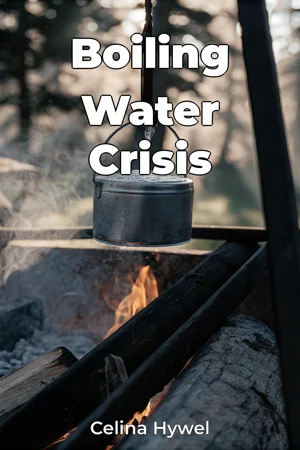
About This Book
Imagine finding yourself in a survival situation: lost in the wilderness, facing a natural disaster, or experiencing a prolonged power outage. One of the most critical needs, often taken for granted, becomes readily apparent: access to safe drinking water. *Boiling Water Crisis* tackles this fundamental survival imperative head-on, exploring why mastering the art of water purification through boiling is not merely a useful skill, but a life-saving necessity. This book delves into several key interconnected topics. First, it provides a comprehensive understanding of waterborne pathogens and the dangers they pose, detailing the specific microorganisms that can contaminate water sources and lead to debilitating or even fatal illnesses. Second, it offers a thorough examination of the science behind boiling water as a method of disinfection, explaining the precise temperatures and durations required to effectively eliminate these harmful contaminants under various conditions. Third, it investigates alternative methods of water purification and compares their efficacy, cost, and accessibility to boiling, providing a balanced perspective that underscores the unique advantages of boiling in numerous survival scenarios. Throughout history, waterborne diseases have ravaged communities, highlighting the critical importance of basic sanitation practices. Even in modern societies, unexpected events can compromise water treatment facilities, leaving individuals vulnerable. Therefore, understanding how to procure and purify water remains a crucial life skill. The central argument of *Boiling Water Crisis* is that the ability to safely purify water by boiling is an indispensable skill for anyone seeking to prepare for potential emergencies or engage in outdoor activities. This argument is vital because, while advanced water filtration technologies may offer convenience, boiling relies on a readily available resource – fire – and requires minimal equipment, making it a robust and adaptable solution in diverse crisis situations. The book will present its argument through a structured and layered approach. Initially, it will introduce the theoretical background by: a) outlining the types of waterborne pathogens b) explaining their effects on the human body c) and illustrating how boiling eliminates these threats. The development of ideas will occur across several major points or chapters. a) It will systematically examine different water sources typically encountered in survival settings – rivers, lakes, rainwater, and even unconventional sources like dew or snow – and address the specific challenges each presents. b) It will provide detailed, step-by-step instructions on how to build various types of fires suitable for boiling water, adapt to fuel scarcity, and optimize the boiling process for maximum efficiency. c) It will compare boiling with alternative purification methods, such as filtration, chemical treatment, and solar disinfection, thereby creating a complete view. The culmination of the argument will emphasize practical applications and implications. a) Providing checklists for emergency preparedness kits b) offering field-tested techniques for boiling water in various environments c) discussing best practices for storing purified water to prevent recontamination The evidence and research presented will be drawn from scientific studies on waterborne pathogens, public health guidelines on water disinfection, and practical field experiments conducted by survival experts. The book will also integrate data from historical accounts of epidemics caused by contaminated water, providing compelling real-world examples of the risks involved. *Boiling Water Crisis* connects to several interdisciplinary fields. a) Public health by detailing sanitation practices and disease prevention. b) Environmental science by examining water contamination sources and sustainable water management. c) Outdoor education by providing survival skills crucial for wilderness safety. This interdisciplinary approach enriches the book’s arguments and allows for a more holistic understanding. The book’s unique perspective lies in its focus on boiling as a reliable, low-tech solution within a broader framework of survival preparedness. While acknowledging advanced technologies, it prioritizes a method accessible to everyone, regardless of resources or technical expertise. The writing style will be informative and engaging, balancing scientific accuracy with practical advice. The target audience includes outdoor enthusiasts, preppers, survivalists, and anyone seeking to enhance their self-reliance skills. This book offers a valuable resource for those who recognize the importance of water purification but lack the specific knowledge to confidently implement it in a crisis. In adhering to the conventions of the ‘Health & Fitness, Nature, Health Fitness’ genres, *Boiling Water Crisis* provides clear, fact-based information alongside actionable techniques for improving health and safety in natural settings. The book’s scope is confined to water purification through boiling and its comparison to other methods, without delving into broader survival topics such as shelter building or first aid in extreme detail. The information will have real-world applications, for example: building emergency preparedness kits, safely obtaining water in the backcountry, etc.. While water purification is generally agreed upon as a necessity, some debate exists regarding the effectiveness of different purification methods. The book will address these debates, presenting a balanced view and emphasizing the situations where boiling is the most appropriate and effective solution.
Imagine finding yourself in a survival situation: lost in the wilderness, facing a natural disaster, or experiencing a prolonged power outage. One of the most critical needs, often taken for granted, becomes readily apparent: access to safe drinking water. *Boiling Water Crisis* tackles this fundamental survival imperative head-on, exploring why mastering the art of water purification through boiling is not merely a useful skill, but a life-saving necessity. This book delves into several key interconnected topics. First, it provides a comprehensive understanding of waterborne pathogens and the dangers they pose, detailing the specific microorganisms that can contaminate water sources and lead to debilitating or even fatal illnesses. Second, it offers a thorough examination of the science behind boiling water as a method of disinfection, explaining the precise temperatures and durations required to effectively eliminate these harmful contaminants under various conditions. Third, it investigates alternative methods of water purification and compares their efficacy, cost, and accessibility to boiling, providing a balanced perspective that underscores the unique advantages of boiling in numerous survival scenarios. Throughout history, waterborne diseases have ravaged communities, highlighting the critical importance of basic sanitation practices. Even in modern societies, unexpected events can compromise water treatment facilities, leaving individuals vulnerable. Therefore, understanding how to procure and purify water remains a crucial life skill. The central argument of *Boiling Water Crisis* is that the ability to safely purify water by boiling is an indispensable skill for anyone seeking to prepare for potential emergencies or engage in outdoor activities. This argument is vital because, while advanced water filtration technologies may offer convenience, boiling relies on a readily available resource – fire – and requires minimal equipment, making it a robust and adaptable solution in diverse crisis situations. The book will present its argument through a structured and layered approach. Initially, it will introduce the theoretical background by: a) outlining the types of waterborne pathogens b) explaining their effects on the human body c) and illustrating how boiling eliminates these threats. The development of ideas will occur across several major points or chapters. a) It will systematically examine different water sources typically encountered in survival settings – rivers, lakes, rainwater, and even unconventional sources like dew or snow – and address the specific challenges each presents. b) It will provide detailed, step-by-step instructions on how to build various types of fires suitable for boiling water, adapt to fuel scarcity, and optimize the boiling process for maximum efficiency. c) It will compare boiling with alternative purification methods, such as filtration, chemical treatment, and solar disinfection, thereby creating a complete view. The culmination of the argument will emphasize practical applications and implications. a) Providing checklists for emergency preparedness kits b) offering field-tested techniques for boiling water in various environments c) discussing best practices for storing purified water to prevent recontamination The evidence and research presented will be drawn from scientific studies on waterborne pathogens, public health guidelines on water disinfection, and practical field experiments conducted by survival experts. The book will also integrate data from historical accounts of epidemics caused by contaminated water, providing compelling real-world examples of the risks involved. *Boiling Water Crisis* connects to several interdisciplinary fields. a) Public health by detailing sanitation practices and disease prevention. b) Environmental science by examining water contamination sources and sustainable water management. c) Outdoor education by providing survival skills crucial for wilderness safety. This interdisciplinary approach enriches the book’s arguments and allows for a more holistic understanding. The book’s unique perspective lies in its focus on boiling as a reliable, low-tech solution within a broader framework of survival preparedness. While acknowledging advanced technologies, it prioritizes a method accessible to everyone, regardless of resources or technical expertise. The writing style will be informative and engaging, balancing scientific accuracy with practical advice. The target audience includes outdoor enthusiasts, preppers, survivalists, and anyone seeking to enhance their self-reliance skills. This book offers a valuable resource for those who recognize the importance of water purification but lack the specific knowledge to confidently implement it in a crisis. In adhering to the conventions of the ‘Health & Fitness, Nature, Health Fitness’ genres, *Boiling Water Crisis* provides clear, fact-based information alongside actionable techniques for improving health and safety in natural settings. The book’s scope is confined to water purification through boiling and its comparison to other methods, without delving into broader survival topics such as shelter building or first aid in extreme detail. The information will have real-world applications, for example: building emergency preparedness kits, safely obtaining water in the backcountry, etc.. While water purification is generally agreed upon as a necessity, some debate exists regarding the effectiveness of different purification methods. The book will address these debates, presenting a balanced view and emphasizing the situations where boiling is the most appropriate and effective solution.
*Boiling Water Crisis* emphasizes the critical, often overlooked, skill of water purification through boiling, especially in survival situations. The book highlights that mastering this technique is not just useful but potentially life-saving when access to safe drinking water is compromised due to natural disasters or wilderness scenarios. Waterborne pathogens are a serious threat; the book details the specific microorganisms that can contaminate water and cause illness. The core argument is that boiling water is an indispensable skill for anyone preparing for emergencies because it relies on fire, a readily available resource, requiring minimal equipment. The book systematically progresses through understanding waterborne pathogens, explaining how boiling eliminates these threats, and examining various water sources encountered in survival settings, such as rivers and rainwater. It provides step-by-step instructions for building fires suitable for boiling and compares boiling with alternative purification methods like filtration and chemical treatments. This approach offers a complete view of water disinfection and purification, emphasizing boiling's unique advantages in certain circumstances. The culmination emphasizes practical applications, including checklists for emergency kits and field-tested boiling techniques. The book uniquely focuses on boiling as a reliable, low-tech solution within a broader survival preparedness framework. While acknowledging advanced technologies, it prioritizes a method accessible to everyone, making it an invaluable resource for outdoor enthusiasts, preppers, and anyone wanting to enhance their self-reliance and health fitness.
Book Details
ISBN
9788233965136
Publisher
Publifye AS
Your Licenses
You don't own any licenses for this book
Purchase a license below to unlock this book and download the EPUB.
Purchase License
Select a tier to unlock this book
Need bulk licensing?
Contact us for enterprise agreements.