
About This Book
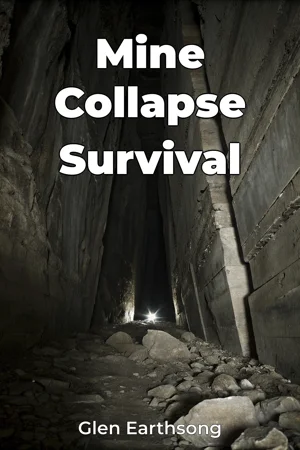
Imagine being trapped hundreds or even thousands of feet underground, the earth having shifted and sealed your fate within the dark confines of a collapsed mine. What are your chances of survival? *Mine Collapse Survival* delves into the harrowing realities of underground disasters, exploring how miners have historically endured such catastrophes and equipping readers with knowledge of the geology, survival strategies, and technological advancements crucial for navigating a cave-in scenario. This book addresses several vital areas: understanding the geological factors that contribute to mine collapses, analyzing historical case studies of mine disasters and subsequent survival stories, and providing a comprehensive guide to emergency procedures and survival techniques in the event of a collapse. These topics are of paramount importance, not only to those directly involved in the mining industry but also to anyone interested in disaster preparedness, earth sciences, or the resilience of the human spirit. The reader may need a basic understanding of geological concepts, such as rock formations and fault lines, to fully grasp the content. The central argument of *Mine Collapse Survival* is that while mine collapses are inherently dangerous and unpredictable, a combination of geological awareness, rigorous safety protocols, technological innovation, and informed survival strategies can significantly increase the odds of survival. The book unfolds in a logical progression, beginning with an introduction to the geological forces at play in underground environments. It examines different types of mines and their inherent vulnerabilities before delving into the primary causes of collapses, such as seismic activity, structural failures, and human error. The subsequent section of the book presents detailed case studies of historical mine disasters throughout the world, analyzing the factors that led to the collapses, the challenges faced by trapped miners, and the rescue efforts undertaken. The survival stories that emerged from these disasters provide valuable insights into the psychological and physiological aspects of enduring prolonged confinement and resource scarcity. The book then transitions into a practical survival manual, providing step-by-step instructions on how to assess the situation, secure a safe location, ration resources, signal for help, and maintain physical and mental well-being while awaiting rescue. Finally, the book explores the latest technological advancements in mine safety, including improved monitoring systems, escape routes, and rescue equipment, while discussing the future of mine safety regulations and practices. The evidence presented throughout the book draws from a variety of sources, including geological surveys, engineering reports, historical records, survivor interviews, and scientific studies on human survival in extreme conditions. Unique data sources may include transcripts from mine safety investigations and previously unpublished accounts from rescue teams. *Mine Collapse Survival* is firmly rooted in Earth Sciences Geography, intertwining geological principles with the spatial analysis of mining environments. It also connects to the fields of engineering (specifically mining and structural engineering), psychology (understanding the mental fortitude required for survival), and history (documenting past disasters and their lessons). A unique aspect of this book is its comprehensive and holistic approach to mine collapse survival, combining scientific analysis with practical guidance and the human element of survival narratives. It does not sensationalize the disasters but approaches them from the point of view of learning and preparation. Written in a clear and accessible style, the overall tone of *Mine Collapse Survival* is informative, practical, and cautiously optimistic. It aims to empower readers with knowledge and skills without downplaying the inherent dangers of underground mining. The target audience includes miners, mining engineers, geologists, emergency responders, disaster preparedness professionals, and anyone with an interest in survival techniques or earth science. As a non-fiction work under distinct genres, it adheres to standards of factual correctness and evidence-based reasoning, while engaging the reader through compelling storytelling and practical advice. The scope of *Mine Collapse Survival* is limited to survival strategies directly related to mine collapses. It does not delve into the broader aspects of mining operations or labor relations unless they directly impact safety and disaster response. The information in this book can be applied in several practical ways, from improving mine safety protocols to enhancing individual preparedness for underground emergencies. It serves as a valuable resource for training programs, safety audits, and personal education. The book addresses the ongoing debate regarding the balance between economic pressures and safety regulations in the mining industry. Examining past disasters, it underscores the importance of prioritizing safety above all else and advocating for continuous improvement in mining practices.
Imagine being trapped hundreds or even thousands of feet underground, the earth having shifted and sealed your fate within the dark confines of a collapsed mine. What are your chances of survival? *Mine Collapse Survival* delves into the harrowing realities of underground disasters, exploring how miners have historically endured such catastrophes and equipping readers with knowledge of the geology, survival strategies, and technological advancements crucial for navigating a cave-in scenario. This book addresses several vital areas: understanding the geological factors that contribute to mine collapses, analyzing historical case studies of mine disasters and subsequent survival stories, and providing a comprehensive guide to emergency procedures and survival techniques in the event of a collapse. These topics are of paramount importance, not only to those directly involved in the mining industry but also to anyone interested in disaster preparedness, earth sciences, or the resilience of the human spirit. The reader may need a basic understanding of geological concepts, such as rock formations and fault lines, to fully grasp the content. The central argument of *Mine Collapse Survival* is that while mine collapses are inherently dangerous and unpredictable, a combination of geological awareness, rigorous safety protocols, technological innovation, and informed survival strategies can significantly increase the odds of survival. The book unfolds in a logical progression, beginning with an introduction to the geological forces at play in underground environments. It examines different types of mines and their inherent vulnerabilities before delving into the primary causes of collapses, such as seismic activity, structural failures, and human error. The subsequent section of the book presents detailed case studies of historical mine disasters throughout the world, analyzing the factors that led to the collapses, the challenges faced by trapped miners, and the rescue efforts undertaken. The survival stories that emerged from these disasters provide valuable insights into the psychological and physiological aspects of enduring prolonged confinement and resource scarcity. The book then transitions into a practical survival manual, providing step-by-step instructions on how to assess the situation, secure a safe location, ration resources, signal for help, and maintain physical and mental well-being while awaiting rescue. Finally, the book explores the latest technological advancements in mine safety, including improved monitoring systems, escape routes, and rescue equipment, while discussing the future of mine safety regulations and practices. The evidence presented throughout the book draws from a variety of sources, including geological surveys, engineering reports, historical records, survivor interviews, and scientific studies on human survival in extreme conditions. Unique data sources may include transcripts from mine safety investigations and previously unpublished accounts from rescue teams. *Mine Collapse Survival* is firmly rooted in Earth Sciences Geography, intertwining geological principles with the spatial analysis of mining environments. It also connects to the fields of engineering (specifically mining and structural engineering), psychology (understanding the mental fortitude required for survival), and history (documenting past disasters and their lessons). A unique aspect of this book is its comprehensive and holistic approach to mine collapse survival, combining scientific analysis with practical guidance and the human element of survival narratives. It does not sensationalize the disasters but approaches them from the point of view of learning and preparation. Written in a clear and accessible style, the overall tone of *Mine Collapse Survival* is informative, practical, and cautiously optimistic. It aims to empower readers with knowledge and skills without downplaying the inherent dangers of underground mining. The target audience includes miners, mining engineers, geologists, emergency responders, disaster preparedness professionals, and anyone with an interest in survival techniques or earth science. As a non-fiction work under distinct genres, it adheres to standards of factual correctness and evidence-based reasoning, while engaging the reader through compelling storytelling and practical advice. The scope of *Mine Collapse Survival* is limited to survival strategies directly related to mine collapses. It does not delve into the broader aspects of mining operations or labor relations unless they directly impact safety and disaster response. The information in this book can be applied in several practical ways, from improving mine safety protocols to enhancing individual preparedness for underground emergencies. It serves as a valuable resource for training programs, safety audits, and personal education. The book addresses the ongoing debate regarding the balance between economic pressures and safety regulations in the mining industry. Examining past disasters, it underscores the importance of prioritizing safety above all else and advocating for continuous improvement in mining practices.
"Mine Collapse Survival" plunges into the perilous world of underground mining disasters, offering crucial insights for survival. It highlights the geological factors leading to collapses, such as seismic activity and structural failures, while also presenting historical case studies. A key aspect of this book is its exploration of how miners have historically survived such events, emphasizing the importance of understanding underground environments. It also underscores that in extreme events, having knowledge of geology, safety protocols, and survival strategies greatly improves one's odds. The book uniquely combines scientific analysis with practical guidance, and the human element of survival stories. Progressing through the book, one gains an understanding of geological forces, the causes of collapses, and case studies. It then transitions into a survival manual, providing step-by-step instructions on how to assess the situation, secure a safe location, ration resources, signal for help, and maintain well-being while awaiting rescue. Ultimately, the book serves as a resource for miners, geologists, and anyone interested in disaster preparedness.
Book Details
ISBN
9788233965105
Publisher
Publifye AS
Your Licenses
You don't own any licenses for this book
Purchase a license below to unlock this book and download the EPUB.
Purchase License
Select a tier to unlock this book
Need bulk licensing?
Contact us for enterprise agreements.