
About This Book
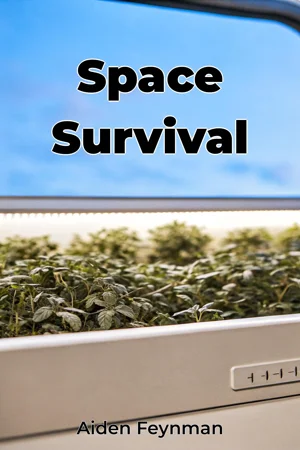
Have you ever considered the sheer complexity of keeping a human being alive beyond the confines of Earth's protective atmosphere? "Space Survival" delves into the intricate science and technology required to sustain life in the hostile environment of space, focusing on the critical aspects of oxygen management, radiation protection, and the myriad other challenges astronauts face. These topics are paramount not only for understanding past and present space missions but also for paving the way for future endeavors, including long-duration space travel and potential colonization. This book argues that successful space exploration hinges not merely on advanced propulsion systems or sophisticated robotics, but fundamentally on our ability to create self-sustaining ecosystems within spacecraft and on planetary surfaces. This argument is crucial as we contemplate missions to Mars and beyond, where resupply from Earth becomes impractical. "Space Survival" begins by establishing the fundamental environmental challenges of space, from the vacuum and extreme temperatures to the ever-present threat of radiation. It examines the history of life support systems, tracing their evolution from the early days of spaceflight to the sophisticated technologies employed on the International Space Station. The book will then explore the crucial aspect of oxygen management, detailing the closed-loop systems that recycle air and water, minimizing the need for resupply. It investigates various methods of oxygen generation, including electrolysis and chemical reactions, and analyzes their efficiency and reliability in different mission scenarios. Radiation protection forms another core theme, with a detailed examination of the sources of radiation in space – solar flares, galactic cosmic rays, and trapped radiation belts. The book explores different strategies for shielding spacecraft and habitats, from passive shielding using specialized materials to active shielding using electromagnetic fields. It also examines the biological effects of radiation exposure and the countermeasures being developed to mitigate these risks. Furthermore, "Space Survival" dedicates chapters to other essential aspects of space survival, such as waste management, food production, and the psychological challenges of long-duration spaceflight. It explores innovative approaches to growing food in space, recycling waste into usable resources, and maintaining the mental and emotional well-being of astronauts confined to small spaces for extended periods. The evidence presented throughout the book draws from a wide range of sources, including NASA technical reports, scientific publications, and the firsthand accounts of astronauts. It also incorporates data from ongoing experiments on the International Space Station and ground-based simulations. "Space Survival" connects to fields such as environmental science, engineering, and medicine. The technologies developed for space survival have direct applications on Earth, such as improving air and water purification systems, developing sustainable agriculture practices, and creating closed-loop life support systems for extreme environments. The psychological aspects of spaceflight are relevant to understanding human behavior in isolated and confined environments, with implications for fields such as psychology and sociology. This book offers a pragmatic perspective on the challenges and solutions related to human spaceflight. It avoids sensationalism and focuses on the scientific and technical aspects of space survival, providing a detailed and accessible overview of the field. The target audience includes students, engineers, scientists, and anyone with an interest in space exploration and the technologies that make it possible. "Space Survival" is valuable to anyone interested in space exploration, engineering, or the development of life-support systems. The scope of the book is limited to the technical and scientific aspects of space survival, with a focus on the physiological and environmental challenges. The book will not delve into the political or economic aspects of space exploration. The information in the book can be applied to the design and development of future space missions, the creation of sustainable habitats on Earth, and the development of technologies for extreme environments. There are ongoing debates within the space community regarding the optimal approaches to radiation shielding and the long-term effects of space travel on human health, and "Space Survival" addresses these controversies by presenting different perspectives and analyzing the available evidence.
Have you ever considered the sheer complexity of keeping a human being alive beyond the confines of Earth's protective atmosphere? "Space Survival" delves into the intricate science and technology required to sustain life in the hostile environment of space, focusing on the critical aspects of oxygen management, radiation protection, and the myriad other challenges astronauts face. These topics are paramount not only for understanding past and present space missions but also for paving the way for future endeavors, including long-duration space travel and potential colonization. This book argues that successful space exploration hinges not merely on advanced propulsion systems or sophisticated robotics, but fundamentally on our ability to create self-sustaining ecosystems within spacecraft and on planetary surfaces. This argument is crucial as we contemplate missions to Mars and beyond, where resupply from Earth becomes impractical. "Space Survival" begins by establishing the fundamental environmental challenges of space, from the vacuum and extreme temperatures to the ever-present threat of radiation. It examines the history of life support systems, tracing their evolution from the early days of spaceflight to the sophisticated technologies employed on the International Space Station. The book will then explore the crucial aspect of oxygen management, detailing the closed-loop systems that recycle air and water, minimizing the need for resupply. It investigates various methods of oxygen generation, including electrolysis and chemical reactions, and analyzes their efficiency and reliability in different mission scenarios. Radiation protection forms another core theme, with a detailed examination of the sources of radiation in space – solar flares, galactic cosmic rays, and trapped radiation belts. The book explores different strategies for shielding spacecraft and habitats, from passive shielding using specialized materials to active shielding using electromagnetic fields. It also examines the biological effects of radiation exposure and the countermeasures being developed to mitigate these risks. Furthermore, "Space Survival" dedicates chapters to other essential aspects of space survival, such as waste management, food production, and the psychological challenges of long-duration spaceflight. It explores innovative approaches to growing food in space, recycling waste into usable resources, and maintaining the mental and emotional well-being of astronauts confined to small spaces for extended periods. The evidence presented throughout the book draws from a wide range of sources, including NASA technical reports, scientific publications, and the firsthand accounts of astronauts. It also incorporates data from ongoing experiments on the International Space Station and ground-based simulations. "Space Survival" connects to fields such as environmental science, engineering, and medicine. The technologies developed for space survival have direct applications on Earth, such as improving air and water purification systems, developing sustainable agriculture practices, and creating closed-loop life support systems for extreme environments. The psychological aspects of spaceflight are relevant to understanding human behavior in isolated and confined environments, with implications for fields such as psychology and sociology. This book offers a pragmatic perspective on the challenges and solutions related to human spaceflight. It avoids sensationalism and focuses on the scientific and technical aspects of space survival, providing a detailed and accessible overview of the field. The target audience includes students, engineers, scientists, and anyone with an interest in space exploration and the technologies that make it possible. "Space Survival" is valuable to anyone interested in space exploration, engineering, or the development of life-support systems. The scope of the book is limited to the technical and scientific aspects of space survival, with a focus on the physiological and environmental challenges. The book will not delve into the political or economic aspects of space exploration. The information in the book can be applied to the design and development of future space missions, the creation of sustainable habitats on Earth, and the development of technologies for extreme environments. There are ongoing debates within the space community regarding the optimal approaches to radiation shielding and the long-term effects of space travel on human health, and "Space Survival" addresses these controversies by presenting different perspectives and analyzing the available evidence.
"Space Survival" explores the complex science and technology required to keep humans alive in the harsh environment of space. The book emphasizes that successful space exploration relies on creating self-sustaining ecosystems within spacecraft and on planetary surfaces, crucial for long-duration missions. It argues that the future of space missions depends on our ability to solve challenges like radiation exposure and resource management. The book begins by outlining the fundamental environmental challenges of space, such as extreme temperatures and radiation, and traces the history of life support systems. It then examines oxygen management, detailing closed-loop systems that recycle air and water, and radiation protection strategies, from passive shielding to active electromagnetic fields. For instance, radiation protection is paramount, considering the dangers from solar flares and cosmic rays. Furthermore, "Space Survival" dedicates chapters to other essential aspects of space survival, such as waste management, food production, and the psychological challenges of long-duration spaceflight. The book draws from NASA reports, scientific publications, and astronaut accounts to provide a pragmatic, detailed, and accessible overview of the field suitable for students, engineers, scientists, and space enthusiasts.
Book Details
ISBN
9788233964900
Publisher
Publifye AS
Your Licenses
You don't own any licenses for this book
Purchase a license below to unlock this book and download the EPUB.
Purchase License
Select a tier to unlock this book
Need bulk licensing?
Contact us for enterprise agreements.