
About This Book
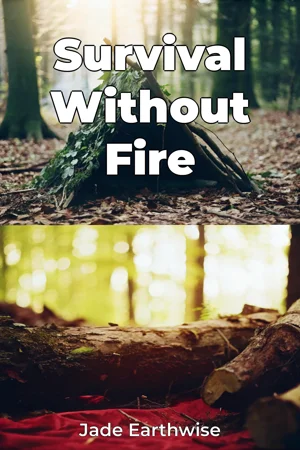
Imagine finding yourself stranded in the wilderness, stripped of modern conveniences and facing the stark reality of survival. Could you endure without the comforting warmth of a fire? This book, "Survival Without Fire," is your comprehensive guide to mastering the essential skills of staying warm, preparing food, and purifying water when fire is not an option. This detailed manual is essential reading for outdoor enthusiasts, survivalists, and anyone seeking to deepen their understanding of self-reliance in nature. "Survival Without Fire" delves into the science and art of surviving in the wild without relying on traditional flame-based methods. The book emphasizes the critical importance of resourcefulness and knowledge, focusing on the interplay between understanding natural processes and implementing practical techniques. The central argument is that survival is achievable in nearly any environment through informed preparation and the application of fire-free strategies. This argument is crucial because it challenges the pervasive reliance on fire in survival narratives, offering a safer, often more sustainable, and sometimes more feasible path to enduring hardship. The book unfolds in a logical progression. Initially, it investigates hypothermia prevention using insulation strategies like layering clothing, building alternative shelters for heat retention, and maximizing solar gain. It then elaborates on no-cook food procurement and preparation, detailing methods such as trapping, foraging, and preserving food using natural resources like sun and wind. The final section explores water purification techniques that don't require boiling, including solar disinfection, filtration systems using natural materials, and chemical purification using plants. The information presented draws upon historical accounts of indigenous practices, scientific studies on thermodynamics and microbiology, and evidence-based survival techniques tested and refined by experienced outdoor professionals. It includes data on the insulating properties of various natural materials, the nutritional content of edible plants, and the effectiveness of different water purification methods. The core subject matter naturally connects to various other fields, including botany (for identifying edible and medicinal plants), engineering (for understanding shelter construction and insulation), and chemistry (for comprehending water purification processes). Integrating these elements strengthens the book's argument by providing a holistic and scientifically grounded understanding of survival. What sets "Survival Without Fire" apart is its practical, hands-on approach and the premise of independence from fire. Rather than simply describing techniques, the book provides clear, step-by-step instructions, illustrations, and examples to allow readers to confidently apply these methods in real-world situations. This book is written in a clear and accessible style, avoiding jargon and complicated explanations, making it approachable for both beginners and experienced survivalists. The target audience includes hikers, campers, preppers, and anyone seeking to improve their self-sufficiency skills. The book is valuable to them because it provides practical, reliable information that can be applied in emergency scenarios or simply used to enhance their connection with nature. As a non-fiction adventure/nature guide, "Survival Without Fire" provides practical information, skill-building exercises, and real-world examples. It maintains a realistic perspective, acknowledging the physical and mental challenges of survival. The book's scope covers a wide range of environments, but it intentionally limits its focus to situations where fire is unavailable or impractical. It does not delve into advanced medical care or extreme survival scenarios requiring specialized equipment. The techniques described in "Survival Without Fire" have immediate real-world applications, from preparing for a short camping trip to responding to a natural disaster. By mastering these skills, readers can significantly increase their preparedness and self-reliance in any outdoor setting. While many survival guides emphasize fire-starting as a fundamental skill, "Survival Without Fire" addresses the limitations and risks associated with fire, particularly in environments where resources are scarce or conditions are unfavorable. It acknowledges the ongoing debate about the necessity of fire in all survival situations, presenting compelling evidence for alternative approaches. This book will not only provide the reader with the skills needed to survive, but the knowledge to thrive.
Imagine finding yourself stranded in the wilderness, stripped of modern conveniences and facing the stark reality of survival. Could you endure without the comforting warmth of a fire? This book, "Survival Without Fire," is your comprehensive guide to mastering the essential skills of staying warm, preparing food, and purifying water when fire is not an option. This detailed manual is essential reading for outdoor enthusiasts, survivalists, and anyone seeking to deepen their understanding of self-reliance in nature. "Survival Without Fire" delves into the science and art of surviving in the wild without relying on traditional flame-based methods. The book emphasizes the critical importance of resourcefulness and knowledge, focusing on the interplay between understanding natural processes and implementing practical techniques. The central argument is that survival is achievable in nearly any environment through informed preparation and the application of fire-free strategies. This argument is crucial because it challenges the pervasive reliance on fire in survival narratives, offering a safer, often more sustainable, and sometimes more feasible path to enduring hardship. The book unfolds in a logical progression. Initially, it investigates hypothermia prevention using insulation strategies like layering clothing, building alternative shelters for heat retention, and maximizing solar gain. It then elaborates on no-cook food procurement and preparation, detailing methods such as trapping, foraging, and preserving food using natural resources like sun and wind. The final section explores water purification techniques that don't require boiling, including solar disinfection, filtration systems using natural materials, and chemical purification using plants. The information presented draws upon historical accounts of indigenous practices, scientific studies on thermodynamics and microbiology, and evidence-based survival techniques tested and refined by experienced outdoor professionals. It includes data on the insulating properties of various natural materials, the nutritional content of edible plants, and the effectiveness of different water purification methods. The core subject matter naturally connects to various other fields, including botany (for identifying edible and medicinal plants), engineering (for understanding shelter construction and insulation), and chemistry (for comprehending water purification processes). Integrating these elements strengthens the book's argument by providing a holistic and scientifically grounded understanding of survival. What sets "Survival Without Fire" apart is its practical, hands-on approach and the premise of independence from fire. Rather than simply describing techniques, the book provides clear, step-by-step instructions, illustrations, and examples to allow readers to confidently apply these methods in real-world situations. This book is written in a clear and accessible style, avoiding jargon and complicated explanations, making it approachable for both beginners and experienced survivalists. The target audience includes hikers, campers, preppers, and anyone seeking to improve their self-sufficiency skills. The book is valuable to them because it provides practical, reliable information that can be applied in emergency scenarios or simply used to enhance their connection with nature. As a non-fiction adventure/nature guide, "Survival Without Fire" provides practical information, skill-building exercises, and real-world examples. It maintains a realistic perspective, acknowledging the physical and mental challenges of survival. The book's scope covers a wide range of environments, but it intentionally limits its focus to situations where fire is unavailable or impractical. It does not delve into advanced medical care or extreme survival scenarios requiring specialized equipment. The techniques described in "Survival Without Fire" have immediate real-world applications, from preparing for a short camping trip to responding to a natural disaster. By mastering these skills, readers can significantly increase their preparedness and self-reliance in any outdoor setting. While many survival guides emphasize fire-starting as a fundamental skill, "Survival Without Fire" addresses the limitations and risks associated with fire, particularly in environments where resources are scarce or conditions are unfavorable. It acknowledges the ongoing debate about the necessity of fire in all survival situations, presenting compelling evidence for alternative approaches. This book will not only provide the reader with the skills needed to survive, but the knowledge to thrive.
"Survival Without Fire" explores the art of thriving in nature without relying on flames, offering a unique perspective on wilderness survival. This book focuses on mastering crucial skills, such as hypothermia prevention, no-cook food preparation, and water purification, under conditions where fire is not an option. It challenges conventional survival wisdom by presenting practical, fire-free strategies, emphasizing resourcefulness and knowledge of natural processes. Did you know that certain plants can be used for chemical water purification, offering an alternative to boiling? The book's value lies in its hands-on approach, providing clear instructions and illustrations for readers of all skill levels. It begins with strategies for staying warm, including building alternative shelters and layering clothing, then transitions to procuring and preparing food without cooking, such as trapping and foraging. Finally, the book details various water purification methods using natural materials, like solar disinfection and filtration systems. This adventure guide integrates historical practices, scientific studies, and tested techniques to provide a comprehensive understanding of self-reliance in the wild, ensuring preparedness and confidence in any outdoor setting.
Book Details
ISBN
9788233964894
Publisher
Publifye AS
Your Licenses
You don't own any licenses for this book
Purchase a license below to unlock this book and download the EPUB.
Purchase License
Select a tier to unlock this book
Need bulk licensing?
Contact us for enterprise agreements.