
About This Book
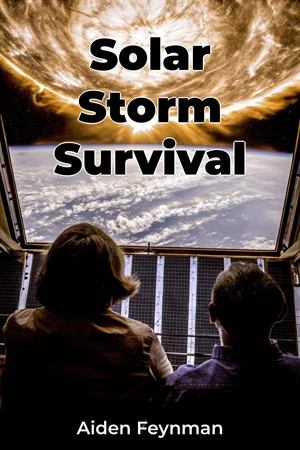
Could a massive solar storm plunge our modern world into chaos, crippling power grids and disrupting the technology we rely on daily? This book, "Solar Storm Survival," offers a comprehensive guide to understanding and preparing for the potentially devastating effects of extreme space weather events. We delve into the science behind solar storms, explore their historical impact, and provide practical strategies for individuals, communities, and even governments to mitigate the risks. This book tackles several key topics, starting with an in-depth examination of solar physics. We explain the sun's activity cycles, coronal mass ejections (CMEs), and the mechanisms by which these solar events can trigger geomagnetic disturbances on Earth. Understanding this science is crucial for grasping the potential severity of solar storms and the rationale behind preparedness measures. A second major topic focuses on the vulnerability of our technological infrastructure, particularly the electric power grid, satellite systems, and communication networks. We analyze how these systems are susceptible to damage from geomagnetically induced currents (GICs) and radiation, and we assess the cascading effects of widespread failures. Finally, the book provides practical strategies for survival, ranging from individual preparedness measures like backup power and communication systems to community-level initiatives for resilience. We present a clear and evidence-based analysis of the threat, drawing upon scientific research, historical data from past solar storms (such as the Carrington Event of 1859 and the Quebec blackout of 1989), and expert assessments from organizations like NASA and NOAA. The book also incorporates insights from interviews with scientists, engineers, and emergency management professionals. The central argument of "Solar Storm Survival" is that while massive solar storms are inevitable, their potentially catastrophic consequences can be significantly reduced through proactive planning and preparedness. We challenge the common misconception that solar storms are a distant threat and emphasize the urgent need for awareness and action at all levels of society. The book is structured into three main parts. Part 1 provides the scientific foundation, explaining the nature of solar storms and their potential impact on Earth. This section covers the solar cycle, CMEs, geomagnetic storms, and the physics of how these events affect technological systems. Part 2 examines the vulnerabilities of critical infrastructure, focusing on the power grid, satellites, and communication networks. We delve into the technical details of how these systems are affected and the potential consequences of their failure. Part 3 offers practical strategies for survival, including individual preparedness, community resilience, and government policy recommendations. This section provides actionable steps that readers can take to protect themselves, their families, and their communities. The book connects to several other fields, most notably emergency management, electrical engineering, and public policy. By integrating knowledge from these diverse areas, we offer a holistic perspective on the challenges posed by solar storms and the strategies for mitigating their impact. Our approach stands out by combining rigorous scientific analysis with practical, actionable advice, providing a comprehensive guide for anyone seeking to understand and prepare for this significant threat. Written in a clear and accessible style, "Solar Storm Survival" is intended for a broad audience, including homeowners, preppers, emergency planners, policymakers, and anyone concerned about the future of our technologically dependent society. The book’s value lies in its ability to empower readers with the knowledge and tools they need to navigate this emerging threat. While the book provides a broad overview of solar storm preparedness, it focuses primarily on the impacts to and resilience of developed nations with advanced technological infrastructure. It is not intended to be an exhaustive guide to every possible survival scenario. The information provided here can be applied practically by individuals creating emergency plans, businesses developing business continuity strategies, and governments formulating policies to protect critical infrastructure. It also touches upon ongoing debates within the scientific community regarding the accuracy of solar forecasting and the effectiveness of various mitigation strategies.
Could a massive solar storm plunge our modern world into chaos, crippling power grids and disrupting the technology we rely on daily? This book, "Solar Storm Survival," offers a comprehensive guide to understanding and preparing for the potentially devastating effects of extreme space weather events. We delve into the science behind solar storms, explore their historical impact, and provide practical strategies for individuals, communities, and even governments to mitigate the risks. This book tackles several key topics, starting with an in-depth examination of solar physics. We explain the sun's activity cycles, coronal mass ejections (CMEs), and the mechanisms by which these solar events can trigger geomagnetic disturbances on Earth. Understanding this science is crucial for grasping the potential severity of solar storms and the rationale behind preparedness measures. A second major topic focuses on the vulnerability of our technological infrastructure, particularly the electric power grid, satellite systems, and communication networks. We analyze how these systems are susceptible to damage from geomagnetically induced currents (GICs) and radiation, and we assess the cascading effects of widespread failures. Finally, the book provides practical strategies for survival, ranging from individual preparedness measures like backup power and communication systems to community-level initiatives for resilience. We present a clear and evidence-based analysis of the threat, drawing upon scientific research, historical data from past solar storms (such as the Carrington Event of 1859 and the Quebec blackout of 1989), and expert assessments from organizations like NASA and NOAA. The book also incorporates insights from interviews with scientists, engineers, and emergency management professionals. The central argument of "Solar Storm Survival" is that while massive solar storms are inevitable, their potentially catastrophic consequences can be significantly reduced through proactive planning and preparedness. We challenge the common misconception that solar storms are a distant threat and emphasize the urgent need for awareness and action at all levels of society. The book is structured into three main parts. Part 1 provides the scientific foundation, explaining the nature of solar storms and their potential impact on Earth. This section covers the solar cycle, CMEs, geomagnetic storms, and the physics of how these events affect technological systems. Part 2 examines the vulnerabilities of critical infrastructure, focusing on the power grid, satellites, and communication networks. We delve into the technical details of how these systems are affected and the potential consequences of their failure. Part 3 offers practical strategies for survival, including individual preparedness, community resilience, and government policy recommendations. This section provides actionable steps that readers can take to protect themselves, their families, and their communities. The book connects to several other fields, most notably emergency management, electrical engineering, and public policy. By integrating knowledge from these diverse areas, we offer a holistic perspective on the challenges posed by solar storms and the strategies for mitigating their impact. Our approach stands out by combining rigorous scientific analysis with practical, actionable advice, providing a comprehensive guide for anyone seeking to understand and prepare for this significant threat. Written in a clear and accessible style, "Solar Storm Survival" is intended for a broad audience, including homeowners, preppers, emergency planners, policymakers, and anyone concerned about the future of our technologically dependent society. The book’s value lies in its ability to empower readers with the knowledge and tools they need to navigate this emerging threat. While the book provides a broad overview of solar storm preparedness, it focuses primarily on the impacts to and resilience of developed nations with advanced technological infrastructure. It is not intended to be an exhaustive guide to every possible survival scenario. The information provided here can be applied practically by individuals creating emergency plans, businesses developing business continuity strategies, and governments formulating policies to protect critical infrastructure. It also touches upon ongoing debates within the scientific community regarding the accuracy of solar forecasting and the effectiveness of various mitigation strategies.
"Solar Storm Survival" addresses the increasing threat of extreme space weather events, focusing on how solar storms can disrupt our technology-dependent world. It highlights the science behind coronal mass ejections (CMEs) and geomagnetic disturbances, explaining how these phenomena can induce geomagnetically induced currents (GICs) that cripple power grids and communication networks. The book draws on historical events like the Carrington Event and the Quebec blackout to illustrate the potential severity of these solar events. The book uniquely combines scientific analysis with practical advice, examining the vulnerabilities of critical infrastructure like the power grid and satellite systems. It then proposes actionable strategies for survival at individual, community, and governmental levels. The book progresses from explaining the science behind solar storms to assessing infrastructure vulnerabilities and finally offering preparedness measures. Ultimately, "Solar Storm Survival" emphasizes that proactive planning is crucial to mitigating the catastrophic consequences of solar storms. It challenges the misconception that solar storms are a distant threat and stresses the urgent need for awareness and action, empowering readers with the knowledge and tools needed to navigate this significant technological risk.
Book Details
ISBN
9788233964887
Publisher
Publifye AS
Your Licenses
You don't own any licenses for this book
Purchase a license below to unlock this book and download the EPUB.
Purchase License
Select a tier to unlock this book
Need bulk licensing?
Contact us for enterprise agreements.