
About This Book
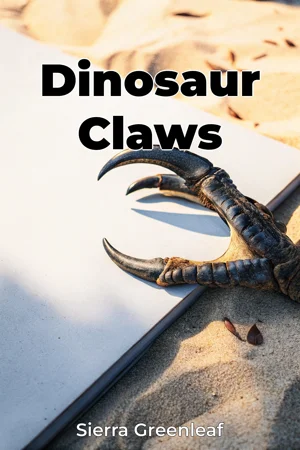
Have you ever wondered how paleontologists unlock the secrets of dinosaur behavior from mere fossilized remains? This book, "Dinosaur Claws," delves into one of the most revealing aspects of predatory dinosaurs: their claws. We will investigate how these seemingly simple structures offer invaluable insights into their hunting strategies, evolutionary adaptations, and ecological roles. Understanding dinosaur claws is crucial because they provide direct evidence of predatory behavior, allowing us to move beyond speculation and reconstruct the lives of these extinct animals with greater accuracy. This book explores three main topics: the morphology of dinosaur claws and its relationship to function, the biomechanics of claw use during hunting, and the evolutionary history of claws within the dinosaur lineage. We will begin by establishing a foundation in dinosaur anatomy and taxonomy, providing a necessary context for understanding the specialized adaptations of their claws. No prior knowledge is needed beyond a general interest in dinosaurs and the natural world. Our central argument is that the form and function of dinosaur claws are directly linked to their predatory lifestyles and reflect specific adaptations to different hunting techniques. By combining paleontological evidence with biomechanical analysis and evolutionary studies, we can gain a comprehensive understanding of how these dinosaurs interacted with their environment. This is important because it challenges conventional portrayals and offers a nuanced view of dinosaur behavior. The book is structured as follows: First, we will introduce the basic types of dinosaur claws, classifying them by shape, size, and curvature. We will investigate the evolutionary pathways that led to such varied claw designs, focusing on fossil evidence and phylogenetic relationships. Second, we will explore the functional aspects of these claws through biomechanical modeling, examining how different claw shapes might have been used for grasping, slashing, or climbing. Specifically, we will look at theropods like dromaeosaurids, famous for their sickle-shaped claws, and compare them to other groups with less specialized claws. Third, we will discuss the ecological implications of these adaptations, examining how claw morphology correlates with prey size and hunting strategies, including pack hunting versus solitary predation. Finally, we will consider practical applications of this research, such as informing our understanding of modern predator-prey relationships and advancing biomechanical engineering. We will draw upon a diverse range of evidence, including detailed analyses of fossil specimens, comparative anatomy of modern animals, and computational modeling of claw biomechanics. We will examine data from museum collections across the globe, along with previously published research in paleontology and related fields. The methodologies employed include 3D modeling, finite element analysis, and phylogenetic comparative methods. This study connects to other fields such as zoology (particularly the study of modern predators), engineering (in the design of tools and robotics inspired by nature), and ecology (in understanding ancient food webs and ecosystem dynamics). These interdisciplinary connections enhance the book's argument by providing diverse perspectives on the significance of dinosaur claws. Our approach offers an innovative perspective by integrating traditional paleontological methods with advanced biomechanical analysis. This fusion allows for a more rigorous and quantitative understanding of dinosaur behavior. The book takes a fact-based tone, presenting information in a clear and accessible manner while rigorously adhering to scientific standards. The target audience includes students, researchers, and anyone with a serious interest in dinosaurs and paleontology. This book would be valuable to them because it presents cutting-edge research in a clear and engaging way, offering new insights into the lives of these fascinating creatures. As a non-fiction work, the book adheres to the conventions of scientific accuracy and rigorous citation. It avoids speculation and focuses on presenting evidence-based conclusions. The scope of the book is limited to the study of dinosaur claws and their role in predation. While it touches upon broader topics such as dinosaur evolution and ecology, its main focus remains on the functional morphology of claws. The information presented can be applied practically in fields such as biomechanics and robotics, where the design principles found in dinosaur claws can inspire innovative solutions. It also has implications for wildlife conservation, as understanding predator-prey relationships is essential for managing ecosystems effectively. The book addresses ongoing debates in paleontology, such as the role of feathers in theropod evolution and the hunting strategies of dromaeosaurids. By presenting new evidence and analysis, it contributes to these discussions and offers fresh perspectives on unresolved questions.
Have you ever wondered how paleontologists unlock the secrets of dinosaur behavior from mere fossilized remains? This book, "Dinosaur Claws," delves into one of the most revealing aspects of predatory dinosaurs: their claws. We will investigate how these seemingly simple structures offer invaluable insights into their hunting strategies, evolutionary adaptations, and ecological roles. Understanding dinosaur claws is crucial because they provide direct evidence of predatory behavior, allowing us to move beyond speculation and reconstruct the lives of these extinct animals with greater accuracy. This book explores three main topics: the morphology of dinosaur claws and its relationship to function, the biomechanics of claw use during hunting, and the evolutionary history of claws within the dinosaur lineage. We will begin by establishing a foundation in dinosaur anatomy and taxonomy, providing a necessary context for understanding the specialized adaptations of their claws. No prior knowledge is needed beyond a general interest in dinosaurs and the natural world. Our central argument is that the form and function of dinosaur claws are directly linked to their predatory lifestyles and reflect specific adaptations to different hunting techniques. By combining paleontological evidence with biomechanical analysis and evolutionary studies, we can gain a comprehensive understanding of how these dinosaurs interacted with their environment. This is important because it challenges conventional portrayals and offers a nuanced view of dinosaur behavior. The book is structured as follows: First, we will introduce the basic types of dinosaur claws, classifying them by shape, size, and curvature. We will investigate the evolutionary pathways that led to such varied claw designs, focusing on fossil evidence and phylogenetic relationships. Second, we will explore the functional aspects of these claws through biomechanical modeling, examining how different claw shapes might have been used for grasping, slashing, or climbing. Specifically, we will look at theropods like dromaeosaurids, famous for their sickle-shaped claws, and compare them to other groups with less specialized claws. Third, we will discuss the ecological implications of these adaptations, examining how claw morphology correlates with prey size and hunting strategies, including pack hunting versus solitary predation. Finally, we will consider practical applications of this research, such as informing our understanding of modern predator-prey relationships and advancing biomechanical engineering. We will draw upon a diverse range of evidence, including detailed analyses of fossil specimens, comparative anatomy of modern animals, and computational modeling of claw biomechanics. We will examine data from museum collections across the globe, along with previously published research in paleontology and related fields. The methodologies employed include 3D modeling, finite element analysis, and phylogenetic comparative methods. This study connects to other fields such as zoology (particularly the study of modern predators), engineering (in the design of tools and robotics inspired by nature), and ecology (in understanding ancient food webs and ecosystem dynamics). These interdisciplinary connections enhance the book's argument by providing diverse perspectives on the significance of dinosaur claws. Our approach offers an innovative perspective by integrating traditional paleontological methods with advanced biomechanical analysis. This fusion allows for a more rigorous and quantitative understanding of dinosaur behavior. The book takes a fact-based tone, presenting information in a clear and accessible manner while rigorously adhering to scientific standards. The target audience includes students, researchers, and anyone with a serious interest in dinosaurs and paleontology. This book would be valuable to them because it presents cutting-edge research in a clear and engaging way, offering new insights into the lives of these fascinating creatures. As a non-fiction work, the book adheres to the conventions of scientific accuracy and rigorous citation. It avoids speculation and focuses on presenting evidence-based conclusions. The scope of the book is limited to the study of dinosaur claws and their role in predation. While it touches upon broader topics such as dinosaur evolution and ecology, its main focus remains on the functional morphology of claws. The information presented can be applied practically in fields such as biomechanics and robotics, where the design principles found in dinosaur claws can inspire innovative solutions. It also has implications for wildlife conservation, as understanding predator-prey relationships is essential for managing ecosystems effectively. The book addresses ongoing debates in paleontology, such as the role of feathers in theropod evolution and the hunting strategies of dromaeosaurids. By presenting new evidence and analysis, it contributes to these discussions and offers fresh perspectives on unresolved questions.
"Dinosaur Claws" explores how the claws of predatory dinosaurs reveal insights into their lives. By examining fossilized remains, paleontologists can deduce hunting strategies, evolutionary adaptations, and ecological roles. The book emphasizes the direct link between claw form and predatory function, offering a nuanced view of dinosaur behavior beyond speculation. Intriguingly, the morphology of claws varies significantly, reflecting different hunting techniques, such as grasping or slashing, and evolutionary pathways. The book investigates the types of dinosaur claws, their biomechanics, and evolutionary history. It begins with dinosaur anatomy and taxonomy, then explores claw function through biomechanical modeling, comparing theropods like dromaeosaurids to others. The ecological implications of claw adaptations are discussed, correlating claw morphology with prey size and hunting strategies, such as pack hunting. This study integrates paleontology with biomechanical analysis, providing a quantitative understanding of dinosaur behavior, and challenges conventional portrayals.
Book Details
ISBN
9788233964610
Publisher
Publifye AS
Your Licenses
You don't own any licenses for this book
Purchase a license below to unlock this book and download the EPUB.
Purchase License
Select a tier to unlock this book
Need bulk licensing?
Contact us for enterprise agreements.