
About This Book
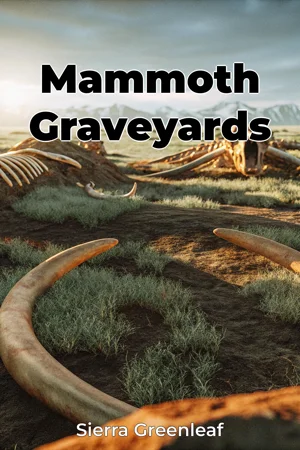
What if the secrets to understanding prehistoric extinctions lay buried beneath our feet, concentrated in vast graveyards of colossal creatures? "Mammoth Graveyards" delves into the enigmatic world of these fossil-rich sites, exploring what they reveal about the demise of mammoths and other megafauna during the last Ice Age. This book examines two critical areas: first, the formation and taphonomy of mammoth graveyards, and second, the implications of these sites for understanding the causes of the Late Pleistocene extinction event. These topics are crucial because they offer tangible evidence for reconstructing past environments, climates, and the interactions between humans and megafauna. The book provides essential context by outlining the geological and climatic conditions of the Pleistocene epoch, often referred to as the Ice Age. This includes discussions of glacial cycles, sea-level changes, and shifts in vegetation patterns necessary to understand the environment the mammoths and many other species inhabited. Understanding the Late Pleistocene environment is necessary to interpret the fossil record and evaluate the various extinction hypotheses. The central argument of this book is that mammoth graveyards, when rigorously analyzed using modern scientific methods, provide invaluable insights into the complex interplay of factors that contributed to megafaunal extinctions. We argue that these sites are not simply random accumulations of bones, but rather represent snapshots of past ecological and environmental conditions. The book unfolds in a structured manner. It starts with an introduction to mammoth graveyards, detailing their geographic distribution, geological context, and taphonomic processes. The next section focuses on the major extinction theories, including climate change, human hunting, and disease, evaluating the evidence for each using data derived from mammoth graveyards. Specifically, the book examines data related to the age and health of the mammoths found at these sites, evidence of human interaction (e.g., butchering marks on bones, associated artifacts), and the paleoenvironmental context. The culmination of the book presents a synthesis of the evidence, proposing a nuanced perspective on the causes of the Ice Age extinctions, acknowledging the likely role of multiple interacting factors. The evidence presented in this book relies heavily on paleontological data from well-documented mammoth graveyards across the globe, including Siberia, North America, and Europe. We draw upon radiocarbon dating, stable isotope analysis, ancient DNA studies, and detailed taphonomic analyses to reconstruct the history of these sites and the lives (and deaths) of the mammoths they contain. Original data from recent excavations will be presented alongside a synthesis of existing research. This book connects to several other fields, including climatology (for understanding past climate change), archaeology (for investigating human-mammoth interactions), and ecology (for modeling past ecological dynamics). Exploring these interdisciplinary connections enhances our understanding of the extinction event by providing a more holistic perspective. A unique aspect of this book is its focus on the taphonomy of mammoth graveyards – that is, the study of how these fossil accumulations formed and what biases might be present in the fossil record. By carefully considering these factors, we aim to provide a more accurate and reliable reconstruction of the past. The tone of the book is factual and analytical, aimed at presenting complex scientific information in an accessible manner. The intended audience includes students, researchers, and anyone interested in paleontology, Ice Age history, or the causes of extinction. "Mammoth Graveyards" provides a valuable resource for understanding one of the most important events in Earth's recent history. The scope of the book is limited to the Late Pleistocene megafaunal extinctions, with a particular emphasis on the role of mammoth graveyards in providing evidence. While other extinction events are mentioned for context, the primary focus remains on the recent past. The book addresses ongoing debates surrounding the causes of megafaunal extinctions such as the relative importance of human hunting versus climate change, presenting different perspectives and evaluating the evidence for each. This scientific understanding informs current concerns about biodiversity loss and the potential for future extinctions.
What if the secrets to understanding prehistoric extinctions lay buried beneath our feet, concentrated in vast graveyards of colossal creatures? "Mammoth Graveyards" delves into the enigmatic world of these fossil-rich sites, exploring what they reveal about the demise of mammoths and other megafauna during the last Ice Age. This book examines two critical areas: first, the formation and taphonomy of mammoth graveyards, and second, the implications of these sites for understanding the causes of the Late Pleistocene extinction event. These topics are crucial because they offer tangible evidence for reconstructing past environments, climates, and the interactions between humans and megafauna. The book provides essential context by outlining the geological and climatic conditions of the Pleistocene epoch, often referred to as the Ice Age. This includes discussions of glacial cycles, sea-level changes, and shifts in vegetation patterns necessary to understand the environment the mammoths and many other species inhabited. Understanding the Late Pleistocene environment is necessary to interpret the fossil record and evaluate the various extinction hypotheses. The central argument of this book is that mammoth graveyards, when rigorously analyzed using modern scientific methods, provide invaluable insights into the complex interplay of factors that contributed to megafaunal extinctions. We argue that these sites are not simply random accumulations of bones, but rather represent snapshots of past ecological and environmental conditions. The book unfolds in a structured manner. It starts with an introduction to mammoth graveyards, detailing their geographic distribution, geological context, and taphonomic processes. The next section focuses on the major extinction theories, including climate change, human hunting, and disease, evaluating the evidence for each using data derived from mammoth graveyards. Specifically, the book examines data related to the age and health of the mammoths found at these sites, evidence of human interaction (e.g., butchering marks on bones, associated artifacts), and the paleoenvironmental context. The culmination of the book presents a synthesis of the evidence, proposing a nuanced perspective on the causes of the Ice Age extinctions, acknowledging the likely role of multiple interacting factors. The evidence presented in this book relies heavily on paleontological data from well-documented mammoth graveyards across the globe, including Siberia, North America, and Europe. We draw upon radiocarbon dating, stable isotope analysis, ancient DNA studies, and detailed taphonomic analyses to reconstruct the history of these sites and the lives (and deaths) of the mammoths they contain. Original data from recent excavations will be presented alongside a synthesis of existing research. This book connects to several other fields, including climatology (for understanding past climate change), archaeology (for investigating human-mammoth interactions), and ecology (for modeling past ecological dynamics). Exploring these interdisciplinary connections enhances our understanding of the extinction event by providing a more holistic perspective. A unique aspect of this book is its focus on the taphonomy of mammoth graveyards – that is, the study of how these fossil accumulations formed and what biases might be present in the fossil record. By carefully considering these factors, we aim to provide a more accurate and reliable reconstruction of the past. The tone of the book is factual and analytical, aimed at presenting complex scientific information in an accessible manner. The intended audience includes students, researchers, and anyone interested in paleontology, Ice Age history, or the causes of extinction. "Mammoth Graveyards" provides a valuable resource for understanding one of the most important events in Earth's recent history. The scope of the book is limited to the Late Pleistocene megafaunal extinctions, with a particular emphasis on the role of mammoth graveyards in providing evidence. While other extinction events are mentioned for context, the primary focus remains on the recent past. The book addresses ongoing debates surrounding the causes of megafaunal extinctions such as the relative importance of human hunting versus climate change, presenting different perspectives and evaluating the evidence for each. This scientific understanding informs current concerns about biodiversity loss and the potential for future extinctions.
"Mammoth Graveyards" explores the mysteries held within concentrated deposits of mammoth remains, offering insights into the Late Pleistocene extinction event. These graveyards, found across continents, are not random bone accumulations, but rather snapshots of past ecological conditions. The book uniquely focuses on taphonomy, the study of how these fossil sites formed, to accurately reconstruct past environments and the lives of mammoths. The book progresses by first introducing the geographic distribution and geological context of mammoth graveyards. It then evaluates major extinction theories like climate change and human hunting, using paleontological data such as radiocarbon dating and fossil analysis, derived from the graveyards themselves. A key argument is that rigorous scientific analysis of these sites reveals the complex interplay of factors contributing to megafaunal extinctions, highlighting the need to consider multiple interacting elements rather than a single cause. These findings inform current discussions about biodiversity loss and potential future extinctions.
Book Details
ISBN
9788233964597
Publisher
Publifye AS
Your Licenses
You don't own any licenses for this book
Purchase a license below to unlock this book and download the EPUB.
Purchase License
Select a tier to unlock this book
Need bulk licensing?
Contact us for enterprise agreements.