
About This Book
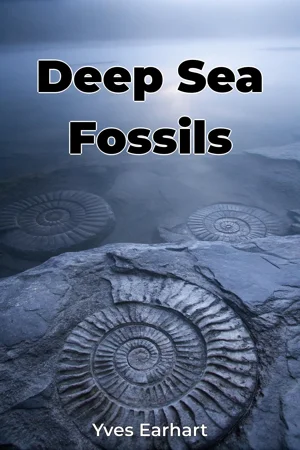
Imagine holding a fragment of Earth's history, a literal piece of a prehistoric ocean teeming with life, now preserved in stone beneath the crushing pressures of the deep sea. "Deep Sea Fossils" unveils this hidden world, exploring the remarkable story of ancient marine life and the geological processes that have entombed their remains within the ocean floor. This book will delve into the profound implications these fossils hold for understanding past climates, evolutionary trajectories, and the very future of our oceans. We will explore two central topics: the paleontology of deep-sea organisms and the geological mechanisms of fossilization in extreme environments. Understanding these topics is crucial because deep-sea fossils provide a unique, largely untapped record of life during periods of significant environmental change, offering critical insights into how marine ecosystems respond to global shifts. Our narrative begins with an examination into the history of deep-sea exploration and the technological advancements that have made the recovery and study of these fossils possible. From early dredging expeditions to modern remotely operated vehicles (ROVs) and deep-sea submersibles, we trace the evolution of our ability to access and interpret this hidden realm. You will gain insights into the challenges and rewards of deep-sea paleontology. The central argument of "Deep Sea Fossils" is that the deep ocean, often perceived as a biological desert, is actually a rich repository of paleontological information essential for reconstructing Earth's past environmental conditions. The book will demonstrate how these fossils not only document the existence of now-extinct species but also serve as indicators of past ocean temperatures, salinity levels, and tectonic activity. The book's structure follows a logical progression. Initially, we introduce the fundamental principles of paleontology and geology relevant to understanding deep-sea fossil formation. We will then examine several key fossil sites and the specific organisms they reveal, from microscopic foraminifera to the skeletal remains of ancient marine reptiles. Next, we will discuss the taphonomic processes that govern fossilization in the deep sea, including the role of microbial activity, sediment composition, and tectonic forces. The book culminates in a discussion of the broader implications of deep-sea fossil research, including its relevance to climate change studies, resource exploration, and our understanding of the origins of life. The evidence presented in the book draws from a wide range of sources, including scientific publications, research expeditions, and data collected from deep-sea drilling projects. We will showcase high-resolution images of fossil specimens, geological maps of key fossil sites, and three-dimensional reconstructions of ancient marine ecosystems. It will draw upon the wealth of data collected by the Integrated Ocean Drilling Program (IODP) and its predecessors. "Deep Sea Fossils" connects to several other fields, including climatology, oceanography, and evolutionary biology. The analysis of fossil isotopes in the deep sea provides valuable data for reconstructing past climate conditions, complementing terrestrial records. The study of deep-sea ecosystems sheds light on the evolutionary adaptations of organisms to extreme environments. The book adopts a multidisciplinary approach, integrating paleontological data with geological and oceanographic information to provide a holistic understanding of the deep-sea environment. This book offers a comprehensive and up-to-date overview of deep-sea paleontology. While focusing on the scientific aspects of fossil discovery and analysis, the book will also address the legal and ethical considerations surrounding the exploitation of deep-sea resources, emphasizing the importance of responsible stewardship of this fragile environment. "Deep Sea Fossils" is aimed at students, researchers, and anyone with an interest in paleontology, marine biology, or Earth sciences. The book is written in an accessible style, avoiding technical jargon where possible and providing clear explanations of complex concepts. The intention is to inform and to inspire a deeper appreciation for the hidden wonders of the deep ocean and the crucial role it plays in understanding our planet's history. This book’s scope is limited primarily to fossils found on the deep ocean floor, beyond the continental shelves, although connections to shallower water fossil records will be acknowledged. We will not delve into the specifics of marine archaeology, focusing instead on fossils formed through natural geological processes. The information presented in "Deep Sea Fossils" has practical applications in various fields. Climate scientists can use fossil data to improve their models of past climate change. The oil and gas industry relies on paleontological information to locate and evaluate potential drilling sites. Conservation efforts can benefit from a better understanding of the ecological history of the deep sea. One of the ongoing debates in deep-sea research concerns the environmental impact of deep-sea mining. This book will address this controversy by presenting the scientific evidence regarding the fragility of deep-sea ecosystems and the potential consequences of disturbing fossil-rich sediments.
Imagine holding a fragment of Earth's history, a literal piece of a prehistoric ocean teeming with life, now preserved in stone beneath the crushing pressures of the deep sea. "Deep Sea Fossils" unveils this hidden world, exploring the remarkable story of ancient marine life and the geological processes that have entombed their remains within the ocean floor. This book will delve into the profound implications these fossils hold for understanding past climates, evolutionary trajectories, and the very future of our oceans. We will explore two central topics: the paleontology of deep-sea organisms and the geological mechanisms of fossilization in extreme environments. Understanding these topics is crucial because deep-sea fossils provide a unique, largely untapped record of life during periods of significant environmental change, offering critical insights into how marine ecosystems respond to global shifts. Our narrative begins with an examination into the history of deep-sea exploration and the technological advancements that have made the recovery and study of these fossils possible. From early dredging expeditions to modern remotely operated vehicles (ROVs) and deep-sea submersibles, we trace the evolution of our ability to access and interpret this hidden realm. You will gain insights into the challenges and rewards of deep-sea paleontology. The central argument of "Deep Sea Fossils" is that the deep ocean, often perceived as a biological desert, is actually a rich repository of paleontological information essential for reconstructing Earth's past environmental conditions. The book will demonstrate how these fossils not only document the existence of now-extinct species but also serve as indicators of past ocean temperatures, salinity levels, and tectonic activity. The book's structure follows a logical progression. Initially, we introduce the fundamental principles of paleontology and geology relevant to understanding deep-sea fossil formation. We will then examine several key fossil sites and the specific organisms they reveal, from microscopic foraminifera to the skeletal remains of ancient marine reptiles. Next, we will discuss the taphonomic processes that govern fossilization in the deep sea, including the role of microbial activity, sediment composition, and tectonic forces. The book culminates in a discussion of the broader implications of deep-sea fossil research, including its relevance to climate change studies, resource exploration, and our understanding of the origins of life. The evidence presented in the book draws from a wide range of sources, including scientific publications, research expeditions, and data collected from deep-sea drilling projects. We will showcase high-resolution images of fossil specimens, geological maps of key fossil sites, and three-dimensional reconstructions of ancient marine ecosystems. It will draw upon the wealth of data collected by the Integrated Ocean Drilling Program (IODP) and its predecessors. "Deep Sea Fossils" connects to several other fields, including climatology, oceanography, and evolutionary biology. The analysis of fossil isotopes in the deep sea provides valuable data for reconstructing past climate conditions, complementing terrestrial records. The study of deep-sea ecosystems sheds light on the evolutionary adaptations of organisms to extreme environments. The book adopts a multidisciplinary approach, integrating paleontological data with geological and oceanographic information to provide a holistic understanding of the deep-sea environment. This book offers a comprehensive and up-to-date overview of deep-sea paleontology. While focusing on the scientific aspects of fossil discovery and analysis, the book will also address the legal and ethical considerations surrounding the exploitation of deep-sea resources, emphasizing the importance of responsible stewardship of this fragile environment. "Deep Sea Fossils" is aimed at students, researchers, and anyone with an interest in paleontology, marine biology, or Earth sciences. The book is written in an accessible style, avoiding technical jargon where possible and providing clear explanations of complex concepts. The intention is to inform and to inspire a deeper appreciation for the hidden wonders of the deep ocean and the crucial role it plays in understanding our planet's history. This book’s scope is limited primarily to fossils found on the deep ocean floor, beyond the continental shelves, although connections to shallower water fossil records will be acknowledged. We will not delve into the specifics of marine archaeology, focusing instead on fossils formed through natural geological processes. The information presented in "Deep Sea Fossils" has practical applications in various fields. Climate scientists can use fossil data to improve their models of past climate change. The oil and gas industry relies on paleontological information to locate and evaluate potential drilling sites. Conservation efforts can benefit from a better understanding of the ecological history of the deep sea. One of the ongoing debates in deep-sea research concerns the environmental impact of deep-sea mining. This book will address this controversy by presenting the scientific evidence regarding the fragility of deep-sea ecosystems and the potential consequences of disturbing fossil-rich sediments.
"Deep Sea Fossils" explores the fascinating realm of deep-sea paleontology, revealing how fossils preserved on the ocean floor offer invaluable insights into Earth's history. It delves into the geological processes that preserve these remains under immense pressure and the technological advancements enabling their discovery. These fossils act as crucial indicators of past ocean conditions, such as temperature and salinity, providing a unique record of life during significant environmental shifts. For example, the analysis of fossil isotopes helps reconstruct past climates. The book begins with the history of deep-sea exploration, then examines key fossil sites and the organisms they reveal, from microscopic foraminifera to ancient marine reptiles. It progresses to taphonomic processes governing fossilization in the deep sea, while highlighting the importance of responsible stewardship. This comprehensive overview connects climatology, oceanography, and evolutionary biology. It demonstrates how deep-sea fossil research is relevant to climate change studies, resource exploration, and our understanding of the origins of life.
Book Details
ISBN
9788233964573
Publisher
Publifye AS
Your Licenses
You don't own any licenses for this book
Purchase a license below to unlock this book and download the EPUB.
Purchase License
Select a tier to unlock this book
Need bulk licensing?
Contact us for enterprise agreements.