
About This Book
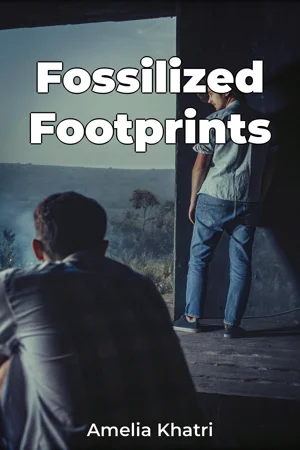
Imagine walking in the footsteps of dinosaurs and early humans – literally. This is the journey we embark on in "Fossilized Footprints," an exploration into the fascinating world of trace fossils, specifically footprints, and the stories they tell about life on Earth. This book delves into how these preserved impressions offer a unique window into the behavior, locomotion, and environments of creatures long gone, bridging the disciplines of Earth Sciences, Geography, and History. At the heart of this exploration lies the study of ichnology – the science of trace fossils, which reveals behaviors often unpreserved by body fossils. We examine how fossilized footprints provide direct evidence of movement, social interactions, and hunting strategies, painting a dynamic picture of past ecosystems. Another key topic is the geological processes of fossilization, focusing on the conditions necessary for footprint preservation and the biases inherent in the fossil record. Understanding these preservational biases is crucial for accurate interpretations and reconstructions of past environments and behaviors. We also address the dating methods applied to footprint sites, including radiometric dating of associated strata and relative dating techniques based on geological context. "Fossilized Footprints" argues that these seemingly simple impressions are powerful tools for understanding evolutionary history and environmental change. Footprints provide a behavioral snapshot of an animal in its environment, a moment frozen in time. This perspective is vital for understanding how extinct creatures interacted with their surroundings and how human ancestors adapted to changing landscapes. The book begins by introducing fundamental concepts in ichnology and geology, ensuring a solid foundation for readers unfamiliar with these fields. We then move into detailed case studies, examining significant footprint sites around the globe. These case studies highlight different types of dinosaur tracksites, revealing insights into dinosaur social behavior and movement patterns. The focus then shifts to hominin footprints, including the famous Laetoli footprints from Tanzania, providing a glimpse into early human locomotion and social structure. We analyze the evidence from these sites, discussing the debates surrounding the interpretation of gait, group size, and the environment in which these individuals lived. The book culminates by discussing the applications of footprint studies in conservation efforts and paleontological reconstruction, illustrating the ongoing relevance of this research. The evidence presented comes from a range of sources, including detailed field observations, laboratory analyses of footprint morphology, and comparisons with modern animal tracks. We use innovative techniques, such as photogrammetry and 3D modeling, to create detailed reconstructions of footprint surfaces and analyze subtle variations in track morphology. This book operates at the intersection of several fields. It draws upon Earth Sciences to understand geological context and taphonomic processes, Geography to analyze spatial distribution and environmental factors, and History to interpret the role of human ancestors in shaping past landscapes. These interdisciplinary connections provide a richer and more nuanced understanding of the fossil record. "Fossilized Footprints" takes a holistic approach, integrating geological context, behavioral interpretations, and evolutionary perspectives to provide a comprehensive understanding of footprints as a source of information about the past. This book avoids overly technical jargon, presenting information in a clear, engaging style suitable for a wide audience. We address a broad range of readers, including amateur paleontologists, science enthusiasts, and students, who have an interest in Earth history, evolution, and the behavior of extinct animals. The insights will appeal to those interested in the history of life, environmental changes, and the development of early humans. The scope of "Fossilized Footprints" is global, encompassing footprint sites from various continents and geological periods. However, we acknowledge the limitations of the fossil record, recognizing that footprint preservation is a rare event and that the available data represent only a small fraction of the creatures that once roamed the Earth. The findings can be applied to modern wildlife management, helping conservationists understand animal behavior and habitat use. Furthermore, the study of fossilized footprints contributes to our understanding of human evolution, offering insights into locomotion, social structure, and adaptation to changing environments. While the interpretation of fossilized footprints is generally consistent, there remain debates regarding the specific behaviors and environments they reflect. For example, the interpretation of specific dinosaur trackways as evidence of herding behavior or hunting strategies is sometimes contested. In the context of hominin footprints, debates exist regarding the gait and posture of early hominins based on footprint analysis. "Fossilized Footprints" addresses these debates, presenting different viewpoints and evidence, encouraging readers to critically evaluate the data and form their own conclusions.
Imagine walking in the footsteps of dinosaurs and early humans – literally. This is the journey we embark on in "Fossilized Footprints," an exploration into the fascinating world of trace fossils, specifically footprints, and the stories they tell about life on Earth. This book delves into how these preserved impressions offer a unique window into the behavior, locomotion, and environments of creatures long gone, bridging the disciplines of Earth Sciences, Geography, and History. At the heart of this exploration lies the study of ichnology – the science of trace fossils, which reveals behaviors often unpreserved by body fossils. We examine how fossilized footprints provide direct evidence of movement, social interactions, and hunting strategies, painting a dynamic picture of past ecosystems. Another key topic is the geological processes of fossilization, focusing on the conditions necessary for footprint preservation and the biases inherent in the fossil record. Understanding these preservational biases is crucial for accurate interpretations and reconstructions of past environments and behaviors. We also address the dating methods applied to footprint sites, including radiometric dating of associated strata and relative dating techniques based on geological context. "Fossilized Footprints" argues that these seemingly simple impressions are powerful tools for understanding evolutionary history and environmental change. Footprints provide a behavioral snapshot of an animal in its environment, a moment frozen in time. This perspective is vital for understanding how extinct creatures interacted with their surroundings and how human ancestors adapted to changing landscapes. The book begins by introducing fundamental concepts in ichnology and geology, ensuring a solid foundation for readers unfamiliar with these fields. We then move into detailed case studies, examining significant footprint sites around the globe. These case studies highlight different types of dinosaur tracksites, revealing insights into dinosaur social behavior and movement patterns. The focus then shifts to hominin footprints, including the famous Laetoli footprints from Tanzania, providing a glimpse into early human locomotion and social structure. We analyze the evidence from these sites, discussing the debates surrounding the interpretation of gait, group size, and the environment in which these individuals lived. The book culminates by discussing the applications of footprint studies in conservation efforts and paleontological reconstruction, illustrating the ongoing relevance of this research. The evidence presented comes from a range of sources, including detailed field observations, laboratory analyses of footprint morphology, and comparisons with modern animal tracks. We use innovative techniques, such as photogrammetry and 3D modeling, to create detailed reconstructions of footprint surfaces and analyze subtle variations in track morphology. This book operates at the intersection of several fields. It draws upon Earth Sciences to understand geological context and taphonomic processes, Geography to analyze spatial distribution and environmental factors, and History to interpret the role of human ancestors in shaping past landscapes. These interdisciplinary connections provide a richer and more nuanced understanding of the fossil record. "Fossilized Footprints" takes a holistic approach, integrating geological context, behavioral interpretations, and evolutionary perspectives to provide a comprehensive understanding of footprints as a source of information about the past. This book avoids overly technical jargon, presenting information in a clear, engaging style suitable for a wide audience. We address a broad range of readers, including amateur paleontologists, science enthusiasts, and students, who have an interest in Earth history, evolution, and the behavior of extinct animals. The insights will appeal to those interested in the history of life, environmental changes, and the development of early humans. The scope of "Fossilized Footprints" is global, encompassing footprint sites from various continents and geological periods. However, we acknowledge the limitations of the fossil record, recognizing that footprint preservation is a rare event and that the available data represent only a small fraction of the creatures that once roamed the Earth. The findings can be applied to modern wildlife management, helping conservationists understand animal behavior and habitat use. Furthermore, the study of fossilized footprints contributes to our understanding of human evolution, offering insights into locomotion, social structure, and adaptation to changing environments. While the interpretation of fossilized footprints is generally consistent, there remain debates regarding the specific behaviors and environments they reflect. For example, the interpretation of specific dinosaur trackways as evidence of herding behavior or hunting strategies is sometimes contested. In the context of hominin footprints, debates exist regarding the gait and posture of early hominins based on footprint analysis. "Fossilized Footprints" addresses these debates, presenting different viewpoints and evidence, encouraging readers to critically evaluate the data and form their own conclusions.
"Fossilized Footprints" explores the world of trace fossils, specifically footprints, offering unique insights into the lives of extinct creatures and early humans. This book delves into ichnology, the study of trace fossils, revealing behaviors often missed by traditional body fossils. Footprints can showcase a moment frozen in time, like direct evidence of dinosaur movement patterns or the social interactions of early hominins. A key aspect is understanding how geological processes preserve these footprints, influencing our interpretation of past environments. The book progresses from basic concepts in ichnology and geology to detailed case studies of significant footprint sites worldwide. Discover how these sites, including the famous Laetoli footprints, reveal information about locomotion and social structures. By integrating Earth Sciences, Geography, and History, "Fossilized Footprints" emphasizes the importance of footprints in understanding evolutionary history and environmental change, presenting a comprehensive view of our planet's past.
Book Details
ISBN
9788233964566
Publisher
Publifye AS
Your Licenses
You don't own any licenses for this book
Purchase a license below to unlock this book and download the EPUB.
Purchase License
Select a tier to unlock this book
Need bulk licensing?
Contact us for enterprise agreements.