
About This Book
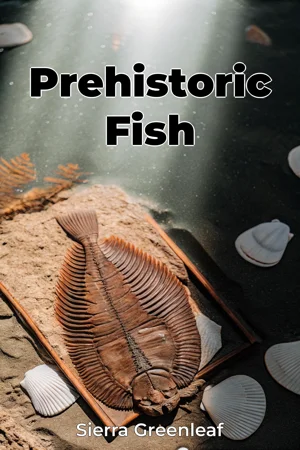
What if the story of life on Earth began not with dinosaurs, but with the strange and wondrous fish that swam in primordial seas millions of years before? "Prehistoric Fish" invites you on an expedition into the deep past, revealing the pivotal role these early aquatic vertebrates played in shaping the evolution of life as we know it. This book explores the world of fossilized fish that existed long before the age of dinosaurs. Their story is more than just a glimpse into ancient marine ecosystems and serves as a crucial chapter in understanding evolution, biodiversity, and the planet's geological history. This book's primary focus is investigating the evolutionary lineage of prehistoric fish, highlighting their significance in understanding key transitions in vertebrate history. These transitions include the development of jaws, the move from cartilaginous to bony skeletons, and the eventual emergence of land-dwelling tetrapods. This subject matter is important because it sheds light on the fundamental processes that drove the diversification of life, providing clues about how environmental pressures can lead to substantial biological innovations. To place these prehistoric organisms in context, we will delve into relevant geological periods, focusing on the environmental conditions that favored their development and diversification. We discuss tectonic shifts, changes in sea levels, and major extinction events to paint a picture of the dynamic world these fish inhabited. A basic understanding of evolutionary principles, such as natural selection and adaptation, will enhance the reader's appreciation of the material. The Central argument lies in the fact that prehistoric fish are not evolutionary dead ends but served as the foundation for all subsequent vertebrate evolution. They possess unique features that offer unparalleled insights into the origins of many anatomical and physiological traits found in modern animals, including humans. The book begins with an introduction to the early classification of fish fossils and the methods paleontologists use to study them. It then moves into specific groups of prehistoric fish, such as the jawless fishes (Agnatha), the armored placoderms, and the early ancestors of modern sharks and bony fishes. For each group, the book examines their unique characteristics, evolutionary relationships, and ecological roles. The book investigates the evolutionary pressures that drove the development of jaws, fins, and other key features, supported by fossil evidence from around the world. The culmination of our journey looks at how the features of prehistoric fish persist in their modern relatives, including ourselves, reinforcing their importance as foundational organisms. The evidence presented in this work draws from a variety of sources, including fossil discoveries, anatomical studies, and phylogenetic analyses. The book features detailed illustrations and photographs of fossil specimens, showcasing their remarkable preservation and unique features. Data from scientific publications and museum collections worldwide contributes to a comprehensive understanding of prehistoric fish evolution. This work is not limited to paleontology, but also touches upon genetics, developmental biology, and environmental science. By examining the genetic relationships between ancient and modern fish, and by understanding the environmental pressures that shaped their evolution, we gain a more complete perspective on the history of life on Earth. "Prehistoric Fish" distinguishes itself by adopting a holistic approach, considering the interplay between evolutionary biology, geology, and environmental science. It synthesizes information from multiple disciplines to provide a comprehensive and accessible account of prehistoric fish evolution. The writing style is designed to be informative and engaging, catering to a broad audience with an interest in paleontology, evolutionary biology, and natural history. Complex scientific concepts are explained clearly and concisely, making them accessible to non-experts. The target audience is anyone with an interest in paleontology, evolutionary biology, or natural history, including students, amateur fossil enthusiasts, and general readers. The book offers a comprehensive and accessible overview of prehistoric fish evolution, providing valuable insights into the history of life on Earth. As a non-fiction work in the Earth Sciences and Biology genres, "Prehistoric Fish" adheres to standards of accuracy, objectivity, and evidence-based reasoning. It strives to provide a balanced and up-to-date account of the current state of knowledge in the field. The book's scope is limited to the evolution of fish prior to the rise of the dinosaurs, with less focus on more recent fish lineages. While the book strives to be comprehensive, it acknowledges that our understanding of prehistoric fish is constantly evolving as new discoveries are made. The study of prehistoric fish has practical applications in the fields of conservation biology and environmental management. Understanding how fish adapted to past environmental changes can provide insights into how modern fish populations may respond to current challenges such as climate change and habitat loss. The study of prehistoric fish also contributes to ongoing conversation about the completeness of fossil records and the interpretation of evolutionary history. Addressing these issues acknowledges the dynamic and ever-evolving nature of scientific understanding.
What if the story of life on Earth began not with dinosaurs, but with the strange and wondrous fish that swam in primordial seas millions of years before? "Prehistoric Fish" invites you on an expedition into the deep past, revealing the pivotal role these early aquatic vertebrates played in shaping the evolution of life as we know it. This book explores the world of fossilized fish that existed long before the age of dinosaurs. Their story is more than just a glimpse into ancient marine ecosystems and serves as a crucial chapter in understanding evolution, biodiversity, and the planet's geological history. This book's primary focus is investigating the evolutionary lineage of prehistoric fish, highlighting their significance in understanding key transitions in vertebrate history. These transitions include the development of jaws, the move from cartilaginous to bony skeletons, and the eventual emergence of land-dwelling tetrapods. This subject matter is important because it sheds light on the fundamental processes that drove the diversification of life, providing clues about how environmental pressures can lead to substantial biological innovations. To place these prehistoric organisms in context, we will delve into relevant geological periods, focusing on the environmental conditions that favored their development and diversification. We discuss tectonic shifts, changes in sea levels, and major extinction events to paint a picture of the dynamic world these fish inhabited. A basic understanding of evolutionary principles, such as natural selection and adaptation, will enhance the reader's appreciation of the material. The Central argument lies in the fact that prehistoric fish are not evolutionary dead ends but served as the foundation for all subsequent vertebrate evolution. They possess unique features that offer unparalleled insights into the origins of many anatomical and physiological traits found in modern animals, including humans. The book begins with an introduction to the early classification of fish fossils and the methods paleontologists use to study them. It then moves into specific groups of prehistoric fish, such as the jawless fishes (Agnatha), the armored placoderms, and the early ancestors of modern sharks and bony fishes. For each group, the book examines their unique characteristics, evolutionary relationships, and ecological roles. The book investigates the evolutionary pressures that drove the development of jaws, fins, and other key features, supported by fossil evidence from around the world. The culmination of our journey looks at how the features of prehistoric fish persist in their modern relatives, including ourselves, reinforcing their importance as foundational organisms. The evidence presented in this work draws from a variety of sources, including fossil discoveries, anatomical studies, and phylogenetic analyses. The book features detailed illustrations and photographs of fossil specimens, showcasing their remarkable preservation and unique features. Data from scientific publications and museum collections worldwide contributes to a comprehensive understanding of prehistoric fish evolution. This work is not limited to paleontology, but also touches upon genetics, developmental biology, and environmental science. By examining the genetic relationships between ancient and modern fish, and by understanding the environmental pressures that shaped their evolution, we gain a more complete perspective on the history of life on Earth. "Prehistoric Fish" distinguishes itself by adopting a holistic approach, considering the interplay between evolutionary biology, geology, and environmental science. It synthesizes information from multiple disciplines to provide a comprehensive and accessible account of prehistoric fish evolution. The writing style is designed to be informative and engaging, catering to a broad audience with an interest in paleontology, evolutionary biology, and natural history. Complex scientific concepts are explained clearly and concisely, making them accessible to non-experts. The target audience is anyone with an interest in paleontology, evolutionary biology, or natural history, including students, amateur fossil enthusiasts, and general readers. The book offers a comprehensive and accessible overview of prehistoric fish evolution, providing valuable insights into the history of life on Earth. As a non-fiction work in the Earth Sciences and Biology genres, "Prehistoric Fish" adheres to standards of accuracy, objectivity, and evidence-based reasoning. It strives to provide a balanced and up-to-date account of the current state of knowledge in the field. The book's scope is limited to the evolution of fish prior to the rise of the dinosaurs, with less focus on more recent fish lineages. While the book strives to be comprehensive, it acknowledges that our understanding of prehistoric fish is constantly evolving as new discoveries are made. The study of prehistoric fish has practical applications in the fields of conservation biology and environmental management. Understanding how fish adapted to past environmental changes can provide insights into how modern fish populations may respond to current challenges such as climate change and habitat loss. The study of prehistoric fish also contributes to ongoing conversation about the completeness of fossil records and the interpretation of evolutionary history. Addressing these issues acknowledges the dynamic and ever-evolving nature of scientific understanding.
"Prehistoric Fish" explores the fascinating world of ancient aquatic vertebrates, highlighting their crucial role in the narrative of life's early evolution. Long before dinosaurs roamed the Earth, these fish were experimenting with biological innovations that would eventually give rise to all vertebrates, including humans. The book emphasizes how these creatures weren't evolutionary dead ends but rather the foundation upon which vertebrate evolution was built. Intriguingly, the development of jaws, a pivotal moment in vertebrate history, can be traced back to these ancient fish. The book investigates various groups of prehistoric fish, such as the jawless Agnatha and the armored placoderms, examining their unique characteristics and evolutionary relationships. By delving into relevant geological periods and environmental conditions, the book paints a vivid picture of the dynamic world they inhabited, including the impact of tectonic shifts and major extinction events. Its unique approach blends evolutionary biology, geology, and environmental science to offer a comprehensive yet accessible account. Beginning with an introduction to fish fossil classification, the book progresses through specific groups, supported by fossil evidence and detailed illustrations. It culminates in an exploration of how features of prehistoric fish persist in their modern relatives, underscoring their foundational importance. This approach makes it a valuable resource for anyone interested in paleontology, evolutionary biology, and the natural history of our planet.
Book Details
ISBN
9788233964535
Publisher
Publifye AS
Your Licenses
You don't own any licenses for this book
Purchase a license below to unlock this book and download the EPUB.
Purchase License
Select a tier to unlock this book
Need bulk licensing?
Contact us for enterprise agreements.