
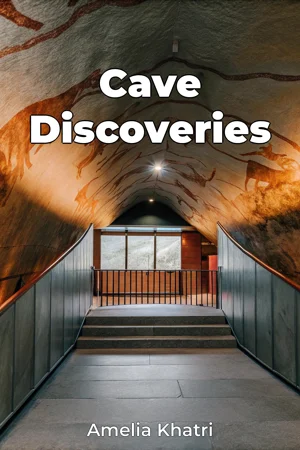
About This Book
What if the Earth itself held the keys to understanding our deepest past? "Cave Discoveries" invites you on a journey into the subterranean world, where ancient caves serve as time capsules, preserving fossils, prehistoric art, and the often-forgotten history of humankind. This book explores the pivotal role caves play in understanding three primary themes: human evolution, the development of artistic expression, and the impact of past climate changes on civilization. These topics are critical because they shed light on the origins of our species, the birth of creative thought, and the enduring relationship between humanity and the environment. To fully appreciate the narrative, a basic understanding of geological time scales and archaeological dating methods is beneficial, though not essential, as these concepts are explained throughout the text. We delve into the scientific context of cave formation, the processes of fossilization, and the techniques used to analyze cave art, providing a solid foundation for grasping the significance of these discoveries. The central argument of "Cave Discoveries" posits that caves provide a unique and often unparalleled record of the past, offering invaluable insights that complement and sometimes challenge traditional historical and archaeological narratives. Their stable environments preserve materials that would otherwise be lost to the elements, making them crucial archives of human experience. The book unfolds in a structured exploration of the following areas. First, we introduce the geological processes that create caves and the mechanisms by which fossils and artifacts are preserved within them. We then proceed to examine key cave sites around the world, focusing on discoveries related to human evolution, showcasing fossils of early hominids and the evidence they provide about our ancestors' lives. A large portion of the book is devoted to prehistoric cave art, analyzing the techniques, styles, and possible meanings behind these ancient paintings and engravings. These images offer a window into the minds of our ancestors, revealing their beliefs, social structures, and relationship with the natural world. Finally, the book explores the role of caves as climate archives, examining stalagmites, sediments, and other deposits that provide valuable data about past environmental conditions and their impact on human societies. We will conclude by discussing the implications of these discoveries for understanding current climate change and its potential effects on our future. The claims made within this book are supported by a wide range of scientific evidence, including fossil analyses, archaeological excavations, geological surveys, and climate reconstructions. Unique data sources, such as isotopic analyses of stalagmites and advanced imaging techniques for studying cave art, provide new perspectives on old questions. "Cave Discoveries" bridges the gap between Earth Sciences, History, and Anthropology, demonstrating how these disciplines converge in the study of caves. The geological processes that form caves create the environmental conditions necessary for preserving fossils and artifacts. These artifacts and fossils then become invaluable sources of information for historians and anthropologists, providing insights into past human behavior and cultural development. What sets this book apart is its interdisciplinary approach and its focus on caves as holistic archives of the past. Rather than treating fossils, art, and climate data as separate entities, we integrate them into a cohesive narrative that reveals the interconnectedness of human history and the natural world. Written in a clear and accessible style, "Cave Discoveries" aims to engage a broad audience, from students and researchers to anyone with an interest in history, archaeology, or Earth Sciences. The book's value lies in its ability to synthesize complex scientific information into an understandable and engaging narrative. In line with the conventions of non-fiction Earth Sciences, Geography, and History, "Cave Discoveries" adheres to rigorous standards of accuracy and objectivity. While the book strives to provide a comprehensive overview of the field, it acknowledges its limitations, focusing primarily on well-documented cave sites and established scientific interpretations. The book does not delve into pseudoscientific theories or fringe interpretations. The information presented in "Cave Discoveries" has practical applications for understanding current environmental challenges, such as climate change and biodiversity loss. By learning about the impact of past climate changes on human societies, we can gain valuable insights into the challenges we face today. The book also touches upon ongoing debates within the scientific community, such as the interpretation of specific cave art symbols and the precise dating of certain fossil finds. By presenting different perspectives and acknowledging areas of uncertainty, the book encourages critical thinking and further exploration.
What if the Earth itself held the keys to understanding our deepest past? "Cave Discoveries" invites you on a journey into the subterranean world, where ancient caves serve as time capsules, preserving fossils, prehistoric art, and the often-forgotten history of humankind. This book explores the pivotal role caves play in understanding three primary themes: human evolution, the development of artistic expression, and the impact of past climate changes on civilization. These topics are critical because they shed light on the origins of our species, the birth of creative thought, and the enduring relationship between humanity and the environment. To fully appreciate the narrative, a basic understanding of geological time scales and archaeological dating methods is beneficial, though not essential, as these concepts are explained throughout the text. We delve into the scientific context of cave formation, the processes of fossilization, and the techniques used to analyze cave art, providing a solid foundation for grasping the significance of these discoveries. The central argument of "Cave Discoveries" posits that caves provide a unique and often unparalleled record of the past, offering invaluable insights that complement and sometimes challenge traditional historical and archaeological narratives. Their stable environments preserve materials that would otherwise be lost to the elements, making them crucial archives of human experience. The book unfolds in a structured exploration of the following areas. First, we introduce the geological processes that create caves and the mechanisms by which fossils and artifacts are preserved within them. We then proceed to examine key cave sites around the world, focusing on discoveries related to human evolution, showcasing fossils of early hominids and the evidence they provide about our ancestors' lives. A large portion of the book is devoted to prehistoric cave art, analyzing the techniques, styles, and possible meanings behind these ancient paintings and engravings. These images offer a window into the minds of our ancestors, revealing their beliefs, social structures, and relationship with the natural world. Finally, the book explores the role of caves as climate archives, examining stalagmites, sediments, and other deposits that provide valuable data about past environmental conditions and their impact on human societies. We will conclude by discussing the implications of these discoveries for understanding current climate change and its potential effects on our future. The claims made within this book are supported by a wide range of scientific evidence, including fossil analyses, archaeological excavations, geological surveys, and climate reconstructions. Unique data sources, such as isotopic analyses of stalagmites and advanced imaging techniques for studying cave art, provide new perspectives on old questions. "Cave Discoveries" bridges the gap between Earth Sciences, History, and Anthropology, demonstrating how these disciplines converge in the study of caves. The geological processes that form caves create the environmental conditions necessary for preserving fossils and artifacts. These artifacts and fossils then become invaluable sources of information for historians and anthropologists, providing insights into past human behavior and cultural development. What sets this book apart is its interdisciplinary approach and its focus on caves as holistic archives of the past. Rather than treating fossils, art, and climate data as separate entities, we integrate them into a cohesive narrative that reveals the interconnectedness of human history and the natural world. Written in a clear and accessible style, "Cave Discoveries" aims to engage a broad audience, from students and researchers to anyone with an interest in history, archaeology, or Earth Sciences. The book's value lies in its ability to synthesize complex scientific information into an understandable and engaging narrative. In line with the conventions of non-fiction Earth Sciences, Geography, and History, "Cave Discoveries" adheres to rigorous standards of accuracy and objectivity. While the book strives to provide a comprehensive overview of the field, it acknowledges its limitations, focusing primarily on well-documented cave sites and established scientific interpretations. The book does not delve into pseudoscientific theories or fringe interpretations. The information presented in "Cave Discoveries" has practical applications for understanding current environmental challenges, such as climate change and biodiversity loss. By learning about the impact of past climate changes on human societies, we can gain valuable insights into the challenges we face today. The book also touches upon ongoing debates within the scientific community, such as the interpretation of specific cave art symbols and the precise dating of certain fossil finds. By presenting different perspectives and acknowledging areas of uncertainty, the book encourages critical thinking and further exploration.
"Cave Discoveries" explores the hidden world beneath our feet, revealing how caves act as time capsules preserving critical pieces of Earth's and humanity's history. These subterranean environments offer unique insights into human evolution, prehistoric art, and past climate changes. Caves provide a stable environment where fossils and artifacts are preserved for millennia, offering a richer understanding compared to traditional historical or archaeological sites. For instance, cave paintings provide direct access to the symbolic world of early humans, offering clues about their belief systems and daily lives. The book progresses by first detailing cave formation and preservation processes, and then moves into examining significant cave sites worldwide. A key focus is on prehistoric cave art, analyzing the artistic techniques and possible meanings behind the ancient paintings and engravings. Finally, the book explores how stalagmites and sediments within caves serve as climate archives, revealing data about past environmental conditions and their impact on ancient civilizations. This interdisciplinary approach integrates Earth Sciences, History, and Anthropology, making it a valuable resource for anyone interested in understanding our planet's and our species' past.
Book Details
ISBN
9788233964467
Publisher
Publifye AS
Your Licenses
You don't own any licenses for this book
Purchase a license below to unlock this book and download the EPUB.
Purchase License
Select a tier to unlock this book
Need bulk licensing?
Contact us for enterprise agreements.