
About This Book
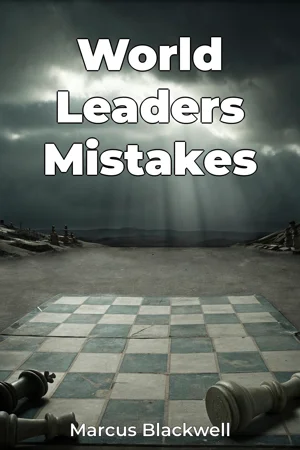
How often do world leaders' decisions echo through history, shaping the lives of millions and altering the course of nations? World Leaders Mistakes delves into the pivotal errors in judgment made by influential figures throughout history, examining their far-reaching consequences and offering insights into the recurring patterns of flawed decision-making at the highest levels of power. This book offers a systematic exploration of political missteps, strategic blunders, and ethical lapses that have redirected the flow of history, examining not only the immediate impacts, but also the long-term reverberations that continue to shape our world. This book centers on three key areas: firstly, the cognitive biases and psychological factors influencing leaders under pressure; secondly, the role of misinformation and flawed intelligence in shaping disastrous decisions; and thirdly, the ethical compromises leaders make when faced with seemingly impossible choices. These topics are crucial because they highlight the fallibility inherent in leadership, demonstrating how even the most powerful individuals are susceptible to errors that can lead to widespread devastation. Understanding these patterns is vital for anyone seeking to comprehend contemporary geopolitical dynamics or to cultivate more effective leadership strategies. We will consider critical historical, social, and political contexts to fully understand the conditions under which these mistakes occurred. An understanding of basic political science concepts, such as power dynamics, international relations theories, and decision-making models, will be helpful, though not required. The central argument is that by critically analyzing past leadership failures, we can identify recurring patterns, understand the underlying causes, and ultimately develop more effective strategies for avoiding similar pitfalls in the future. This argument aims to transcend mere historical narration, offering actionable insights for current and future leaders, policymakers, and engaged citizens. The book is structured to first introduce the theoretical framework for understanding leadership errors, drawing upon cognitive psychology, political science, and historical analysis. It then presents a series of case studies, carefully selected to represent a range of historical periods, geographic regions, and types of leadership failures. These case studies form the core of the book, illustrating the consequences of various mistakes. The book concludes by synthesizing the lessons learned from these examples, offering a framework for better decision-making and a call for greater accountability in leadership. The analysis relies on a wide range of primary and secondary sources, including archival documents, government reports, biographies, and academic studies. The book also incorporates quantitative data, such as economic indicators, population statistics, and military strength assessments, to provide a comprehensive picture of the circumstances surrounding each mistake. The book also connects to other related fields such as psychology (cognitive biases and decision-making), economics (impact of policy decisions), and sociology (influence of social structures on leadership). These interdisciplinary connections enrich the analysis and offer a more nuanced understanding of the complex factors contributing to leadership failures. The unique approach lies in its synthesis of historical analysis with contemporary insights from behavioral science and political theory. It moves beyond simply recounting historical events to provide a framework for understanding the decision-making processes that led to these errors. The tone is analytical and objective, using clear language to present complex information in an accessible manner. The intended audience includes students of history, political science, and international relations, as well as current and aspiring leaders in government, business, and other fields. The book will also appeal to general readers interested in understanding the forces shaping world events. As a work of non-fiction history, the book adheres to standards of accuracy, objectivity, and thorough research. It acknowledges multiple perspectives and avoids biased interpretations of events. The scope is broad, encompassing examples from various historical periods and geographic regions, but it is also limited to mistakes directly attributable to individual leaders or small groups of decision-makers. Systemic failures and broader social trends are addressed only insofar as they relate to specific leadership errors. Practically, the book provides a valuable resource for leaders seeking to improve their decision-making processes, avoid cognitive biases, and navigate complex ethical dilemmas. By understanding the mistakes of the past, leaders can make more informed choices and better serve the interests of those they lead. The book touches upon ongoing debates surrounding the ethics of leadership and the responsibility of leaders for the consequences of their actions. It acknowledges differing interpretations of historical events and encourages readers to critically evaluate the evidence presented.
How often do world leaders' decisions echo through history, shaping the lives of millions and altering the course of nations? World Leaders Mistakes delves into the pivotal errors in judgment made by influential figures throughout history, examining their far-reaching consequences and offering insights into the recurring patterns of flawed decision-making at the highest levels of power. This book offers a systematic exploration of political missteps, strategic blunders, and ethical lapses that have redirected the flow of history, examining not only the immediate impacts, but also the long-term reverberations that continue to shape our world. This book centers on three key areas: firstly, the cognitive biases and psychological factors influencing leaders under pressure; secondly, the role of misinformation and flawed intelligence in shaping disastrous decisions; and thirdly, the ethical compromises leaders make when faced with seemingly impossible choices. These topics are crucial because they highlight the fallibility inherent in leadership, demonstrating how even the most powerful individuals are susceptible to errors that can lead to widespread devastation. Understanding these patterns is vital for anyone seeking to comprehend contemporary geopolitical dynamics or to cultivate more effective leadership strategies. We will consider critical historical, social, and political contexts to fully understand the conditions under which these mistakes occurred. An understanding of basic political science concepts, such as power dynamics, international relations theories, and decision-making models, will be helpful, though not required. The central argument is that by critically analyzing past leadership failures, we can identify recurring patterns, understand the underlying causes, and ultimately develop more effective strategies for avoiding similar pitfalls in the future. This argument aims to transcend mere historical narration, offering actionable insights for current and future leaders, policymakers, and engaged citizens. The book is structured to first introduce the theoretical framework for understanding leadership errors, drawing upon cognitive psychology, political science, and historical analysis. It then presents a series of case studies, carefully selected to represent a range of historical periods, geographic regions, and types of leadership failures. These case studies form the core of the book, illustrating the consequences of various mistakes. The book concludes by synthesizing the lessons learned from these examples, offering a framework for better decision-making and a call for greater accountability in leadership. The analysis relies on a wide range of primary and secondary sources, including archival documents, government reports, biographies, and academic studies. The book also incorporates quantitative data, such as economic indicators, population statistics, and military strength assessments, to provide a comprehensive picture of the circumstances surrounding each mistake. The book also connects to other related fields such as psychology (cognitive biases and decision-making), economics (impact of policy decisions), and sociology (influence of social structures on leadership). These interdisciplinary connections enrich the analysis and offer a more nuanced understanding of the complex factors contributing to leadership failures. The unique approach lies in its synthesis of historical analysis with contemporary insights from behavioral science and political theory. It moves beyond simply recounting historical events to provide a framework for understanding the decision-making processes that led to these errors. The tone is analytical and objective, using clear language to present complex information in an accessible manner. The intended audience includes students of history, political science, and international relations, as well as current and aspiring leaders in government, business, and other fields. The book will also appeal to general readers interested in understanding the forces shaping world events. As a work of non-fiction history, the book adheres to standards of accuracy, objectivity, and thorough research. It acknowledges multiple perspectives and avoids biased interpretations of events. The scope is broad, encompassing examples from various historical periods and geographic regions, but it is also limited to mistakes directly attributable to individual leaders or small groups of decision-makers. Systemic failures and broader social trends are addressed only insofar as they relate to specific leadership errors. Practically, the book provides a valuable resource for leaders seeking to improve their decision-making processes, avoid cognitive biases, and navigate complex ethical dilemmas. By understanding the mistakes of the past, leaders can make more informed choices and better serve the interests of those they lead. The book touches upon ongoing debates surrounding the ethics of leadership and the responsibility of leaders for the consequences of their actions. It acknowledges differing interpretations of historical events and encourages readers to critically evaluate the evidence presented.
"World Leaders Mistakes" explores critical errors in judgment made by influential figures throughout history. It examines how political missteps, strategic blunders, and ethical lapses have redirected history, highlighting the fallibility of leadership. The book delves into cognitive biases affecting leaders under pressure and the impact of misinformation on disastrous decisions, providing insights into the long-term consequences of flawed decision-making. One intriguing aspect is the analysis of ethical compromises made when leaders face seemingly impossible choices. The book progresses by first introducing a theoretical framework using cognitive psychology, political science, and historical analysis. It then presents case studies representing various historical periods and geographic regions, illustrating the consequences of leadership failures. By analyzing these mistakes, the book identifies recurring patterns and underlying causes, providing actionable insights for current and future leaders. What makes this book unique is its blend of historical analysis with contemporary insights from behavioral science and political theory.
Book Details
ISBN
9788233964344
Publisher
Publifye AS
Your Licenses
You don't own any licenses for this book
Purchase a license below to unlock this book and download the EPUB.
Purchase License
Select a tier to unlock this book
Need bulk licensing?
Contact us for enterprise agreements.