
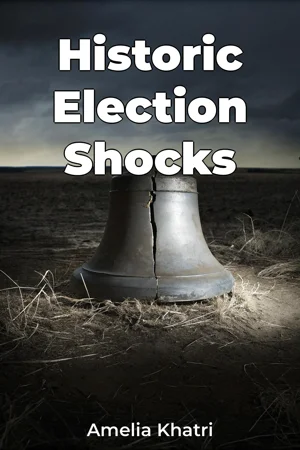
About This Book
Have you ever wondered how seemingly insurmountable leads can vanish overnight, altering the course of nations? "Historic Election Shocks" delves into precisely that: the most unexpected and transformative election upsets in history, and the profound political realignments they triggered. This book explores the anatomy of surprise victories, examining the confluence of factors that defy conventional wisdom and reshape political landscapes. We will dissect key elections through the lens of political science, history, and sociology to understand not just *what* happened, but *why*. The book will focus on three core themes. First, the role of socioeconomic anxieties: how economic downturns, inequality, and demographic shifts fuel voter discontent and create opportunities for insurgent candidates. Second, the power of campaign strategy and messaging: analyzing how successful campaigns capitalized on these anxieties, mobilized overlooked constituencies, and framed their narratives to resonate with disillusioned voters. Finally, the long-term consequences of these upsets: assessing how these unexpected victories reshaped party alignments, policy agendas, and the very fabric of political discourse. Understanding these upsets requires a firm grasp of historical context. We’ll examine pre-election polls and expert predictions, comparing them with the actual results to identify systemic biases and flawed assumptions. A crucial element will be tracing the evolution of political rhetoric and the rise of new communication technologies that amplified the impact of specific campaigns. The central argument of "Historic Election Shocks" posits that election upsets are not mere statistical anomalies, but rather, symptomatic expressions of deeper societal shifts and failures of established political institutions to address the needs and concerns of a significant portion of the electorate. By understanding the underlying dynamics of these shocks, we can gain valuable insights into the fragility of political power and the potential for unexpected change. The book is structured in three parts. The first part introduces the framework for analyzing surprise elections, outlining the key variables and methodological approaches. The second part presents detailed case studies of significant election upsets, from Truman’s 1948 victory to more recent examples in various democracies across the globe. Each case study will analyze the specific factors contributing to the upset, including economic conditions, social trends, campaign strategies, and media coverage. The third part synthesizes the findings from the case studies, drawing broader conclusions about the nature of political change and the conditions under which election upsets are most likely to occur. It will culminate in a discussion of the implications for contemporary politics, offering strategies for understanding and navigating an increasingly volatile political landscape. The analysis will rely on a variety of sources, including polling data, campaign finance records, media archives, and interviews with key campaign figures and political analysts. We will employ quantitative methods to analyze voting patterns and demographic trends, as well as qualitative methods to assess the impact of campaign messaging and media narratives. This book sits at the intersection of political science, history, and sociology. The economic analysis of voter behavior connects to economic theory, while the study of campaign messaging draws on communication studies. Furthermore, its exploration of the long-term consequences of these elections has relevance in public policy and governance. "Historic Election Shocks" distinguishes itself by its comparative approach, examining upsets across different countries and time periods to identify common patterns and unique contextual factors. It offers a fresh perspective on the dynamics of political change, moving beyond simplistic explanations to provide a nuanced and comprehensive analysis. Written in an accessible and engaging style, "Historic Election Shocks" is aimed at a broad audience, including students of political science and history, journalists, political professionals, and anyone interested in understanding the forces shaping our political world. It provides valuable insights for those seeking to understand the dynamics of political campaigns, the psychology of voters, and the potential for unexpected political change. The book focuses on democratic elections and intentionally limits its scope by focusing on surprise upsets where pre-election indicators strongly suggested a different outcome. While acknowledging the complex nature of political forecasting, it centers on cases where the unexpectedness was most pronounced. The insights offered here are highly applicable to understanding current political trends and the potential for future upsets. By understanding the factors that contribute to these shocks, readers can better anticipate and navigate the complexities of the modern political landscape. The book will address controversies surrounding the accuracy of polling data and the influence of social media on election outcomes.
Have you ever wondered how seemingly insurmountable leads can vanish overnight, altering the course of nations? "Historic Election Shocks" delves into precisely that: the most unexpected and transformative election upsets in history, and the profound political realignments they triggered. This book explores the anatomy of surprise victories, examining the confluence of factors that defy conventional wisdom and reshape political landscapes. We will dissect key elections through the lens of political science, history, and sociology to understand not just *what* happened, but *why*. The book will focus on three core themes. First, the role of socioeconomic anxieties: how economic downturns, inequality, and demographic shifts fuel voter discontent and create opportunities for insurgent candidates. Second, the power of campaign strategy and messaging: analyzing how successful campaigns capitalized on these anxieties, mobilized overlooked constituencies, and framed their narratives to resonate with disillusioned voters. Finally, the long-term consequences of these upsets: assessing how these unexpected victories reshaped party alignments, policy agendas, and the very fabric of political discourse. Understanding these upsets requires a firm grasp of historical context. We’ll examine pre-election polls and expert predictions, comparing them with the actual results to identify systemic biases and flawed assumptions. A crucial element will be tracing the evolution of political rhetoric and the rise of new communication technologies that amplified the impact of specific campaigns. The central argument of "Historic Election Shocks" posits that election upsets are not mere statistical anomalies, but rather, symptomatic expressions of deeper societal shifts and failures of established political institutions to address the needs and concerns of a significant portion of the electorate. By understanding the underlying dynamics of these shocks, we can gain valuable insights into the fragility of political power and the potential for unexpected change. The book is structured in three parts. The first part introduces the framework for analyzing surprise elections, outlining the key variables and methodological approaches. The second part presents detailed case studies of significant election upsets, from Truman’s 1948 victory to more recent examples in various democracies across the globe. Each case study will analyze the specific factors contributing to the upset, including economic conditions, social trends, campaign strategies, and media coverage. The third part synthesizes the findings from the case studies, drawing broader conclusions about the nature of political change and the conditions under which election upsets are most likely to occur. It will culminate in a discussion of the implications for contemporary politics, offering strategies for understanding and navigating an increasingly volatile political landscape. The analysis will rely on a variety of sources, including polling data, campaign finance records, media archives, and interviews with key campaign figures and political analysts. We will employ quantitative methods to analyze voting patterns and demographic trends, as well as qualitative methods to assess the impact of campaign messaging and media narratives. This book sits at the intersection of political science, history, and sociology. The economic analysis of voter behavior connects to economic theory, while the study of campaign messaging draws on communication studies. Furthermore, its exploration of the long-term consequences of these elections has relevance in public policy and governance. "Historic Election Shocks" distinguishes itself by its comparative approach, examining upsets across different countries and time periods to identify common patterns and unique contextual factors. It offers a fresh perspective on the dynamics of political change, moving beyond simplistic explanations to provide a nuanced and comprehensive analysis. Written in an accessible and engaging style, "Historic Election Shocks" is aimed at a broad audience, including students of political science and history, journalists, political professionals, and anyone interested in understanding the forces shaping our political world. It provides valuable insights for those seeking to understand the dynamics of political campaigns, the psychology of voters, and the potential for unexpected political change. The book focuses on democratic elections and intentionally limits its scope by focusing on surprise upsets where pre-election indicators strongly suggested a different outcome. While acknowledging the complex nature of political forecasting, it centers on cases where the unexpectedness was most pronounced. The insights offered here are highly applicable to understanding current political trends and the potential for future upsets. By understanding the factors that contribute to these shocks, readers can better anticipate and navigate the complexities of the modern political landscape. The book will address controversies surrounding the accuracy of polling data and the influence of social media on election outcomes.
"Historic Election Shocks" explores transformative election upsets and their profound impact on political realignments. It dissects surprise victories by examining factors defying conventional wisdom, such as socioeconomic anxieties and campaign strategies, and how these reshape political landscapes. The book uniquely argues that election upsets are symptomatic of deeper societal shifts and failures of political institutions. An intriguing fact is how economic downturns fuel voter discontent, creating opportunities for insurgent candidates. Another insight is how successful campaigns capitalize on anxieties by mobilizing overlooked constituencies. The book employs a comparative approach, examining upsets across different countries and time periods to identify common patterns. Structured in three parts, it first introduces a framework for analyzing surprise elections. Second, it presents detailed case studies, and third, it synthesizes findings to draw broader conclusions about political change. By understanding the underlying dynamics of these shocks, the book offers valuable insights into the fragility of political power and the potential for unexpected change.
Book Details
ISBN
9788233964092
Publisher
Publifye AS
Your Licenses
You don't own any licenses for this book
Purchase a license below to unlock this book and download the EPUB.
Purchase License
Select a tier to unlock this book
Need bulk licensing?
Contact us for enterprise agreements.