
About This Book
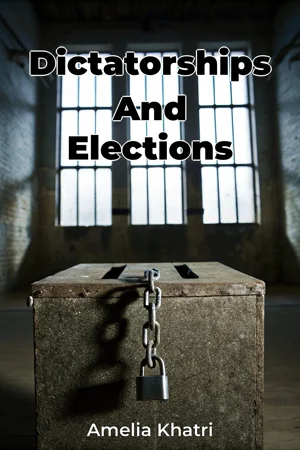
Why do elections persist, even thrive, in authoritarian regimes? This book, *Dictatorships And Elections*, explores the paradoxical relationship between authoritarianism and electoral processes, revealing how these regimes utilize elections not as a pathway to democracy but as a tool for maintaining power and suppressing dissent. We delve into the mechanics and manipulations employed by authoritarian leaders to present a veneer of legitimacy while actively undermining free and fair electoral competition. Our exploration focuses on three pivotal areas: the strategic use of elections for authoritarian survival, the diverse methods of electoral manipulation, and the long-term consequences of sham elections on political development and stability. Understanding these topics is crucial in an era where authoritarianism is resurgent and electoral processes are increasingly vulnerable to manipulation. By examining these dynamics, readers will gain insights into the resilience of authoritarian rule and the challenges faced by pro-democracy movements. Historically, elections have been viewed as cornerstones of democratic transitions. However, many authoritarian governments conduct elections that are carefully managed to produce predetermined outcomes. This book examines how factors like weak institutions, lack of independent media, and the repression of opposition groups enable authoritarian rulers to manipulate electoral processes. It analyzes case studies from across the globe, drawing on political science, historical analysis, and legal studies to provide a comprehensive picture. The central argument of *Dictatorships And Elections* is that elections in authoritarian contexts are primarily instruments of control, allowing regimes to co-opt elites, divide the opposition, and project an image of popular support both domestically and internationally. This argument challenges conventional wisdom about the democratizing effects of elections and highlights the adaptability of authoritarian regimes in the face of global pressure for electoral reform. The book begins by defining key concepts such as electoral authoritarianism and hybrid regimes, laying the theoretical groundwork for understanding the complexities of the topic. It then examines the strategic motivations behind authoritarian elections, including legitimization, co-optation, and international signaling. Subsequent chapters delve into the specific tactics used to manipulate elections, such as gerrymandering, voter registration fraud, media control, and the suppression of opposition parties. We also analyze the role of international election observers and the effectiveness of different strategies for promoting electoral integrity in authoritarian states. The book culminates by assessing the long-term implications of electoral authoritarianism for political stability, economic development, and the prospects for democratic transition, offering practical recommendations for policymakers and pro-democracy activists. The analysis draws on a wide range of empirical evidence, including election data from various countries, case studies of specific elections, interviews with political actors, and analyses of legal frameworks and media coverage. We utilize comparative methodologies to identify patterns and variations in electoral authoritarian practices across different regions and political systems. This book interfaces with fields such as political science, international relations, and law, contributing to the broader understanding of democratization, authoritarianism, and human rights. It offers a unique perspective by combining theoretical analysis with detailed empirical research, challenging simplistic assumptions about the relationship between elections and democracy. Our approach is distinguished by its focus on the micro-level mechanisms through which authoritarian regimes manipulate elections, providing a nuanced understanding of the strategies of both rulers and those who seek to challenge them. The writing style is factual and analytical, aimed at providing a rigorous yet accessible account of the phenomenon of electoral authoritarianism. The target audience for this book includes students, scholars, policymakers, journalists, and anyone interested in understanding contemporary political dynamics. The book will be valuable to readers seeking a deeper understanding of the challenges facing democracy in the 21st century. As a work of political science and history, *Dictatorships And Elections* maintains a commitment to objectivity and empirical accuracy, presenting a balanced assessment of the complex interplay between authoritarianism and electoral processes. The book’s scope is broad, encompassing a wide range of authoritarian regimes and electoral systems, but it acknowledges the limitations of generalizing across diverse political contexts. The insights offered in this book can inform practical strategies for promoting electoral integrity and supporting pro-democracy movements in authoritarian states. By understanding the mechanisms of electoral manipulation, policymakers and activists can develop more effective approaches to combating authoritarianism and promoting democratic values. The book addresses ongoing debates about the effectiveness of different strategies for promoting democratization, including the use of sanctions, election monitoring, and support for civil society. It seeks to contribute to these debates by providing a nuanced analysis of the complexities of electoral authoritarianism and the challenges of promoting meaningful political change.
Why do elections persist, even thrive, in authoritarian regimes? This book, *Dictatorships And Elections*, explores the paradoxical relationship between authoritarianism and electoral processes, revealing how these regimes utilize elections not as a pathway to democracy but as a tool for maintaining power and suppressing dissent. We delve into the mechanics and manipulations employed by authoritarian leaders to present a veneer of legitimacy while actively undermining free and fair electoral competition. Our exploration focuses on three pivotal areas: the strategic use of elections for authoritarian survival, the diverse methods of electoral manipulation, and the long-term consequences of sham elections on political development and stability. Understanding these topics is crucial in an era where authoritarianism is resurgent and electoral processes are increasingly vulnerable to manipulation. By examining these dynamics, readers will gain insights into the resilience of authoritarian rule and the challenges faced by pro-democracy movements. Historically, elections have been viewed as cornerstones of democratic transitions. However, many authoritarian governments conduct elections that are carefully managed to produce predetermined outcomes. This book examines how factors like weak institutions, lack of independent media, and the repression of opposition groups enable authoritarian rulers to manipulate electoral processes. It analyzes case studies from across the globe, drawing on political science, historical analysis, and legal studies to provide a comprehensive picture. The central argument of *Dictatorships And Elections* is that elections in authoritarian contexts are primarily instruments of control, allowing regimes to co-opt elites, divide the opposition, and project an image of popular support both domestically and internationally. This argument challenges conventional wisdom about the democratizing effects of elections and highlights the adaptability of authoritarian regimes in the face of global pressure for electoral reform. The book begins by defining key concepts such as electoral authoritarianism and hybrid regimes, laying the theoretical groundwork for understanding the complexities of the topic. It then examines the strategic motivations behind authoritarian elections, including legitimization, co-optation, and international signaling. Subsequent chapters delve into the specific tactics used to manipulate elections, such as gerrymandering, voter registration fraud, media control, and the suppression of opposition parties. We also analyze the role of international election observers and the effectiveness of different strategies for promoting electoral integrity in authoritarian states. The book culminates by assessing the long-term implications of electoral authoritarianism for political stability, economic development, and the prospects for democratic transition, offering practical recommendations for policymakers and pro-democracy activists. The analysis draws on a wide range of empirical evidence, including election data from various countries, case studies of specific elections, interviews with political actors, and analyses of legal frameworks and media coverage. We utilize comparative methodologies to identify patterns and variations in electoral authoritarian practices across different regions and political systems. This book interfaces with fields such as political science, international relations, and law, contributing to the broader understanding of democratization, authoritarianism, and human rights. It offers a unique perspective by combining theoretical analysis with detailed empirical research, challenging simplistic assumptions about the relationship between elections and democracy. Our approach is distinguished by its focus on the micro-level mechanisms through which authoritarian regimes manipulate elections, providing a nuanced understanding of the strategies of both rulers and those who seek to challenge them. The writing style is factual and analytical, aimed at providing a rigorous yet accessible account of the phenomenon of electoral authoritarianism. The target audience for this book includes students, scholars, policymakers, journalists, and anyone interested in understanding contemporary political dynamics. The book will be valuable to readers seeking a deeper understanding of the challenges facing democracy in the 21st century. As a work of political science and history, *Dictatorships And Elections* maintains a commitment to objectivity and empirical accuracy, presenting a balanced assessment of the complex interplay between authoritarianism and electoral processes. The book’s scope is broad, encompassing a wide range of authoritarian regimes and electoral systems, but it acknowledges the limitations of generalizing across diverse political contexts. The insights offered in this book can inform practical strategies for promoting electoral integrity and supporting pro-democracy movements in authoritarian states. By understanding the mechanisms of electoral manipulation, policymakers and activists can develop more effective approaches to combating authoritarianism and promoting democratic values. The book addresses ongoing debates about the effectiveness of different strategies for promoting democratization, including the use of sanctions, election monitoring, and support for civil society. It seeks to contribute to these debates by providing a nuanced analysis of the complexities of electoral authoritarianism and the challenges of promoting meaningful political change.
"Dictatorships And Elections" examines the surprising prevalence of elections in authoritarian regimes, exploring how these elections serve as tools of control rather than pathways to democracy. It reveals the strategies used by authoritarian leaders to manipulate electoral processes, maintaining power while projecting an image of legitimacy. The book delves into the mechanics of electoral manipulation, such as voter registration fraud, media control, and suppression of opposition parties, providing insights into the resilience of authoritarian rule. This book highlights the fact that authoritarian regimes often use elections to co-opt elites, divide the opposition, and signal international support. It challenges the conventional view of elections as inherently democratizing. Utilizing case studies from around the globe and drawing on political science, historical analysis, and legal studies, the book presents a comprehensive picture of electoral authoritarianism. It progresses from defining key concepts to examining strategic motivations, specific manipulation tactics, and the long-term implications for political stability and democratic transition. The book's unique value lies in its focus on the micro-level mechanisms of electoral manipulation, offering a nuanced understanding of the strategies employed by both rulers and those challenging them. By understanding these dynamics, readers can gain insights into the challenges faced by pro-democracy movements and the complexities of promoting electoral integrity in authoritarian states.
Book Details
ISBN
9788233964085
Publisher
Publifye AS
Your Licenses
You don't own any licenses for this book
Purchase a license below to unlock this book and download the EPUB.
Purchase License
Select a tier to unlock this book
Need bulk licensing?
Contact us for enterprise agreements.